Digital payment solutions are accelerating financial inclusion worldwide, with 79% of adults now owning financial accounts, according to World Bank data. Yet 1.3 billion people remain unbanked.
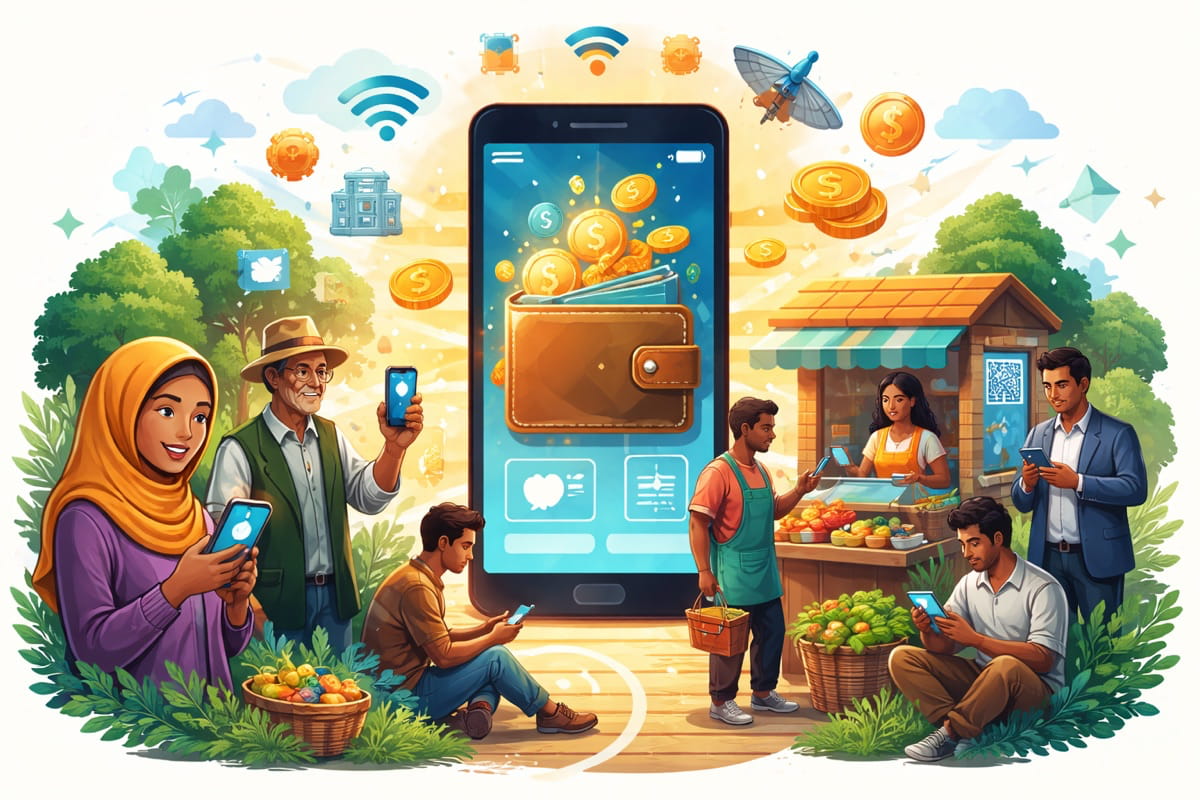
Billions Gain Financial Access as Digital Payments Expand
Digital payment solutions are rapidly transforming how people access financial services across the world. Mobile wallets, instant payment networks, and digital banking platforms are enabling millions of individuals particularly in developing economies to participate in the formal financial system for the first time.
According to the latest data from the World Bank, 79% of adults globally now own a financial account, a significant increase from just 51% in 2011. Yet despite this progress, about 1.3 billion adults remain unbanked, highlighting the continued importance of accessible payment infrastructure in driving financial inclusion.
For many people, digital payments represent the first step into formal finance, allowing them to receive wages, government benefits, or remittances directly into secure accounts.
Payments: The First Step Into the Financial System
Payments are often the entry point for individuals who have never used financial services before. Once people begin receiving or sending money digitally, they are more likely to adopt additional services such as savings, insurance, or credit.
World Bank research shows that more than 60% of adults in low- and middle-income economies now make or receive digital payments, while around 42% use digital payments to pay merchants online or in stores.
Government-to-person payments are particularly influential. When governments distribute welfare benefits, pensions, or subsidies digitally, recipients often open their first financial account to receive the funds.
Research from the World Bank also shows that about three-quarters of women receiving government payments in developing economies receive them directly into financial accounts, helping boost financial inclusion and economic participation.
Mobile Payments Are Expanding Access in Emerging Markets
Mobile technology has become a major driver of digital payments and financial inclusion. Today, about 86% of adults globally own a mobile phone, creating new opportunities for financial services to reach previously underserved communities.
Mobile money services are especially important in developing regions where traditional banking infrastructure may be limited. In Sub-Saharan Africa, for example, mobile money platforms allow users to store funds, transfer money, and pay bills without needing access to a bank branch.
Industry analysts note that hundreds of millions of unbanked adults already own mobile phones, meaning digital wallets and payment apps could significantly reduce barriers to financial access.
Real-Time Payment Systems Accelerate Inclusion
National real-time payment systems are also reshaping financial inclusion by enabling instant, low-cost transactions between individuals and businesses.
Countries such as Brazil and India have introduced large-scale digital payment infrastructures that are now widely used by consumers and small businesses.
In India, the Reserve Bank of India reports that around 85% of the country’s digital transactions are processed through the Unified Payments Interface, making it one of the largest real-time payment networks in the world.
Similarly, Brazil’s Pix instant payment system has seen rapid adoption since its launch, enabling instant bank transfers through smartphones and digital wallets.
These platforms are designed to be interoperable and accessible, allowing users to move money between banks and fintech apps instantly, often with little or no transaction fees.
Digital Payments Help Close the Gender Gap
Expanding digital payment infrastructure is also helping reduce the gender gap in financial access. Globally, 77% of women now have financial accounts compared with 81% of men, a significant improvement compared with a decade ago.
In developing economies, women’s account ownership has almost doubled since 2011, rising from 37% to roughly 73% today, according to the World Bank.
Digital payments play a key role in this progress because many women open their first financial account specifically to receive wages or government payments electronically.
Regional Progress Shows Mixed Results
Financial inclusion has improved across most regions, although progress remains uneven.
- East Asia and the Pacific: About 83% of adults have financial accounts.
- Sub-Saharan Africa: Around 58% account ownership, largely driven by mobile money services.
- Middle East and North Africa: Roughly 53% of adults hold financial accounts, with continued growth expected as digital payments expand.
Despite these advances, several barriers remain. Limited internet access, digital literacy gaps, regulatory fragmentation, and cybersecurity concerns can still prevent individuals from fully adopting digital financial services.
To address these challenges, regulators are increasingly focusing on secure payment infrastructure, digital identity systems, and consumer protection frameworks.
The Next Phase of Financial Inclusion
Experts believe payment technologies will remain central to financial inclusion efforts over the next decade.
Real-time payment networks, digital public infrastructure, and fintech innovations are lowering the cost of financial services while expanding access for small businesses and individuals.
According to the World Bank, improving payment systems, connectivity, and trust in financial institutions will be essential to bringing the remaining unbanked population into the global financial ecosystem.
As governments, banks, and fintech companies continue investing in digital payment infrastructure, payment solutions could help unlock economic opportunities for billions of people, turning financial inclusion from an aspiration into a global reality.