Launching a cashless beverage station can be a smart move for hotels, QSRs, and campus operations. These stations speed up service. They reduce lines, and help teams manage drink programs with less labor.
To get them right, though, you need to think about planning, equipment, payment tech, data connections, hygiene, and future scalability.
Here’s a clear walkthrough to help you build a setup that works from day one.
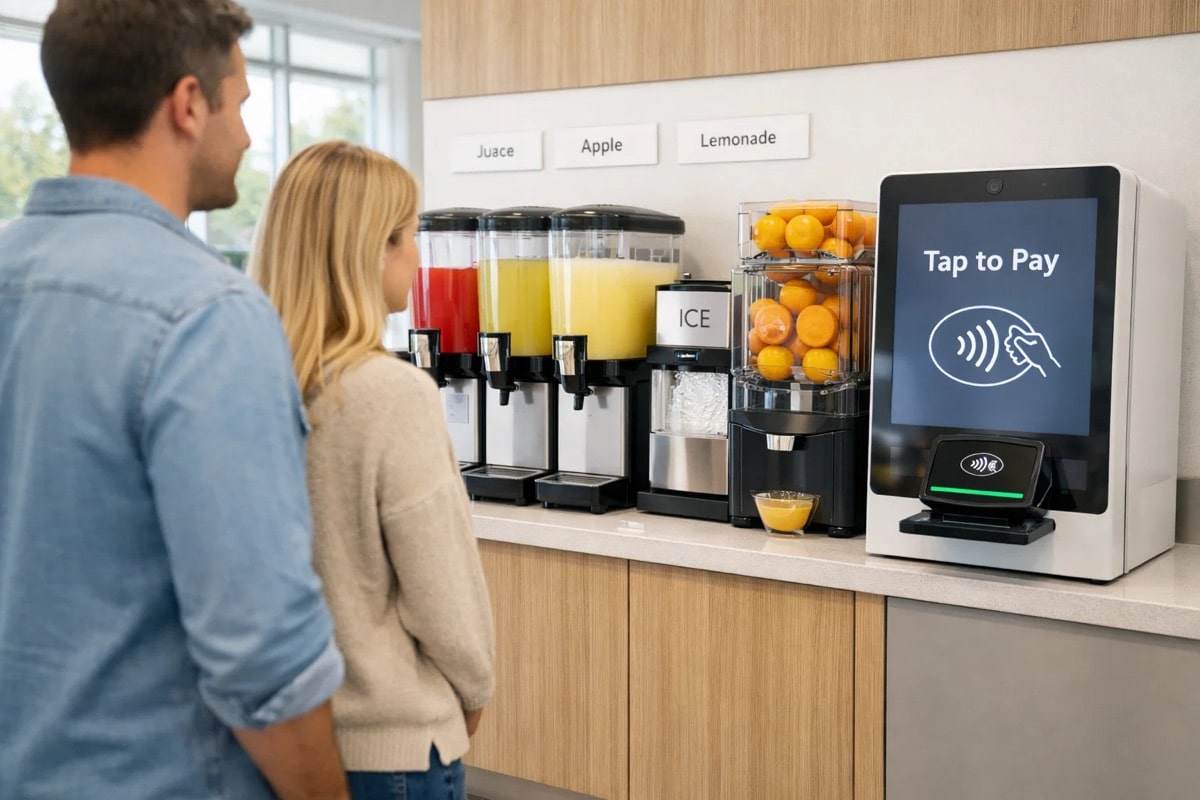
Image: created with Sora
Start with Operational Planning
Begin by mapping your drink program goals. Are you dispensing still water, sparkling water, juices, or flavored beverages? Will users self-serve or will staff assist?
From there, think through peak times, average pour sizes, and expected foot traffic.
This helps you size equipment, select payment methods, and calculate throughput so your station never becomes a bottleneck.
Select Hardware and Equipment
Station hardware determines reliability, speed, and how many guests you can serve in an hour.
Let’s say you’re offering fresh juice or flavored beverages in a busy city setting. In that case, you’d need good refrigeration units and filtration systems. Reliable high capacity ice and water dispensers with features that support heavy-use environments are another must-have.
This gives you a baseline for figuring out which specs matter most when building a cashless station that won’t slow down during peak demand.
For instance, look at capacity, filtration type, dispense speed, ADA compliance details, and maintenance requirements.
- Consider stations with modular or front serviceable cooling.
- Plan for high-traffic moments when multiple pours happen back-to-back.
- Check filtration specs and recommended replacement intervals.
- Review ADA-reach ranges and operational clearances.
Build Your Payment Experience
Cashless stations generally rely on EMV tap, mobile wallet acceptance, or QR-based payments. Decide how many payment points your layout needs and whether readers should sit above, below, or beside the dispenser.
Clear sightlines and simple prompts help guests move quickly through the station without confusion.
Add EMV Tap and Mobile Wallet Acceptance
Modern users expect fast, secure tap-to-pay flows. EMV-compliant readers support contactless cards, Apple Pay, Google Pay, and smartwatch transactions.
According to a 2025 report on micropayment trends by Cantalopue, contactless transactions continue to rise across self-service environments. This makes EMV tap nearly mandatory for any beverage station launching in 2025.
Consider how the reader mounts and how visible it is from different heights. Quick read and approval times keep your line moving, even during the lunch rush or between class changes.
Integrate POS and Back Office Systems
Integration ties everything together. Your beverage station should push sales data to your POS or campus card system automatically, so reports are always accurate.
Tie Into Campus, Hotel, or QSR Systems
Decide whether transactions settle directly through your POS or through an intermediate processor. Matching IDs and product codes between systems helps prevent reconciliation headaches later.
Sync Inventory and Consumption Data
If your beverage offerings change often, a synced menu makes updates simpler. Some operators keep a master menu that pushes to all stations, ensuring consistent pricing and product names across a property.
Build Telemetry and Remote Monitoring
Live data helps you stay proactive about service, maintenance, and supply. This includes dispense counts, online status, temperature warnings, and filter life.
Autonomous retail systems might still have limitations as a recent survey indicated, but telemetry still provides strong value for beverage stations. It reduces technician visits and helps you spot issues before they impact guests.
Strengthen Hygiene and User Safety
Clean dispensing surfaces guide user trust and meet food safety expectations. Many operators add schedules for wipe downs, drain checks, and filtration maintenance. This is especially important when stations serve both ice and water.
Quick Tips
- Build a sanitation routine around peak usage windows.
- Use splash zones and drip trays that are easy to remove and clean.
- Train staff on how to sanitize high-touch areas.
In discussions around beverage station sanitation that highlight how operators maintain consistent hygiene across high-traffic drink areas, one reality stands out. Being in an F&B business also makes you a cleaning business.
Model Throughput and Flow
Throughput modeling shows how many guests you can serve in a given time. It helps you predict lines and determine where to put additional stations.
Space layout, lane flow, and line of sight all matter. You can also borrow inspiration from other well-established cashless kiosks to refine placement and flow ideas.
Confirm Capacity, Filtration, and ADA Specs
Before you launch, run a final checklist on station performance and user accessibility.
A Quick Scan
- Confirm filtration specs match expected water quality.
- Review ADA reach, knee clearance, and height requirements.
- Validate cooling and production capacity during a stress test.
- Double-check mounting, anchoring, cable routing, and reader placement.
These checks ensure your station is ready for peak periods like lunch waves, conference breaks, or weekend rushes.
Endnote
It’s part beverage engineering and part user experience design. Just build around capacity and sanitation. Prioritize payment simplicity and data visibility. Plan early. Many operators refine their setup after a few weeks of use, so treat the first stage as a learning period.
With smart adjustments and thoughtful layout decisions, you’ll end up with a fast, reliable, and guest-friendly drink service station that fits perfectly into your overall operation. A cashless beverage station that guests love and staff can manage with ease.