The Philippines is positioning itself to play a bigger role in the global artificial intelligence (AI) industry through Pax Silica, a US-led initiative focused on strengthening supply chains for semiconductors, critical minerals, and AI-related technologies.
The proposed Pax Silica Industrial Hub in New Clark City, Tarlac, is envisioned as an advanced manufacturing and logistics center under the Luzon Economic Corridor. According to the Philippine government, the project could attract investment, create skilled jobs, and strengthen the country’s position in the global technology supply chain (Presidential Communications Office, 2026).
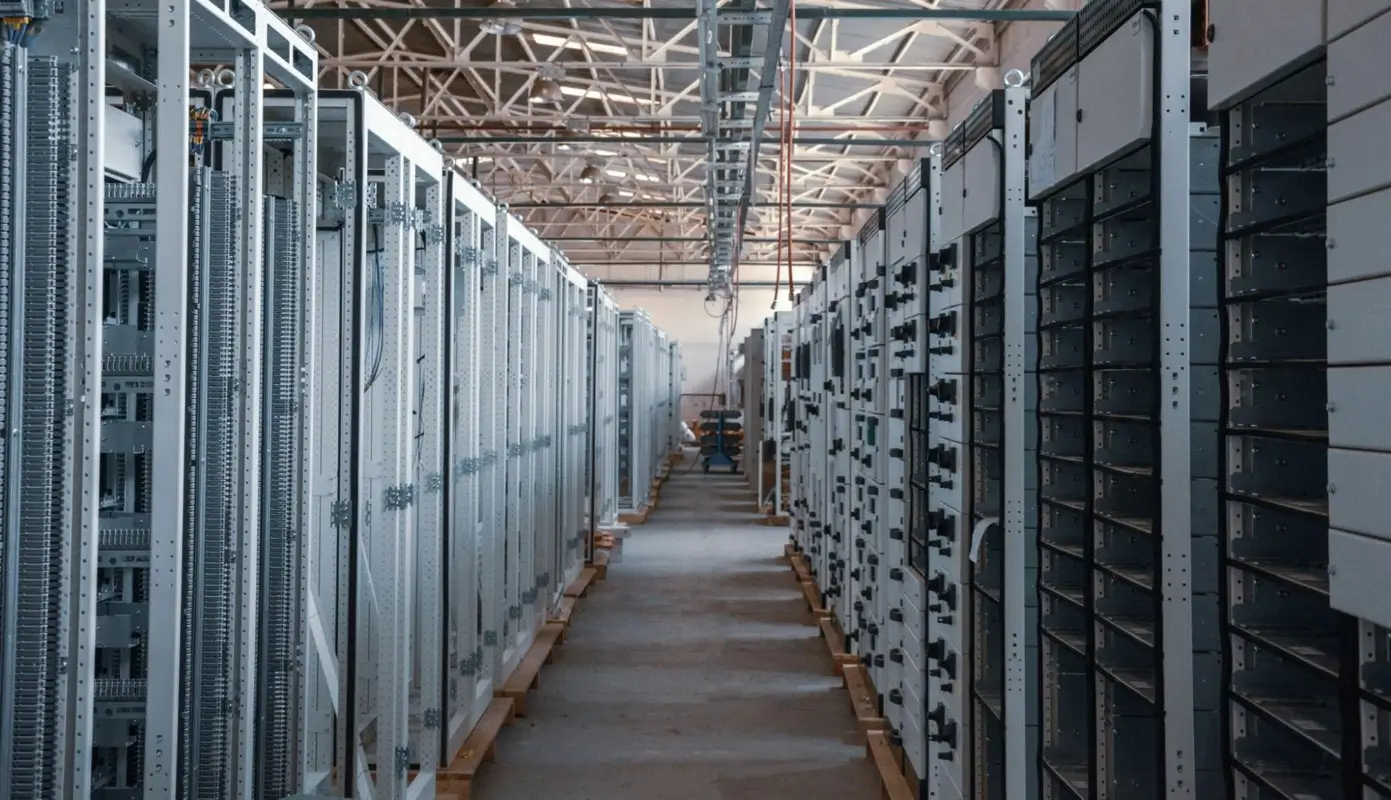
However, AI infrastructure raises legitimate questions about electricity consumption, freshwater availability, environmental protection, and community welfare.
Understanding the facts requires separating what the project actually proposes from assumptions about what AI development always entails.
Misconceptions About Pax Silica and AI Infrastructure
One misconception is that Pax Silica simply means building an enormous AI data center in the Philippines. The initiative is broader than that. It encompasses the supply chains and industrial capabilities needed to manufacture technologies supporting AI, including semiconductor components.
The Bases Conversion and Development Authority (BCDA) has also addressed concerns about the proposed development’s size, environmental effects, and potential community displacement.
These official clarifications provide useful context, although independent environmental assessments and transparent project disclosures remain important for evaluating actual impacts (Philippine Information Agency, 2026).
Another misconception is that AI is either inherently environmentally destructive or automatically beneficial because it improves efficiency. Neither conclusion is justified without examining the technology, its energy sources, its water requirements, and how it is deployed.
AI can support scientific research, manufacturing, and resource management. Yet the infrastructure powering these applications has real environmental costs.
The International Energy Agency and recent academic research emphasize that rising computing demand makes energy efficiency and responsible infrastructure planning increasingly important.
Do Data Centers Really Use Less Water Than Golf Courses?
The comparison seems straightforward, but the answer depends on location, facility size, and what qualifies as water consumption.
A widely cited study published in npj Clean Water explains that data centers use water directly for cooling and indirectly through electricity generation. Its review estimated that a medium-sized, 15-megawatt data center could consume as much water as more than two average 18-hole golf courses under the comparison it examined (Mytton, 2021).
This finding challenges the blanket claim that data centers always use less water than golf courses.
However, it does not prove that every data center consumes more water than every golf course. Irrigation needs vary with climate, turf area, rainfall, and water-management practices. Data center water use likewise depends on cooling technology, computing workloads, and electricity sources.
A 2025 review in Resources, Conservation and Recycling found that water use per computing workload can vary by more than 10,000-fold because of differences in server efficiency, cooling systems, electricity generation, and other operational factors (The water use of data center workloads, 2025).
The practical lesson is that national averages cannot establish whether a specific facility is sustainable. For the Philippines, meaningful assessments should disclose projected freshwater withdrawals, actual consumption, seasonal demand, cooling methods, and effects on nearby communities and watersheds.
How Can We Mitigate AI’s Environmental Impact?
Several measures can make AI infrastructure more sustainable without pretending its environmental footprint can disappear.
- Improve computing efficiency. Efficient chips, better server utilization, and appropriately sized AI models can reduce the energy and water associated with individual workloads.
- Choose cooling systems carefully. Air cooling, direct-to-chip liquid cooling, and recycled or non-potable water can offer different advantages. Their suitability depends on local climate, electricity sources, and water availability. No single solution eliminates every environmental trade-off.
- Expand clean energy responsibly. Renewable electricity can reduce emissions, while grid planning and energy storage can help accommodate growing demand. Water and carbon impacts should be evaluated together rather than optimizing one at the expense of the other.
- Require transparent reporting. Developers should disclose energy consumption, water withdrawals, water consumption, and environmental impacts. Public reporting and independent assessments can help communities evaluate whether proposed projects meet local needs.
- Use AI selectively. Individuals and businesses can avoid unnecessary AI queries, use smaller tools for simple tasks, and choose conventional software when it works just as well.
Online services, including a search for JILI casino information, depend on digital infrastructure, but the environmental cost of any particular interaction varies by service and system design.
Reducing waste across millions of unnecessary computing tasks can matter more than treating every AI interaction as equally resource-intensive.
What Pax Silica Should Mean for the Philippines
Pax Silica could create opportunities for Philippine manufacturing, technical employment, and participation in global semiconductor supply chains.
Those opportunities should be assessed alongside environmental safeguards, infrastructure requirements, and the interests of local communities.
The real question is not whether AI is good or bad. It is whether the country can develop its technology sector while protecting freshwater resources, improving energy efficiency, and demanding accountability from investors.
Sustainable AI requires measurable standards, not reassuring slogans. For the Philippines, that means evaluating each proposed facility on its actual design, resource requirements, and environmental effects rather than assuming every data center is either a threat or a technological miracle.
References
Mytton, D. (2021). Data centre water consumption. npj Clean Water, 4, Article 11. https://doi.org/10.1038/s41545-021-00101-w
Presidential Communications Office. (2026, July 27). Pax Silica hub to boost PH role in global AI value chain. https://pco.gov.ph/news_releases/pax-silica-hub-to-boost-ph-role-in-global-ai-value-chain/
Philippine Information Agency. (2026, August 10). BCDA clarifies misconceptions on Pax Silica project in New Clark City. https://pia.gov.ph/news/bcda-clarifies-misconceptions-on-pax-silica-project-in-new-clark-city/
The water use of data center workloads: A review and assessment of key determinants. (2025). Resources, Conservation and Recycling, 219, Article 108310. https://doi.org/10.1016/j.resconrec.2025.108310
Chien, A. A., Gupta, U., Ren, S., Sriraman, A., et al. (2026). Strategies and design for increasing AI sustainability. Nature Reviews Clean Technology, 2, 624–638. https://www.nature.com/articles/s44359-026-00195-w