People can be divided into two categories: those who love shopping and those who hate it. Interestingly, both types could benefit from AI assistance in the purchase process. However, there are also hidden pitfalls in AI-assisted shopping you should know about.
Whether you like shopping or not, it’s an inevitable part of anyone’s life. Numerous e-commerce websites and marketplaces have greatly facilitated the process of ordering food, clothing, tickets, and miscellaneous items. At the same time, the abundance of shopping choices and purchase options sometimes serves a completely opposite goal than initially intended. It confuses and overwhelms the shopper, ultimately leading to hours of precious time wasted on online storefront browsing and selecting the best deals. If only someone could do it for you, preferably free of charge…
AI Shopping Assistants Promise Tons of Benefits
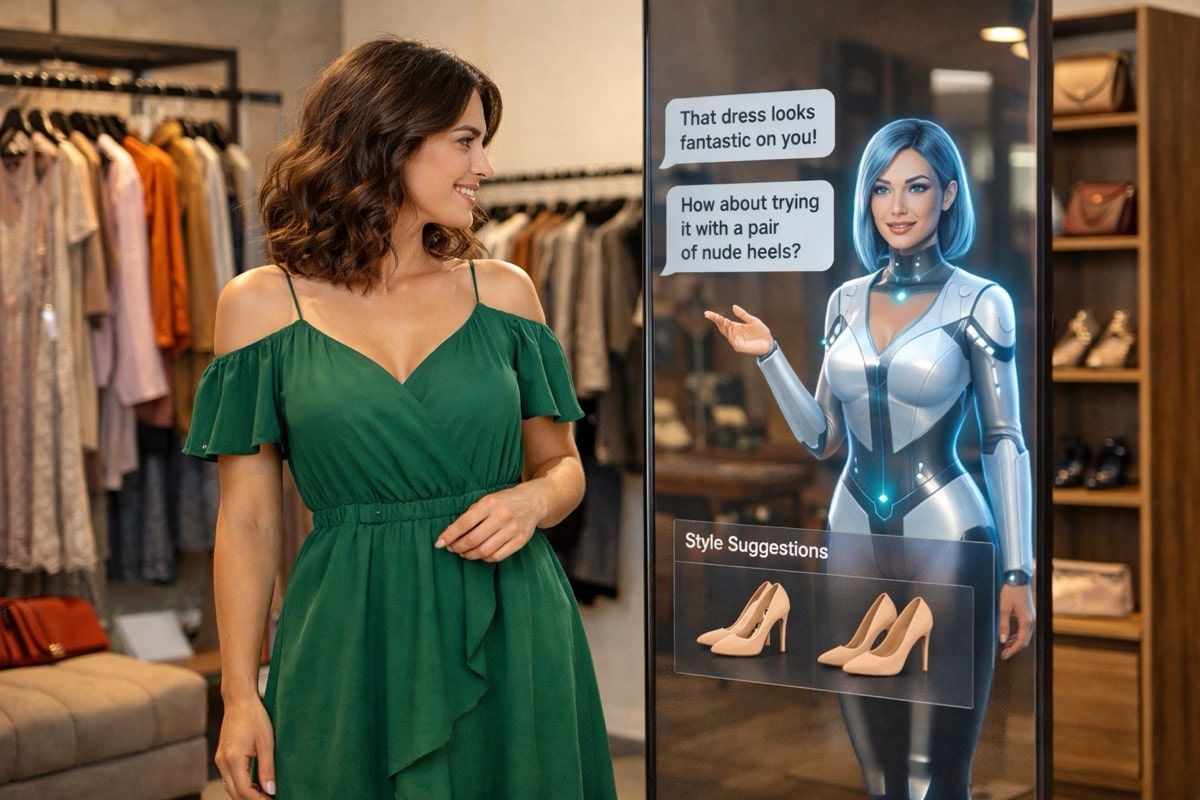
Walmart, Target, Amazon, Sephora, Klarna, eBay, and even Ralph Lauren have all introduced AI-assisted shopping features of some kind to make their customers feel more at ease while buying what’s needed. Virtual assistants help shoppers with product search, recommendations, and checkout, scan grocery lists, and navigate you through stores, compare prices, enable virtual try-ons, and do so much more.
AI-Assisted Shopping Is Really Convenient
AI tools can instantly:
-
suggest items to buy based on your preferences and past purchase behavior;
-
answer questions about the product on sale in detail;
-
help compare prices or brands without endless scrolling;
- suggest how to fit your shopping list into a limited budget.
These AI capabilities reduce the need for you to search for a chosen thing all day, visit multiple stores, or manually open numerous tabs.
Virtual Try-Ons Are Something Extraordinary
Today, instead of a Sophie’s choice between having to try on multiple clothing items or makeup testers and buying something remotely with a hope that it would suit you the way it looks on the screen, one has the added benefit of virtual try-ons enabled by AI. These tools allow a person to:
-
try on clothes with their photo or avatar;
-
preview makeup shades on their face;
-
see how furniture looks in their actual room via AR.
This might still not be a 100% fit. After all, no technology is perfect. Yet, it still helps people feel more confident before buying and can potentially reduce returns. Despite its emerging nature, 15% of German shoppers have already embraced virtual try-ons and AI-powered style assistants.
AI Can Significantly Save Time Required for Product Selection
AI algorithms look through huge e-commerce catalogs and filter them very quickly. They alleviate a great share of decision-making burden by:
-
learning your style and size;
-
removing things that clearly won’t fit your needs;
- strictly sticking to the provided budget;
-
giving a few “best matches” instead of 5,000 search results;
So instead of browsing for an hour, you may get curated shortlists designed exactly per your instructions in seconds. Today, about 40% of shoppers say AI helps them reduce browsing time.
Automated Payments Are on the Horizon
Since payment industry players are actively working on payment protocols for agentic payments and AI commerce, and instant automatic checkout for agentic shopping is already deployed in select apps and solutions, there will soon come a time when AI assistants will not only draft a preliminary shopping list but conclude the shopping journey end-to-end on behalf of the user.
What exactly could AI do?
-
auto-fill checkout details;
-
choose the best discount or promo code;
-
select the best delivery option;
- book dwelling and transport according to a travel plan;
-
automate small routine purchases with voice or gesture authorization;
- schedule regular grocery shopping and make standard orders.
This makes the whole buying process almost invisible in the background.
AI Recommendations Are Smart and Personalized
When you rely on the opinions of your friends and family to advise whether you should buy something or not, the pieces of advice are driven by their own subjective ideas and experiences. Meanwhile, AI assistants take your budget, your preferred brands, and what you like and dislike for a suggestion foundation. Many people follow the examples and recommendations given by social media influencers. At the same time, 68% of AI-assisted shoppers in the UK do not mind following the advice given by AI-generated virtual assistants, finds Statista.
If over half of the people in many regions use AI platforms or chatbot tools to search for various items online and find it a life-saving experience, what could the possible objections to this shopping mode be?
Drawbacks of AI-Assisted Shopping
While some are ready to make AI their stylist, advisor, and favourite shopping buddy in closely-controlled settings, only around 40% of consumers say they would let an AI shop for them autonomously. People have a lot of valid concerns regarding the agentic shopping:
-
55% worry about identity theft;
-
55% fear incorrect or unauthorized purchases;
-
53% are concerned about fraud;
-
51% feel they could lose control over their finances.
Here are some other potential drawbacks that virtual assistance and automation in the AI economy could bring.
Privacy Concerns
AI shopping often requires personal data, images of your body and face (for virtual try on), purchase history, private preferences, banking data, and more. Some people worry about how that data is stored and used. They have many reasons to do that, too, since there is often no clear understanding and awareness even of how our personal data are used for marketing purposes without AI involved, not to mention the inner workings of AI data training.
Risk of Over-Personalization
If AI only shows what it thinks you like, you might miss new styles or options, never find out about alternative trends and products, get trapped in the same old conformistic bubble, and stick to a narrow choice of select brands. Discovery can become faster, true, but also narrower and less exciting.
Increased Impulsive Buying
Our brain loves something easy best. Because AI makes shopping smoother and faster, it can reduce even that shopping friction that normally makes you think twice, and encourage quick purchases you regret later. We may have no statistics yet that prove that suggestion, but if reduced payment friction can serve as an illustration, one should simply see the future where uncontrolled shopping sprees are more and more common. Just take a look at BNPL. Interest-free flexible payments have been a blessing for many households that can now afford so much more, faster, and with less friction. However, for many others, these easy payments have become another debt trap that sends them spiralling down the unsustainable budgeting road.
AI Is Prone to Errors and Bias
AI systems are helpful, but not perfect. They can make honest mistakes like recommend wrong sizes, misinterpret your body shape or style, and reflect style biases from the data they were trained on. Anyone who has tested ChatGPT and similar chatbots for answering their queries has probably faced them mentioning non-existent names of books or films, fake survey results which could not be supported by any reliable source, errors in code, or something else that goes wrong. Imagine that happens to the selection of a present for your dear person or a party costume for your child’s birthday. Not the most pleasant experience, right?
Decision-Making Skills Go Obsolete
The last point is kind of philosophical, but no less relevant. As AI handles more choices for us, people may tend to rely less on their own judgment and feel less in control of decisions that shape their lives, creating a sense of dissatisfaction and uselessness. Their decision-making would become less sharp if they fully automate every shopping step, instead of using AI for informed decisions of their own as well.
Bottom Line
In the end, super convenience and over-reliance are just two extreme sides of one spectrum. The utility of AI-shopping, meanwhile, lies somewhere in the middle. It gives you unmatched speed and personalization, but also may trick a person into uncontrolled shopping and limited or even biased selection choices. After all, any object or solution may face the same dilemma and be used both for good and to one’s detriment. The main thing is that a person who relies on AI in their shopping journey should be well-aware of both pros and cons to better navigate the landscape of tech and e-commerce innovations.