Banking reality changes so fast. Today we take time to pay tribute to the major milestones on the road to mobile payments

When was the last time you visited your bank? For many people, it is hard to say. A few decades ago, the answer was simple. Withdrawing cash, paying a bill, transferring money and checking a balance often required a trip to a branch.
Today, a phone or laptop handles most of these tasks. Online banking has become part of everyday life. This article traces the main developments that made it possible.
Before the Internet: Automation Arrives
The shift began with machines, not websites. On 27 June 1967, Barclays inaugurated an automated teller machine (ATM) at its Enfield branch in north London. It is widely recognized as the first ATM in regular public service. A similar machine developed by Docutel appeared at Chemical Bank in Rockville Centre, New York, on 2 September 1969. Customers could now withdraw cash without waiting for a branch to open.
Banks were also changing behind the counter. Computers increasingly handled ledgers, account records and settlement processes. In 1973, 239 banks from 15 countries founded the Society for Worldwide Interbank Financial Telecommunication (SWIFT) to standardize secure financial messaging between institutions. The network began live operations in 1977. Retail customers did not interact with it directly, but it helped make international financial communication faster and more consistent.
The 1980s: Home Banking Experiments
The first attempts at remote banking relied on telephone lines and early videotex systems. In 1981, several large New York banks announced home banking experiments and pilot services. Customers could use dedicated terminals or modified televisions to access certain account functions. Take-up remained limited, partly because the equipment was expensive and the technology was unfamiliar.
Europe moved forward in some markets. In 1982, France introduced Minitel, a videotex network that eventually supported services including online banking. In the United Kingdom, Nottingham Building Society launched Homelink in September 1982 on a restricted basis. Developed with Bank of Scotland and British Telecom, the service expanded nationally in 1983. Customers could use a television and compatible terminal to check account information, transfer money and pay bills from home.
Telephone banking grew in parallel. In 1989, First Direct launched in the UK as a bank without traditional branches. Customers dealt with the bank by phone rather than visiting a physical location. The model demonstrated that banking services could operate without a conventional branch network.
The 1990s: The Web Changes Everything
The public internet gave banks a new channel. Unlike earlier home banking systems, websites did not require dedicated terminals or proprietary networks. In October 1994, Stanford Federal Credit Union began offering online banking services to its members. It is frequently cited among the earliest financial institutions to provide internet banking.
In May 1995, Wells Fargo launched its website-based online banking service, initially allowing customers to review account activity and statements. The same year, Security First Network Bank opened in October as the first internet-only bank in the United States. It operated without physical branches. Other established banks followed, developing websites that gradually added transfers, bill payments and additional account services.
Security remained a major concern. Early users worried about fraud, stolen passwords and the safety of financial information transmitted online. Banks responded with encrypted connections, stronger password requirements and, over time, additional identity verification. Trust developed gradually. By the end of the decade, checking balances and paying bills online had become increasingly familiar services.
Digital payments outside traditional banking also took shape. Confinity and X.com, two separate technology companies, merged in March 2000. The combined business initially operated under the X.com name before adopting PayPal in February 2001. Its email-based payment service helped demonstrate demand for convenient online money transfers.
The 2000s: Broadband and Mobile Beginnings
Faster home internet connections made online banking easier to use. Pages loaded more quickly, and customers could manage savings, loans and cards through a single website. Many banks began promoting online accounts as a convenient alternative to routine branch visits.
Mobile banking started in a more limited form. Late-1990s services used SMS and Wireless Application Protocol (WAP) to deliver account balances and transaction alerts to basic mobile phones. Features were narrow, and small screens limited what customers could do.
In 2006, USAA introduced remote check deposits using an internet connection and scanner. In 2009, it launched its mobile banking app, helping move more financial services onto smartphones. Mobile check deposit through a phone camera subsequently became an important feature of banking apps.
Real-time transfers also arrived in some markets. The UK’s Faster Payments Service launched on 27 May 2008. It allowed participating banks to process eligible domestic transfers within seconds rather than requiring customers to wait several working days.
Mobile money developed along a different path. In March 2007, M-Pesa launched in Kenya. The service allowed users to send and receive money through a mobile phone, including people without traditional bank accounts. Customers could also deposit and withdraw cash through a network of local agents. M-Pesa became an important example of how mobile technology could expand access to financial services.
The 2010s: The Smartphone Era
Apple introduced the iPhone in 2007 and opened the App Store in 2008. Banks soon began developing dedicated mobile applications. Customers could check balances, review transactions and make transfers without opening a browser. Mobile check deposit, initially developed through remote deposit services, became increasingly common as smartphone cameras improved.
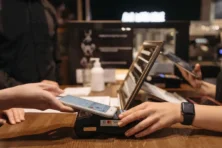
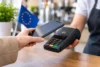
Mobile wallets expanded the idea of digital payments. Apple announced Apple Pay in September 2014, with the service becoming available in the United States in October that year. It allowed customers to pay in stores using compatible iPhones and Apple Watches instead of presenting a physical payment card. Other technology companies and financial institutions introduced similar services.
New digital-only banks also entered the market during the mid-2010s. Monzo, Revolut and N26 built their services around app-based accounts, instant transaction notifications and simplified account management. Their products placed the smartphone at the centre of the banking experience. Established banks responded by investing in their own applications and improving digital services.
Regulation also changed the landscape. The European Union adopted the revised Payment Services Directive, known as PSD2, in 2015. It entered into force in January 2016, with member states required to transpose it into national law by January 2018. The directive established a framework for authorized third-party providers to access payment-account information and initiate payments with customer consent.
The UK’s Open Banking initiative began its managed rollout on 13 January 2018. It enabled customers to authorize regulated third-party providers to access financial information held by participating banks and use it in other applications and services. This helped create opportunities for account aggregation, payment initiation and new financial management tools.
PSD2 also introduced strong customer authentication (SCA). The requirements became applicable on 14 September 2019. For many electronic payments, customers had to verify their identity using at least two independent elements from categories such as knowledge, possession and inherence. Certain exemptions applied, depending on the payment and circumstances. The aim was to strengthen security and reduce fraud.
In the United States, the bank-owned payment network Zelle launched in June 2017. It enabled customers of participating financial institutions to transfer money directly between eligible bank accounts, often within minutes.
The 2020s: Everything on the Phone
The COVID-19 pandemic accelerated existing digital banking trends. Lockdowns and restrictions reduced opportunities for branch visits, while contactless and mobile payments became more important. Banks expanded remote customer support, digital onboarding and online account management.
Opening an account increasingly became possible through a smartphone. Customers could submit identity documents, complete verification checks and access banking services without visiting a branch. Biometric authentication, including fingerprint and facial recognition, also became more common in mobile banking applications.
Instant payment infrastructure continued to expand. More countries introduced or developed national real-time payment networks, allowing individuals and businesses to transfer money between accounts within seconds. Account-to-account payments gained attention as an alternative to traditional card transactions, particularly in e-commerce and retail payments.
Open banking also developed beyond basic account access. Financial technology companies began using authorized financial data to provide budgeting tools, account aggregation, credit assessments and payment services. In some markets, open finance initiatives extended these concepts to a wider range of financial products.
Artificial intelligence entered banking applications as well. Banks increasingly used AI for customer support, fraud monitoring, transaction analysis and personalized financial recommendations. However, questions about data protection, model reliability and customer control remained important considerations.
What Comes Next
Online banking continues to evolve as financial institutions adopt new technologies and respond to changing customer expectations. AI-assisted services could make account management and financial planning more personalized. Open finance may allow customers to manage information from different financial providers through connected platforms.
Instant payments and embedded finance are also likely to influence how people interact with banking services. Payments may increasingly take place directly within shopping platforms, business software and other applications, without requiring customers to open a separate banking app.
Distributed ledger technology and digital assets could have a role in selected areas, including cross-border payments, settlement and digital identity. However, their wider adoption will depend on regulation, security, interoperability and practical demand.
The history of online banking shows a recurring pattern. Technologies that initially served a limited group of users gradually became part of everyday financial life. ATMs, telephone banking, websites and mobile applications each changed how customers accessed their money. The next stage will depend on which innovations can make banking more convenient, secure and accessible without compromising customer trust.