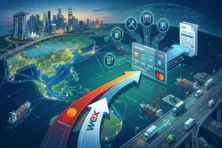
AI agents can soon pay your grocery order, your electricity bill, or your monthly subscription, without you tapping a single button. India may be about to make that real for hundreds of millions of people who use UPI.

India is preparing to let AI agents make payments on people’s behalf through its Unified Payments Interface (UPI), the country’s massive mobile payment system, according to three sources cited by Reuters. The new framework to make that happen, called the Unified Agent Protocol, could be unveiled as soon as next week at the Global Fintech Fest in Mumbai.
The scale of the potential innovation is impressive because UPI is not a small payment industry experiment. In fact, the International Monetary Fund has named it the world’s largest retail fast-payment system by transaction volume, handling billions of transactions every month. If agent-led payments launch here, they find themselves at a scale no other country’s payment network can currently match.
UPI is a government-backed system that lets people in India send and receive money instantly between bank accounts using just a mobile phone, without needing a credit card or long account numbers. It took the National Payments Corporation of India (NPCI) about four years to build and launch. Since its official debut in 2016, UPI has become the default way most Indians pay for everything from taxi rides to street food. To even imagine an emerging concept of agentic payments landing within a network used by over 500 million people is challenging at this point of AI tech deployment.
Agentic payments is a term the fintech industry uses for a simple idea: instead of a person clicking “buy” every time, an AI assistant does it for them, within limits the person sets in advance. Think of it like giving a trusted assistant a company credit card with a spending cap, except the assistant is software. According to reporting from Business Standard, NPCI is designing the Unified Agent Protocol to let these AI agents be registered, verified, and authorized within UPI’s existing trust system, so banks and merchants can confirm an agent is legitimate before it spends a user’s money.
Western companies including Visa, Mastercard, Adyen, and Airwallex are also racing to build tools that let AI agents shop and pay. But those efforts run through private card networks and company-built platforms. India’s approach is notable because it would run through UPI, a public, interoperable payment rail that already connects nearly every bank and payment app in the country. That means, if approved, agent-led payments in India could work the same way across every app and bank instead of being locked to one company’s technology, a structural difference from how the West is building the same idea.
NPCI has not commented publicly on the media reporting. If the protocol is announced at the Global Fintech Fest as expected, the PaySpace Magazine Global team believes the initial rollout is likely to focus on small, routine purchases like groceries rather than large transactions, giving both regulators and users a lower-risk way to test how much trust people are willing to place in AI to spend their money.