New research from Sinch AB (publ) shows consumer attitudes toward artificial intelligence (AI) are divided ahead of Black Friday and holiday shopping season. Concerns about AI persist, especially when it comes to privacy, but confidence rises sharply when the technology is applied to specific, practical tasks.
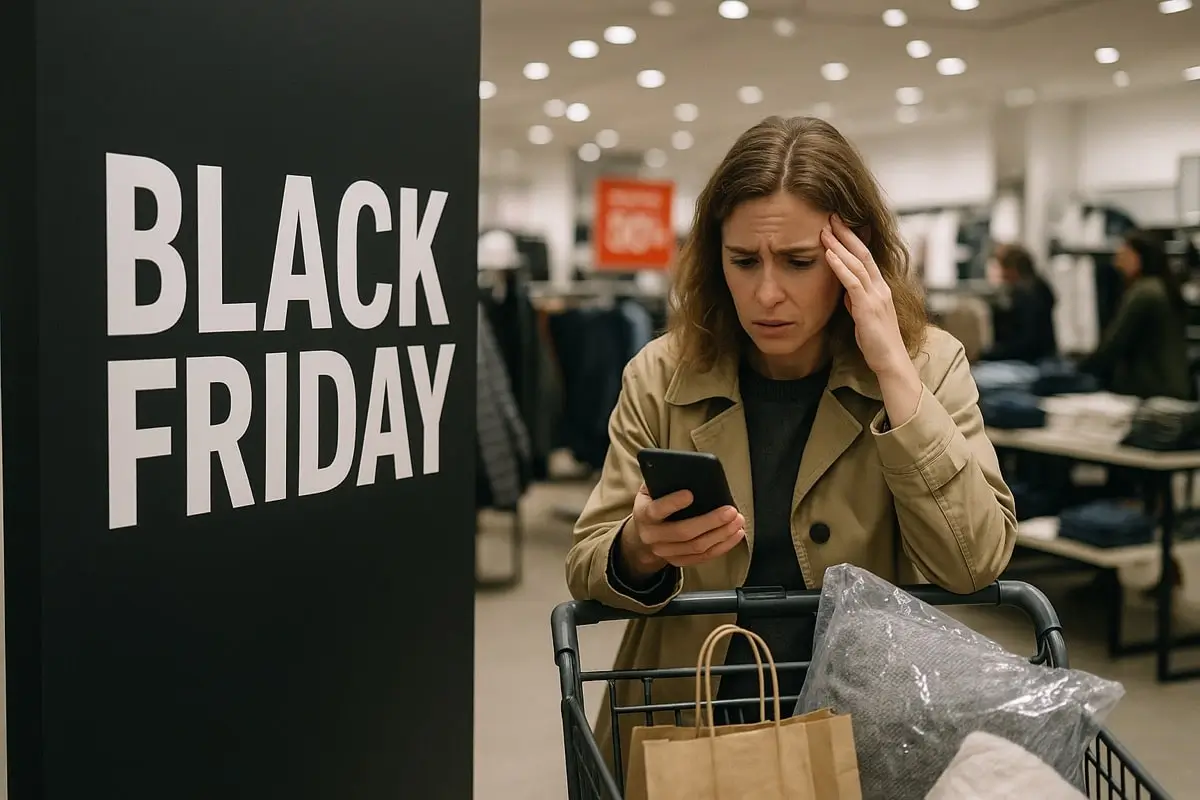
The survey polled 2,501 consumers across eight markets. Since the research has been done several times now, one can already trace some dynamics. Thus, people’s confidence in AI utility has gotten slightly lower. Only 43% of respondents believe AI will make their holiday shopping easier this year. That’s a decline from 48% in 2025. Privacy remains the top reservation about AI for the second consecutive year, though. This factor is cited by 43% of shoppers. Just 7% say they have no concerns about AI at all.
However, that hesitation fades significantly once AI is supposed to perform a defined task. Confidence reaches 81% for AI tools ability to manage order tracking and shipping updates, and 74% for pre-purchase questions. It drops, however, to 66% for account changes and 62% for payment or billing changes, as these tasks are dealing with more sensitive data.
Shoppers in general remain open to AI interaction per se. Among all 2,501 respondents, only one said they would never want to interact with an AI chatbot under any circumstance. The most common use cases cited were order tracking (48%), researching a product before purchase (47%), and customer service (36%).
“AI for AI’s sake doesn’t land with shoppers, but AI attached to a job they actually want done does. Order tracking and pre-purchase questions are the easy wins, where confidence is already high. Payment, billing and account changes are different: shoppers still want a human close by, and brands need to make that handoff easy and obvious.”
Robert Gerstmann, Co-Founder of Sinch
Trust levels display similar trends when AI moves to advice-giving. Slightly more than half (53%) of shoppers say they trust a real person’s product recommendation over AI. Though the prevalence hangs by a thread, since 47% trust AI just as much or more.
At the same time, the trust is not universal. As another recent research by PSE Consulting showed, just 14% of consumers simply follow an AI assistant’s top recommendation. Others pay attention to brand name, double-check customer reviews and price before proceeding to purchase.
On voice interactions, 48% trust a human phone agent over an AI voice agent, compared with 37% who trust both equally or favor the AI.
Notably, attitudes vary widely by market. The United States, home to most popular AI projects of the world is paradoxically also the most AI-skeptical market in the survey. Only 26% of shoppers think AI will make their holiday shopping easier, while 43% say it will not. Brazil, on the contrary, is prevalently optimistic about AI commerce use. There, 78% of respondents believe AI will improve their shopping experience this year.
The survey was conducted online by Sinch in 2026 among 2,501 consumers in the United States (698), Australia (351), Brazil (350), the United Kingdom (252), France (225), Germany (225), Mexico (200), and Spain (200). India and Canada, included in the 2025 sample, were not part of the 2026 study.