As tech giants pour hundreds of billions into AI infrastructure and executives paint visions of transformation, a new wave of research reveals that most Americans remain unconvinced in their scepticism and many are quietly opting out.
Something unusual is unfolding in the world of technology. The companies building artificial intelligence are spending at a scale almost without precedent, hundreds of billions of dollars flowing into data centers, chips, and research, yet the public they aim to serve remains stubbornly, perhaps wisely, unmoved.
Nvidia’s Jensen Huang and OpenAI’s Sam Altman have both voiced frustration at what they see as lagging enthusiasm. Altman, speaking at the Cisco AI Summit, expressed surprise that enterprises weren’t moving faster given how much automation was already achievable. Huang went further, calling “doomer” narratives and requests for regulation “extremely hurtful.”
A landmark survey by the Pew Research Center of 5,000 Americans illuminates exactly why that gap persists. A majority of respondents, namely 57 percent, believe AI poses big or very big risks to society. Only 25% see proportionate benefits.
The concern topping the list is not job loss, as many industry observers assume. It is the erosion of human abilities and connections — a slower, quieter threat that people sense before they can fully articulate. The fear that relying on AI will atrophy the very skills that make us human resonates across age groups and demographics.
The creativity question is striking: 53% of Pew respondents believe expanded AI use will make people worse at thinking creatively. Another 40 percent worry it will impair decision-making, and 38% expect problem-solving skills to gradually fade, much like a muscle that weakens when a crutch is used too long.
On the social front, half of all respondents believe AI will worsen people’s ability to form meaningful human relationships, even as millions turn to AI chatbots for companionship — a development that underscores the depth and intimacy of the disconnect.
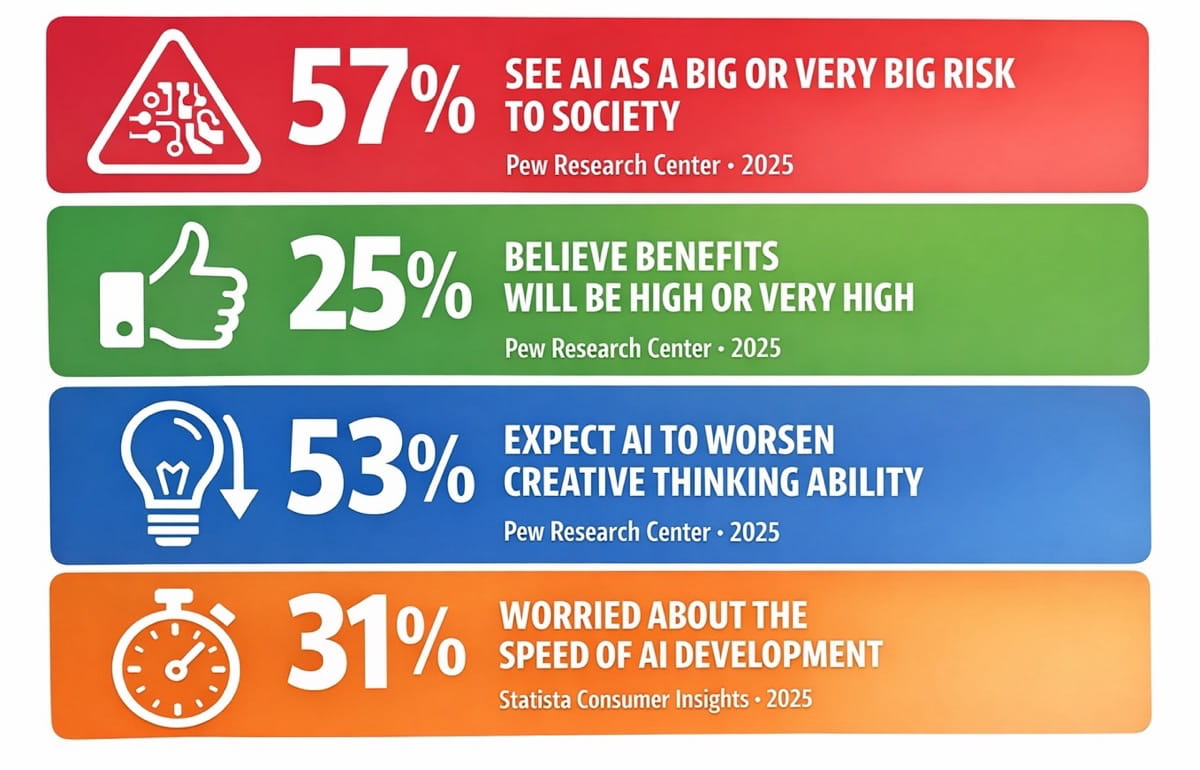
A recent Statista Consumer Insights survey adds behavioral texture to the Pew attitudinal data. Nearly a third of U.S. respondents (31%) said they were worried specifically about the pace of AI’s development. Twenty-six percent said they were actively avoiding AI wherever possible. A further 18 percent use it but reported feeling conflicted, and 28% said they simply don’t believe the hype.
That last figure deserves particular attention. The industry narrative assumes that skepticism stems from ignorance or fear, that once people understand what AI can do, they will embrace it. But skepticism rooted in disbelief in the hype is not the same as fear. It is a judgment call. And 28 percent of Americans appear to have made it.
On the optimistic end, 28 percent described themselves as excited about AI’s possibilities, and 14 percent identified as early adopters eager to try new features. Those who rate AI’s potential benefits as high tend to focus on efficiency gains: the elimination of tedious, repetitive tasks, and, more ambitiously, the prospect of accelerating human capability in science and health care.
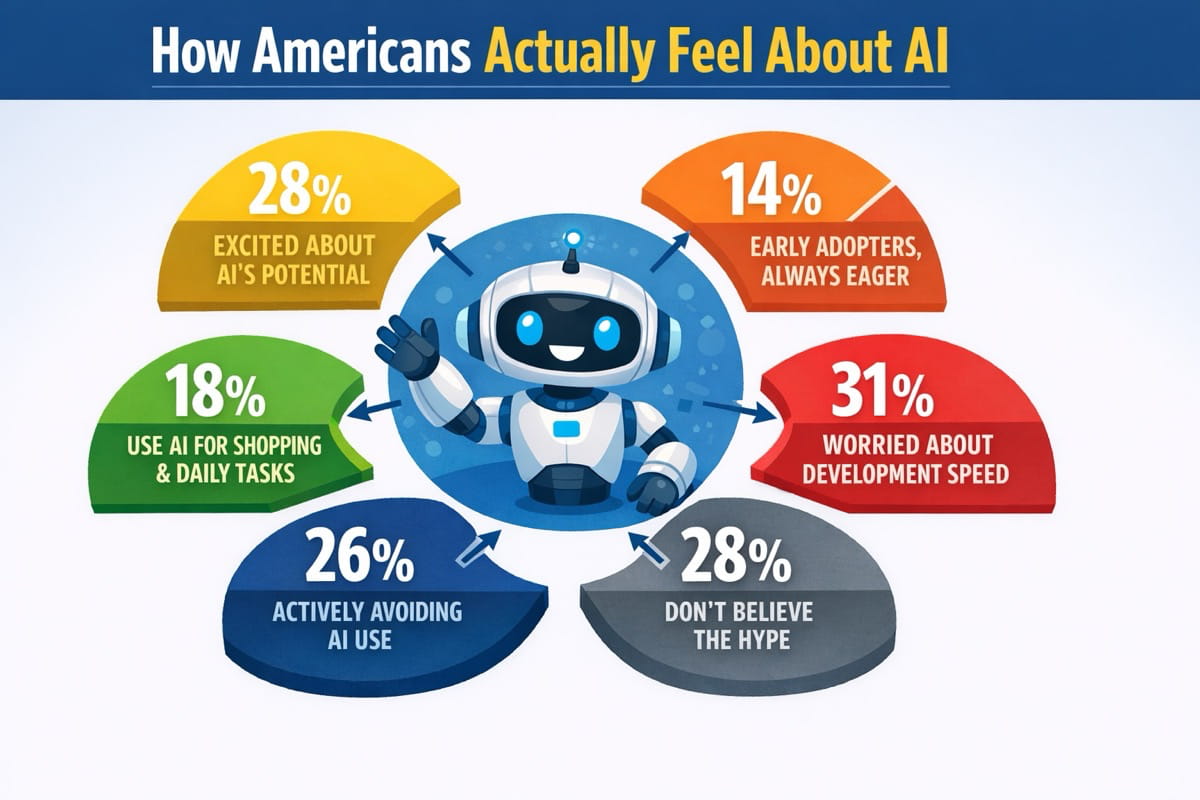
The honest reading of all this data is not a nation polarized into true believers and fearful luddites, but one cautiously threading a middle course. Most Americans are capable of holding two ideas at once: that AI offers real benefits, and that its risks deserve genuine, ongoing scrutiny. That blend of excitement and skepticism may be less satisfying to industry boosters, but it is probably the most rational posture available to people navigating a genuinely uncertain technological shift at a pace they did not choose.