In a world where AI can already write emails, summarize reports, code apps, and process invoices, the real question isn’t “Will AI replace my job?”. It’s “Which parts of my job are worth keeping human?”
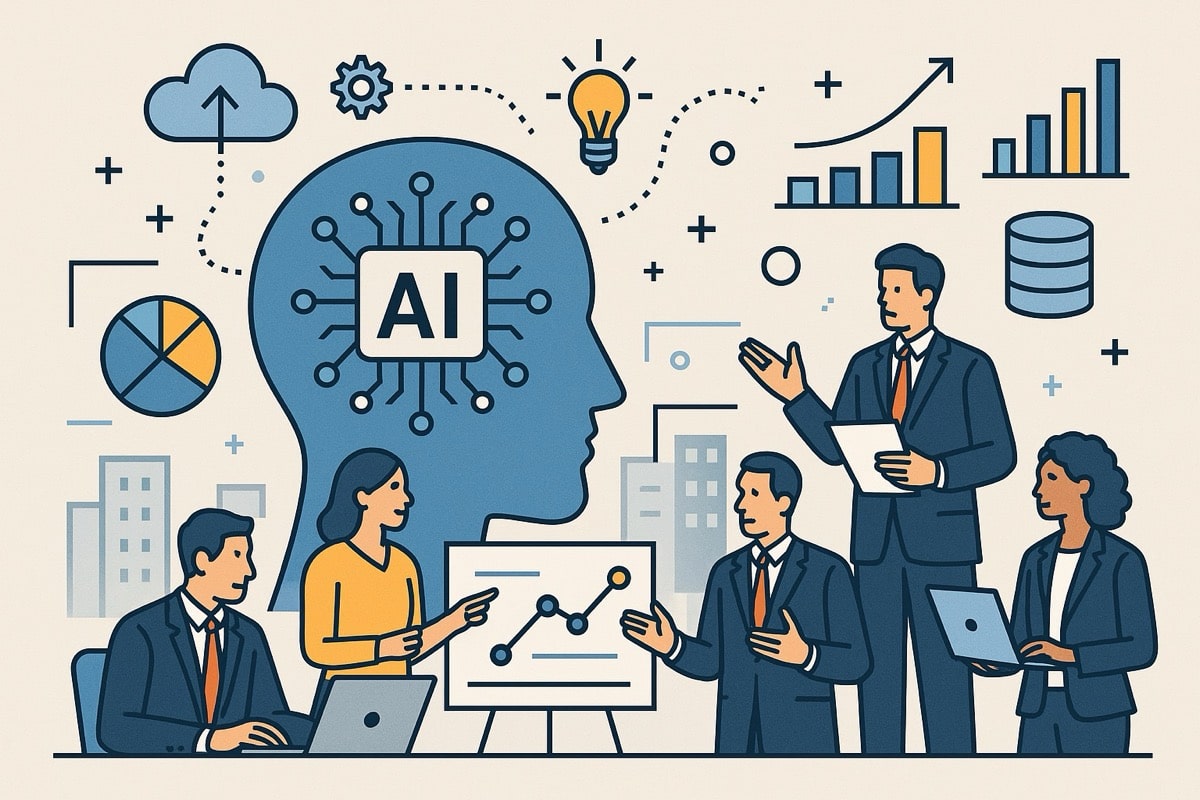
The latest McKinsey Global Institute report, Agents, Robots, and Us: Skill Partnerships in the Age of AI, takes a refreshingly practical look at the future of work. Its message is surprisingly optimistic: while AI and automation will transform a massive share of work hours, they won’t eliminate the need for people. Instead, the workplace will shift toward a human-plus-machine partnership, where certain skills grow dramatically in value while others fade into the background.
Let’s break down what the near-future workplace will actually look like and which skills are worth building now.
The Human Skills That Become More Important, Not Less
One of the clearest findings in the report is that AI fluency — the ability to understand, use, and guide AI tools, will become a basic requirement for almost every job. This doesn’t mean everyone needs to become a programmer. Rather, workers will need to be comfortable asking AI the right questions, interpreting what it gives back, spotting when something looks wrong, and combining that output with real-world judgment. AI fluency is shaping up to be the new “computer literacy”: essential, expected, and woven into everyday work.
At the same time, the demand for deeply human skills is rising. As automated systems take on more routine execution work, activities involving communication, collaboration, empathy, negotiation, and creative problem-solving grow even more valuable. Work happens in teams, with clients, under pressure, amid miscommunications and shifting expectations and these are contexts AI still struggles to navigate. The ability to explain, influence, mediate, and connect becomes a defining asset in an automated workplace.
Another major shift will be toward roles requiring judgment and decision-making. As AI handles more of the preparation and analysis, humans will be increasingly responsible for defining direction, evaluating AI-generated insights, making tradeoffs, and staying accountable for final decisions. Even the most advanced AI systems can’t replace the nuance of human responsibility, especially in areas involving ethics, risk, and interpersonal consequences.
The report also highlights growing need for people who can oversee and quality-check AI systems. Automation increases efficiency, but it also requires supervision. Someone has to confirm that an AI agent executed a process correctly, validate its outputs, and handle the complex or unusual cases the system can’t resolve. In other words, the more AI we introduce, the more important this human oversight layer becomes.
Finally, McKinsey points to the emergence of hybrid roles that combine domain expertise with digital capability — people in finance who interpret AI-driven insights, customer-facing professionals who use AI to personalize interactions, or operations specialists overseeing automated workflows. These jobs don’t require deep technical training but do require comfort working alongside digital tools and interpreting their results.
What AI Will Actually Replace
While many jobs will change, it’s not because AI will suddenly do everything. What it will do is take over the types of tasks it’s already good at: structured, repetitive, rules-based work.
Routine cognitive tasks, the kind that involve entering data, compiling information, drafting standard documents, or following predictable steps, are some of the most automatable. AI agents can already execute many of these faster and more accurately than people, and their capabilities are growing quickly.
Standardized finance and administrative workflows fall into a similar category. Tasks like basic bookkeeping, invoicing, reconciliation checks, or compliance routines are highly structured, making them ideal candidates for automation, with humans shifting into supervisory, exception-handling roles.
In areas like manufacturing, warehousing, and logistics, robots will continue absorbing repetitive physical work where automation is feasible. And across industries, any multi-step workflow that follows a consistent path: onboarding forms, scheduling sequences, document collection cycles, etc. is likely to shift toward AI orchestration.
McKinsey estimates that up to 57% of current work hours could theoretically be automated using today’s technology. But crucially, the report emphasizes that this doesn’t translate to 57% of jobs disappearing. What it means is that most roles will be reconfigured, with AI executing certain components while humans take on higher-level responsibilities — guiding, interpreting, coaching, creating, and connecting.
What This Means for Workers Now
The future of work isn’t about competing with AI. It’s about learning to work with it, and understanding where human strengths shine. People who build digital confidence, sharpen their communication and problem-solving skills, and remain adaptable will find themselves well-equipped for whatever comes next. Those in highly routine jobs may need to pivot, but even there, the transition is less about abandoning a field and more about shifting into roles that oversee, interpret, or enhance the automated systems taking over execution work.
The report’s takeaway is reassuring: AI is not the end of human work. It’s the end of the most repetitive parts of it. AI-powered agents and robots could unlock $2.9 trillion in annual economic value in the US by 2030, but only if people, workflows, and organizations learn to work with them, not around them. The workplace ahead will rely on human judgment, creativity, empathy, leadership, and resilience, supported, not overshadowed, by machines.
If anything, the rise of agents and robots gives people the chance to focus on what humans do best: think, imagine, connect, decide and leave the tedious tasks behind.