As the 2026 Iran war stock market narrative unfolds, global energy markets have been roiled by escalating conflict, strategic military strikes, and heightened risk surrounding critical energy infrastructure. Central to the global energy story is Kharg Island, a Persian Gulf oil export hub that handles up to 90% of Iran’s crude exports. A U.S. airstrike on the island’s military assets and renewed threats to oil infrastructure have pushed energy prices sharply higher this week, with knock‑on effects on consumer fuel costs and stock markets worldwide.

Image created via Sora
Kharg Island Strike and Strategic Shifts
On March 13, U.S. forces conducted a precision bombing raid on Kharg Island, targeting more than 90 Iranian military sites, including naval mine and missile storage. The strikes deliberately spared the island’s oil and gas export facilities, a move designed to avoid an immediate global oil shock but signal Washington’s strategic leverage. Iranian officials confirmed explosions and warned that any attack on oil infrastructure would trigger severe retaliation.
The strike’s timing and messaging have driven market anxiety. Even without direct damage to export facilities, the symbolic threat of such an attack or of a future U.S. attempt to seize the island outright has been enough to lift crude benchmarks. Some political strategists and analysts have discussed assembling a “Hormuz coalition” — a multinational force to secure the Strait of Hormuz and ensure the safe passage of energy tankers.
Although reports suggest pressure on regional and global powers, including China and NATO allies, to participate in protecting the crucial waterway, at present there are no ongoing efforts to actually create such an alliance. On the contrary, President Donald Trump said Monday that some U.S. allies are not willing to join a coalition to protect tankers in the Strait of Hormuz.
The strait normally channels about 20 % of the world’s daily oil supply, and its partial closure has been one of the most disruptive energy events since the 1970s. Recent estimates suggest the closure and conflict have cut millions of barrels per day from global trade, sending oil prices past $100 per barrel and fueling inflation fears.
Energy Markets: Oil Spikes, Gas Prices Surge
Oil benchmarks have surged on the back of these geopolitical risks. Brent and WTI crude have climbed more than 40 % above pre‑conflict levels, driven by the closure of key routes and supply concerns. Diesel and gasoline prices are climbing sharply, with U.S. fuel often moving in tandem with global crude trends. The ripple effect is being felt at the pump, with regions experiencing significant price increases at retail stations, even as wholesalers struggle to balance supply and demand.
This spike in energy costs is impacting Costco gas prices and consumer behavior. Traditionally known for below‑market fuel pricing, Costco stations are now tied to broader market movements, meaning households are paying more for every gallon at the pump — a tangible reflection of geopolitical risk passed through to everyday life.
Stock Market Reaction: Volatility and Sector Rotation
Equities have reacted in typically risk‑sensitive ways. Initially, major indices experienced bouts of volatility as investors digested rising energy prices and heightened uncertainty. Asian markets, for instance, saw notable declines amid concerns that conflict would weigh on growth and inflation. At the same time, within a few days, markets stabilized despite oil staying high, with major indexes starting their gradual rebound on March 13.
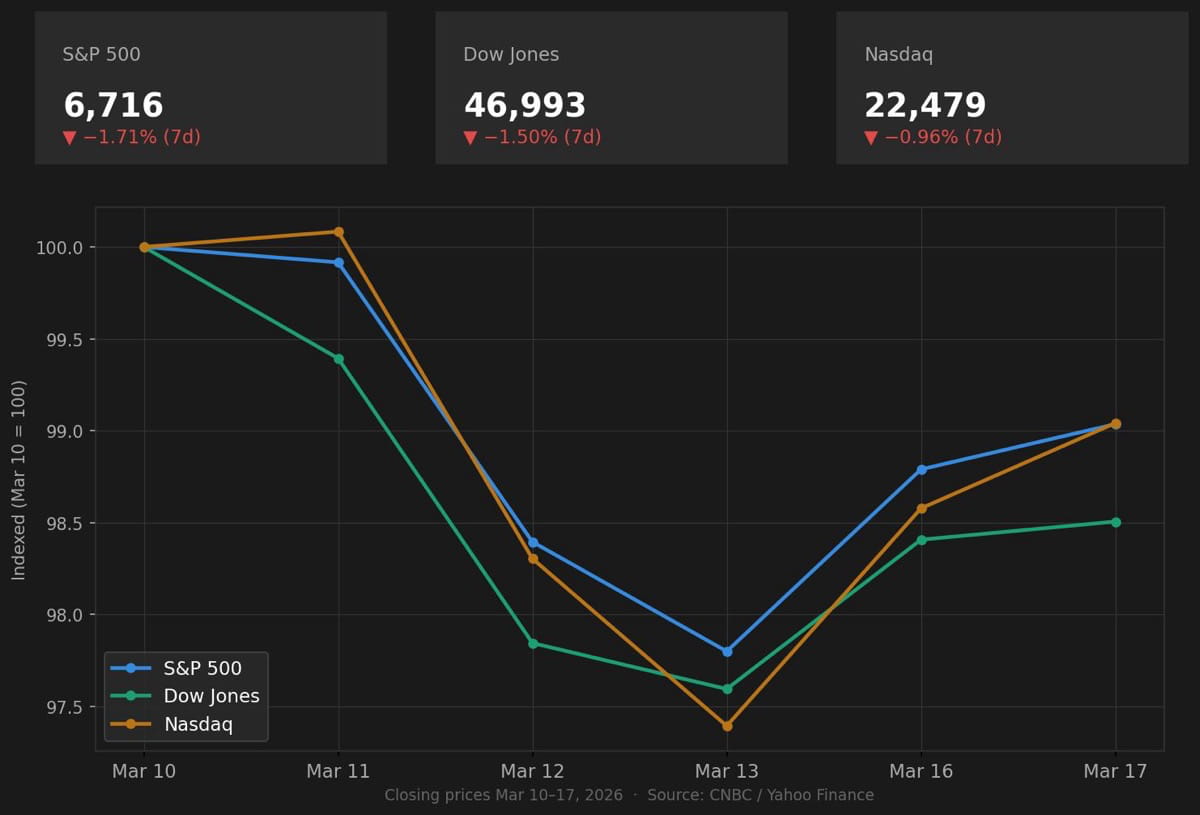
With stock market, the picture is complex. Energy sector stocks, including major integrated oil companies, have outperformed broader markets as higher crude prices boost profit margins. Meanwhile, other sectors, like travel, airlines, and consumer discretionary, have lagged, pressured by rising fuel costs and growing recession risks tied to inflation and disrupted supply chains. Retailers like Costco, though primarily a consumer play, can see indirect effects as higher energy costs squeeze consumer wallets and influence spending patterns.
Market commentators also note a rotation into traditional “safe havens,” such as gold and defense stocks, as risk appetite diminishes and geopolitical risk premiums climb. Overall, the Iran war stock market narrative has underscored how deeply global equities remain linked to energy market dynamics.
Future Risks and Scenarios
While the conflict remains fluid, analysts outline several potential risk scenarios:
- Worsening supply disruptions: If attacks extend to oil export facilities on Kharg Island or elsewhere in the region, global crude prices could spike further, potentially reaching unprecedented levels.
- Prolonged Strait of Hormuz closure: Continued blockage of the strait could tighten energy supplies for extended periods, further pressuring inflation and economic growth globally.
- Coalition pressure and diplomatic shifts: The formation of a protective coalition for Hormuz might stabilize shipping lanes but also deepen military entanglement.
Today, markets are pricing not just current conditions but the probability of escalation as well, making energy prices exceptionally sensitive to political developments.
Conclusion
The evolving conflict in the Middle East, marked by targeted strikes on Kharg Island, strategic threats to critical infrastructure, and talks of a Hormuz coalition, underscores how geopolitical risk drives both energy markets and global equities. With crude prices elevated and Costco gas prices catching up to wholesale benchmarks, consumers and investors alike continue to feel the impact of instability far from the Persian Gulf. Market watchers caution that as long as uncertainty persists, energy markets will remain volatile and intertwined with broader economic forecasts.