The race to win stablecoins is aimed at consumers. The customer that matters most is a machine.
By Gracy Chen, CEO of Bitget
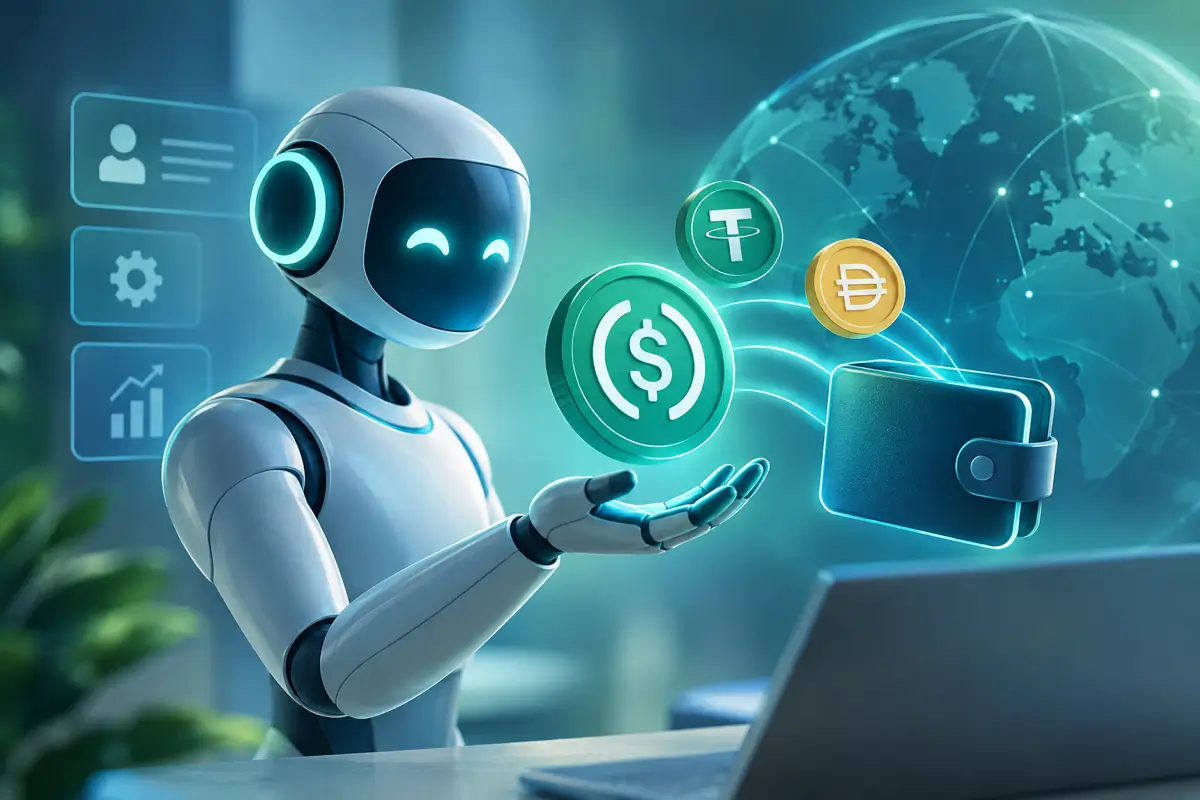
Now that stablecoins are legal and regulated in the US, the race to win them has begun in earnest. Banks, card networks and fintechs are pitching the same thing: a faster, cheaper digital dollar for people. Better remittances, instant payouts, a slicker checkout. It is a real market, and I understand why everyone is chasing it. But I think it misses who will turn out to be the biggest user of stablecoins, and it is not a person. Consider what a stablecoin actually is: money that is instant, programmable, borderless, and available every hour of every day. For most people, that is a modest upgrade on a bank transfer they can already make. For a piece of software, it is the difference between being able to transact and not.
An AI agent cannot open a bank account. It cannot pass a branch’s identity check, hold a debit card, or wait for a payment network that keeps business hours. What it can do is hold and send a stablecoin, in seconds, without asking anyone to open the doors. Stablecoins are the first form of money that was built for machines rather than adapted for them, and that is beginning to matter, because software is starting to spend.
This is no longer theoretical. Agents are already booking, buying, and paying on their owners’ behalf, and the largest payment companies have noticed. Visa and Mastercard are competing over how an AI agent should pay, and a new class of stablecoin-native payment rails has grown up specifically so that agents can settle with one another directly. When the incumbents are fighting over the machine customer, the machine customer is real.
We see the same shift on the trading side of our business. More than half of our users already lean on AI tools, and a growing share of activity on our platform is initiated by agents that place and settle trades in stablecoins around the clock. An agent does not care which brand of dollar it holds. It cares that the money clears instantly, works everywhere, and never closes. Those are properties a stablecoin has and a bank account does not.
That has a consequence the consumer race tends to overlook. The stablecoin that wins will probably not be the one with the best app or the biggest marketing budget. It will be the one that agents standardize on, because it settles fastest and reaches furthest. The decision-maker is a machine optimizing for cost and speed. Distribution to people may matter far less than distribution to software.
None of this removes the hard questions, and I would be wary of anyone who says it does. Money that moves at machine speed, with no human in the loop, needs guardrails: spending limits an agent cannot exceed, a way to give an agent a verifiable identity, and a clear answer to who is liable when an agent gets it wrong. Those are reasons to build this carefully, not reasons to assume it will not be built. The demand is already forming, and it will move to whatever rails let it act.
So here is the prediction I am willing to put my name to. Within a few years, I expect more stablecoin transactions to be started by software than by people. The rules the US has just written to protect consumers will end up underpinning an economy of machines, and the dollar’s most important users may not be human at all. We are building for that world now, because the customer we are really designing for has already arrived, and it does not keep office hours.