What is debt collection software?
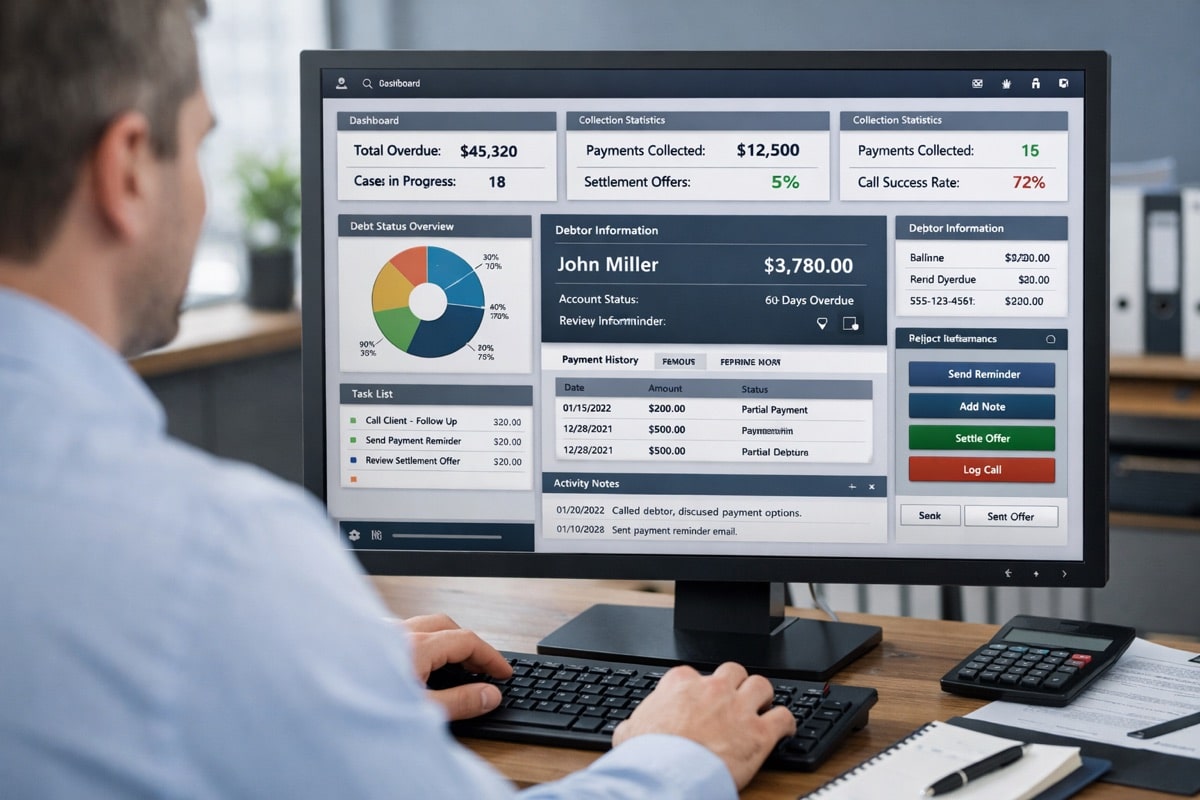
Debt collection software helps businesses manage and recover unpaid invoices in a structured and repeatable way. It brings overdue receivables into one place, supports consistent follow up and gives finance teams visibility into what is outstanding and what actions need to happen next.
As companies grow, collecting payments manually becomes harder. More customers, more invoices and more edge cases make it easy for follow ups to slip through the cracks. Debt collection software helps reduce that risk by introducing automation, prioritization and shared workflows so teams can stay on top of collections while maintaining professional and transparent communication with customers.
Why businesses need debt collection software
Late payments directly impact cash flow and forecasting. Relying on inbox reminders or spreadsheets makes it difficult to scale collections efforts or focus on the accounts that matter most.
Using dedicated a debt collection software allows businesses to:
- Improve payment timelines and reduce DSO
- Create a consistent and professional collections process
- Prioritize effort based on impact
- Gain better visibility into cash flow risk
The result is more predictable collections and less manual effort for finance teams.
Top debt collection software for 2026
1. Upflow
Upflow is a modern debt collection and accounts receivable platform built to help finance teams stay organized, collect faster and build stronger customer relationships. It brings together visibility, collaboration and automation so collections become a structured process rather than a reactive task.
Upflow gives teams real-time insight into outstanding invoices and payment behavior while making it easy to coordinate follow ups internally and externally. By connecting directly with ERP and accounting systems, it turns receivables into a more proactive and measurable part of the finance workflow.
Key features
- Automated invoice reminders with customizable rules and messaging
- Real-time visibility into receivables, DSO and cash collection performance
- Branded customer payment portal with multiple payment methods, autopay and promise-to-pay options
- Smart cash application to help match payments to invoices and reduce manual work
- Internal collaboration features to assign tasks and track follow ups
- Seamless integrations with ERP and accounting tools like NetSuite, QuickBooks, Xero and many more.
2. NetSuite
NetSuite includes collections functionality as part of its broader ERP offering. Through dunning letters and AR workflows, businesses can automate reminders for overdue invoices while keeping everything within their core financial system.
This might make NetSuite a practical option for organizations who need a basic setup and are already using it as their core ERP. Collections are well integrated but tend to be more structured and accounting driven than flexible or workflow focused.
Key features
- Dunning letters and automated invoice reminders
- Integrated AR and accounting data
- Centralized financial reporting
- ERP-native collections setup
3. QuickBooks
QuickBooks provides basic debt collection capabilities through automated invoice reminders and overdue invoice tracking. It is commonly used by small businesses that want a simple way to follow up on unpaid invoices without adding new tools.
While effective for straightforward use cases, its collections features are best suited for early stage or low-volume environments.
Key features
- Automated email reminders for overdue invoices
- Overdue invoice tracking
- Simple setup within accounting workflows
- Designed for small teams
4. HighRadius
HighRadius is an enterprise-focused platform designed to support large scale accounts receivable and collections operations. It offers extensive automation, reporting and integration capabilities for organizations with complex requirements.
The platform is typically used by large enterprises with established finance processes and dedicated resources. Implementation and setup can be more involved compared to lighter, more flexible tools.
Key features
- Advanced collections automation
- Detailed reporting and analytics
- Deep ERP integrations
- Built for large, complex finance organizations
5. Collect!
Collect! is a traditional debt collection software commonly used by agencies and organizations managing formal recovery processes. It focuses on case management, compliance and structured collections workflows.
It is a solid option for teams running classic collections operations where regulatory requirements and detailed tracking are key priorities.
Key features
- Case and account management
- Compliance-focused workflows
- Customizable collection processes
- Reporting and audit tools
Conclusion
Debt collection software plays an important role in maintaining healthy cash flow and scaling finance operations. While many platforms offer collections capabilities, they differ significantly in flexibility, usability and focus.
Based on our research, Upflow offers the most balanced solution for modern businesses by combining automation, visibility and collaboration in a way that fits how finance teams actually work. Upflow also integrates seamlessly with tools like NetSuite and QuickBooks mentioned above, giving teams the best of both worlds: a dedicated debt collection platform alongside their existing ERP or accounting system.