Investing today is full of completely distinct choices: stocks, ETFs, bonds, real estate, crypto, and more are available even to market amateurs. But which products are actually trending right now? Recent surveys and market research give us clear answers. Here’s a data-driven overview of what investors are choosing in 2026 and why.

Stocks Rank as The Global Favorite
Stocks remain the most widely held investment product worldwide. According to a Statista survey across multiple countries, stocks or equity-linked products are held by a large share of investors in the U.S., India, Germany, Brazil, and the U.K., even despite all the new investment options out there. Mutual funds and ETFs that invest in stocks also contribute to this popularity.
Stocks offer long-term growth potential and remain a core part of most portfolios. This popularity reflects the long-term appeal of owning a piece of companies as a way to grow wealth over time, whether you live in a developed or emerging economy.
ETFs: The Fastest-Growing Trend
ETFs (exchange-traded funds) are booming:
-
Over 24 million U.S. adults, which is about 23% of local investors, now own ETFs, according to BlackRock’s People & Money survey.
-
U.S. ETF assets reached $12 trillion in 2025, more than doubling since 2020.
-
Globally, ETFs hold $14.7 trillion, with nearly $1.9 trillion in new inflows coming in 2024 alone.
Why investors love ETFs? Diversification is key, low costs are additional benefit, and the flexibility to trade them like stocks finishes this beautiful picture.
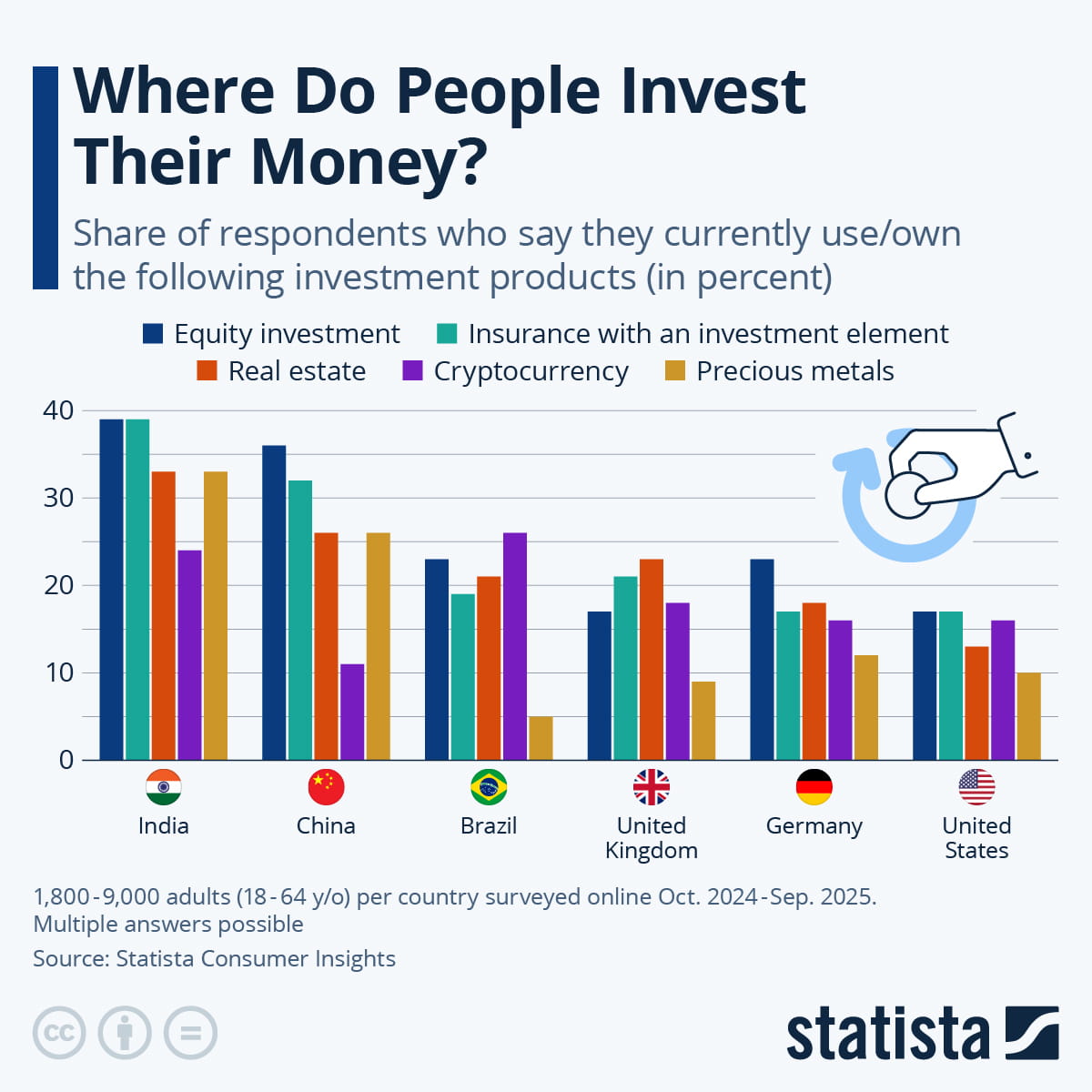
Image source: Statista
Mutual Funds Awareness Is Rising
In India, surveys show something notable. Over half (53%) of households are aware of mutual funds and ETFs. Furthermore, these investment products are displaying the highest awareness among other existing market entry methods. However, only 9.5% of Indian citizens actually invest in stocks, securities or mutual funds. Why that happens?
Awareness is growing faster than participation, highlighting the need for accessible education and tools for new investors. There is progress through regulatory efforts, nationwide quizzes and events, community and workplace programmes, etc. but gaps remain, particularly in terms of reaching rural populations, low‑income communities, and those with limited digital access.
Crypto-Linked Products Are Heading to Mainstream Adoption
Crypto is moving beyond niche trading today. Although institutional investors are still contributing to the large bulk of crypto purchases, individuals are quickly catching up, especially with the growing pool of crypto-related investment products available through popular investment apps.
For instance, crypto ETFs let investors gain exposure while limiting risk compared to buying individual coins. Per earlier surveys, 45% of U.S. investors planned to include crypto ETFs in their portfolios in 2025.
The crypto investing trend is supported mainly by younger investors, while regulators globally are driving the adoption of regulated crypto products. Thailand is the latest known country exploring the crypto-linked ETF rules, while Canada, Brazil, U.S., Australia, Hong Kong, and some European countries have already established regulated markets for this product type.
Even Morgan Stanley’s latest report advises diversifying investment portfolios with up to 4% share of reputable cryptocurrencies.

Bonds, Real Estate & Precious Metals Remain The Steady Core
Traditional investments continue to play an important role in many portfolios, even as ETFs and stocks gain popularity. Bonds and insurance‑linked products are commonly held in a range of markets and often make up a significant part of diversified portfolios, with some institutional models suggesting around 15–17 % allocations to bonds in balanced strategies.
Real estate remains a favorite long‑term choice, and in the United States, about 37% of people cite it as the best long‑term investment, ahead of other assets.
Precious metals like gold are especially popular in emerging markets, where 26–33% of respondents report using them as an investment in a global survey. The U.S. does not fall far behind, as 23 % of respondents in a recent Gallup poll also selected gold as a top long‑term investment. These traditional assets matter because they can provide stability and diversification, helping portfolios weather market volatility while newer products like ETFs and equities grow in use.
Key Takeaways and Next Steps for Investors
Investing wisely today means diversifying your portfolio, with ETFs and multi-asset funds helping spread risk while stocks remain a central foundation for long-term growth. Interest in crypto is rising, but most investors try sticking to regulated products as it helps manage volatility rather than pursuing every short-lived meme coin.
Investment product awareness alone isn’t enough though, education matters, especially in emerging markets where participation lags behind knowledge. To act on these trends, start by learning the basics of each product, begin with small, diversified positions, and use reliable tools to track and manage your investments. Following this data-driven approach will help you build a portfolio that aligns with your goals and risk tolerance while staying on top of today’s most popular investment products.