In a blockchain industry largely content to defer hard problems until they become crises, Circle is doing something unusual: solving one before it arrives.
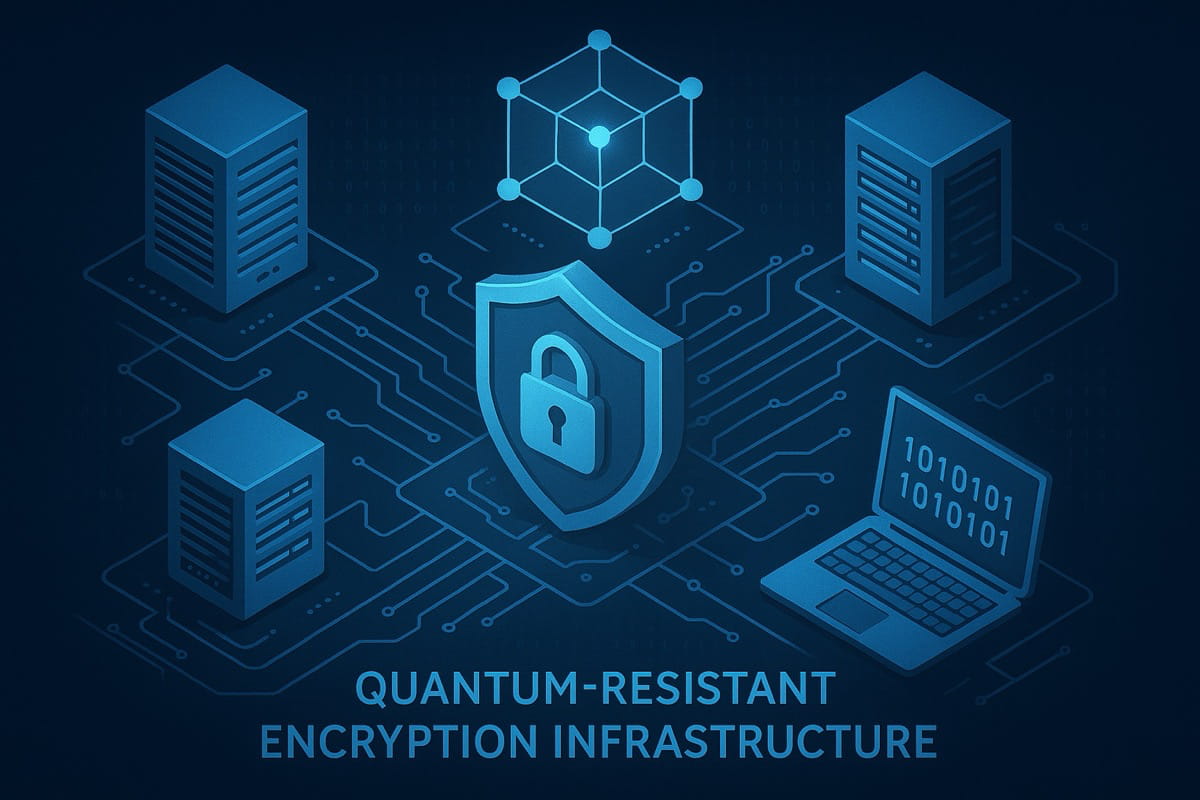
On April 2, the company published a detailed quantum-resistant roadmap for Arc, its forthcoming layer-1 blockchain built around stablecoin infrastructure. The document outlines a phased, full-stack approach to securing the network against quantum computing threats — not as a retrofit, but as a founding design principle. Arc hasn’t even launched on mainnet yet, and Circle is already mapping out cryptographic defenses for a machine that doesn’t exist at commercial scale.
That timing is the story.
The Threat That Isn’t Here Yet (But Is Being Planned For Now)
Q-Day — the point at which a sufficiently powerful quantum computer could break public-key cryptography, would have direct consequences for blockchains: signatures that secure wallets, authorize transactions, and authenticate network participants could no longer be assumed safe. Some experts believe such systems could emerge by 2030 or earlier.
But the risk calculus is more urgent than that timeline suggests. NIST explicitly warns about “harvest now, decrypt later,” where attackers collect encrypted data today with the intention of decrypting it once quantum capability matures. For institutions holding long-lived digital assets, think tokenized bonds, real-world asset platforms, or sovereign-grade stablecoin reserves, data exposed today could be compromised years down the line, well before the network ever upgrades.
Circle Research has argued that blockchains need to be prepared across every layer of the stack, not just at the wallet level. Arc’s roadmap is the operational expression of that argument.
A Four-Phase Blueprint
Arc’s mainnet will launch with post-quantum signature support, giving users a practical path to create quantum-resistant wallets — an opt-in scheme with no forced migration and no disruptive network-wide reset. It’s a deliberate choice to lead without mandating: let the ecosystem mature around new cryptographic standards rather than forcing adoption before tooling is ready.
The near-term phase targets private state protection. Arc’s privacy roadmap is designed so that when opt-in privacy features launch, they will be quantum-resistant on day one, meaning confidential transactions won’t be built on security assumptions that may erode over time.
The mid-term phase addresses infrastructure: cloud environments, HSMs, access controls, and the operational cryptography used across the entire stack. Protocols like TLS 1.3 already support post-quantum algorithms, and Circle intends Arc’s surrounding systems to keep pace with its onchain protections.
The long-term phase is validator hardening and Circle is candid about why it comes last. Because Arc is designed to finalize blocks in under a second, an attacker would have only roughly 500 milliseconds to forge a validator signature before finality, making that attack path highly improbable even in a post-quantum scenario. The delay isn’t complacency; it’s sequencing. Post-quantum signatures carry greater computational overhead, and consensus upgrades need rigorous performance testing before touching a live validator set.
The Competitive Advantage Hidden in Plain Sight
What makes Arc’s approach strategically notable isn’t just the cryptography — it’s the window. Most blockchains were not designed with realistic post-quantum migration roadmaps, and for networks already live, post-quantum readiness is more likely to be a retrofit. Arc has the advantage of planning for it upfront.
Some estimates suggest that migrating all Bitcoin UTXOs to post-quantum wallets could take months of nonstop processing in a best-case scenario — a preview of the operational chaos that awaits established chains forced into emergency transitions. Arc is designed to avoid exactly that bind.
For the enterprises, fintechs, and asset issuers Circle is courting as Arc’s core users, the message is clear: quantum resilience isn’t a feature to be added later. It’s infrastructure and the time to build it is before you need it.