The Entry/Exit System went fully live on 10 April 2026. The technology is working in EU. Getting through the airport is another matter.
Europe’s most ambitious border overhaul in decades became a reality this month as the EU’s Entry/Exit System (EES) reached full operational status across 29 countries, replacing the humble passport stamp with a centralised biometric database tracking every non-EU national crossing the Schengen frontier.
What EU Entry/Exit System (EES) is
The system has been developed by about six years. Its original plan was launch in 2020 but the scale of ambition far surpassed tech readiness. In essence, EES is an automated IT platform managed by eu-LISA, the EU’s border technology agency. It captures four fingerprints and a facial image from each non-EU traveller on their first entry. Since the biometrics capture date, sensitive ID profile is linked to passport details and stored for three years. This digital profile effectively replaces ink stamps as the primary record of who entered Europe, when, and for how long.
Since its phased rollout began in October 2025, the results have been notable. More than 52 million border crossings have been recorded electronically. Over 27,000 people have been refused entry, many for expired or fraudulent documents, and around 700 individuals have been flagged as security risks. One case in Romania illustrates the system’s power: biometrics revealed a traveller operating under two separate identities, who had been refused entry three times across different member states. Without the EES, that would almost certainly have gone undetected.
The EU’s Home Affairs Commissioner Magnus Brunner has described it as taking genuine control of Europe’s frontiers for the first time. And on paper, the logic is sound. Once registered, returning travellers simply scan their biometrics at a kiosk — a process the European Commission says averages 70 seconds. The overstay problem, long difficult to enforce, is now handled automatically.
Which challenges non-EU travellers face this April
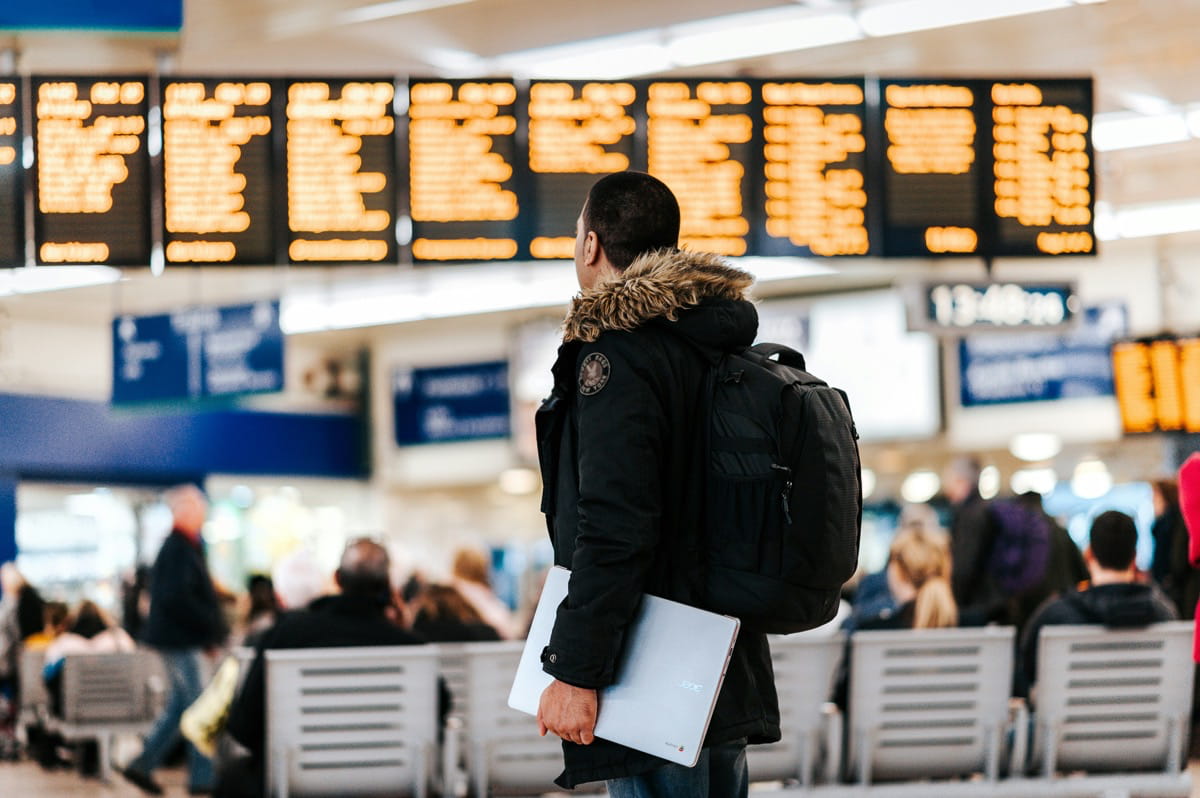
In practice, however, the first day of full operations (April 10) was a real mess. Paris Charles de Gaulle, Lyon, Marseille, Geneva, and other major EU travel hubs all saw tremendous queues of up to four hours. Airports Council International says processing times have risen by average 70% across European airports. While the technology is supposed to decrease wait times, main hurdle today is first-time registrations, which require staffed booths and human touch. Portugal suspended the system entirely at Lisbon Airport in December 2025 after repeated crashes, and France was still using manual passport stamps into early April due to delayed infrastructure rollout. Notably, France’s facial-recognition e-gates still cannot process UK or US passports.
Does Entry/Exit System (EES) use AI?
Crucially, despite the biometric and digital architecture, there is very little AI involved. The system automates data capture and cross-referencing. Yet, it does not use AI in other aspects, i.e. to manage queue flow, predict congestion, or triage travellers. There appear some reports that eu-LISA is developing an AI chatbot. But this tool is destined for the separate ETIAS pre-travel authorisation scheme, expected later in 2026. It would primarily help travellers understand the rules, but will not speed up border lanes.
What should you do as a tourist visiting EU under new travel rules?
For travellers, the reality-check advice is to arrive 90 minutes to two hours before typical deadline. Biometric passports allow access to self-service kiosks. Unfortunately, standard passport holders must be prepared to queue at staffed counters. Refusing to provide biometric data means automatic denial of entry, so there’s not much choice here.
The longer arc is more promising. As more people are registered and e-gate infrastructure matures, the system should eventually be faster than what it replaced. For now, EU digital border exists, just with analogue patience required at the front of the Entry/Exit System queue.