A rare celestial event known as a planetary parade, where six planets appear close together along the evening sky, is expected to be visible from many parts of the world in February 2026, peaking on 28 February.
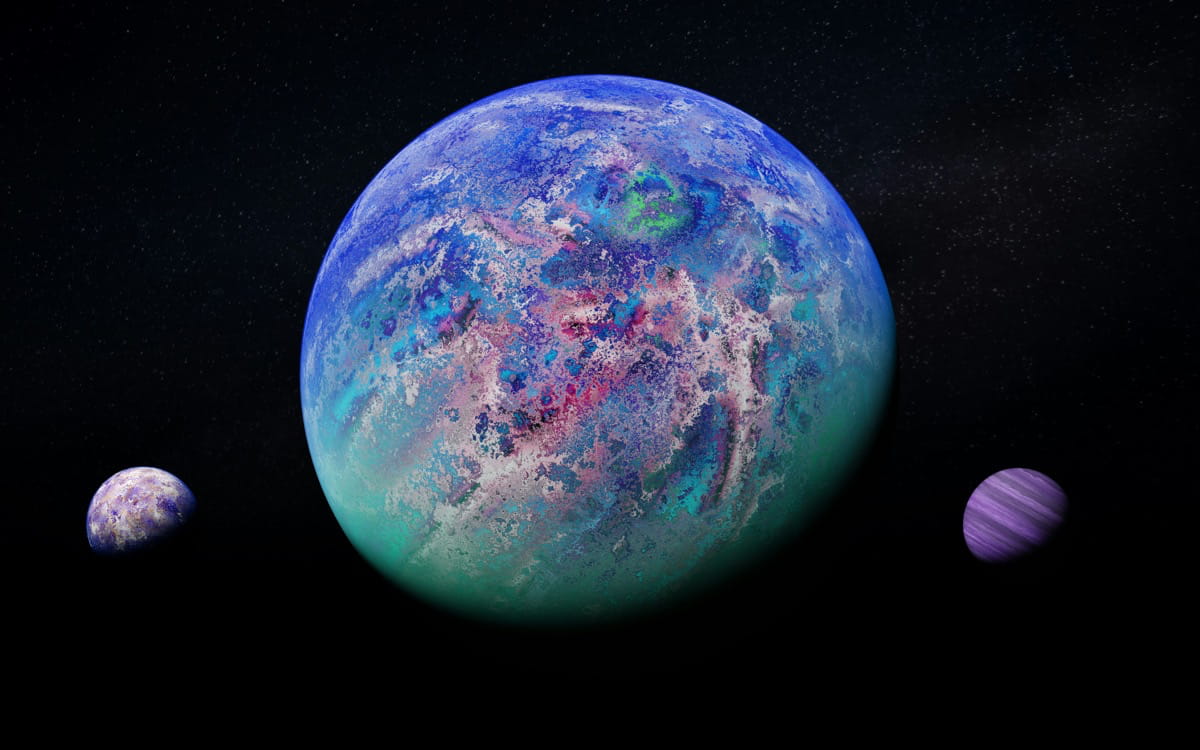
Astronomers say that Mercury, Venus, Jupiter, Saturn, Uranus and Neptune will appear clustered along the ecliptic, which is the path the Sun follows across the sky, shortly after sunset around the end of February. While all six planets will be in the general alignment, the visibility of each varies: Mercury and Venus will be low on the western horizon just after sunset, Jupiter and Saturn will be easier to spot higher in the sky, and Uranus and Neptune will require binoculars or a small telescope due to their distance and faintness.
The most compact appearance of the planetary configuration is expected around an hour after sunset on 28 February, though skywatchers can look for the grouping from the last week of February into early March in locations with clear western skies.
This phenomenon is caused by the planets’ orbits lying roughly in the same plane around the Sun, meaning that from Earth’s perspective they can sometimes appear lined up along the sky. Despite the term “alignment,” the planets are still separated by millions of kilometres in space. It’s an optical effect rather than a literal straight-line formation.
For observers in cities such as São Paulo, New York, Tokyo and London, conditions around late February are expected to offer good opportunities to view the parade, weather permitting.
Planetary parades with multiple visible planets are uncommon and draw interest from both amateur and professional astronomers, though they occur periodically as part of normal orbital mechanics.
Astronomy groups and stargazing communities recommend that anyone wishing to observe the event choose a location with a clear horizon, minimal light pollution and a view to the west shortly after sunset. Using star-mapping apps or sky charts can help identify the planets’ positions as they appear in sequence from the setting Sun outward.
You might be also interested whether an astronaut is a well-paid job. Check Astronaut Salary: How Much Do Astronauts Earn.