Solana, a blockchain network known for fast and low-cost transactions, is rolling out a technical overhaul called Alpenglow. The upgrade is designed to confirm transactions in about 150 milliseconds, down from roughly 12.8 seconds today.
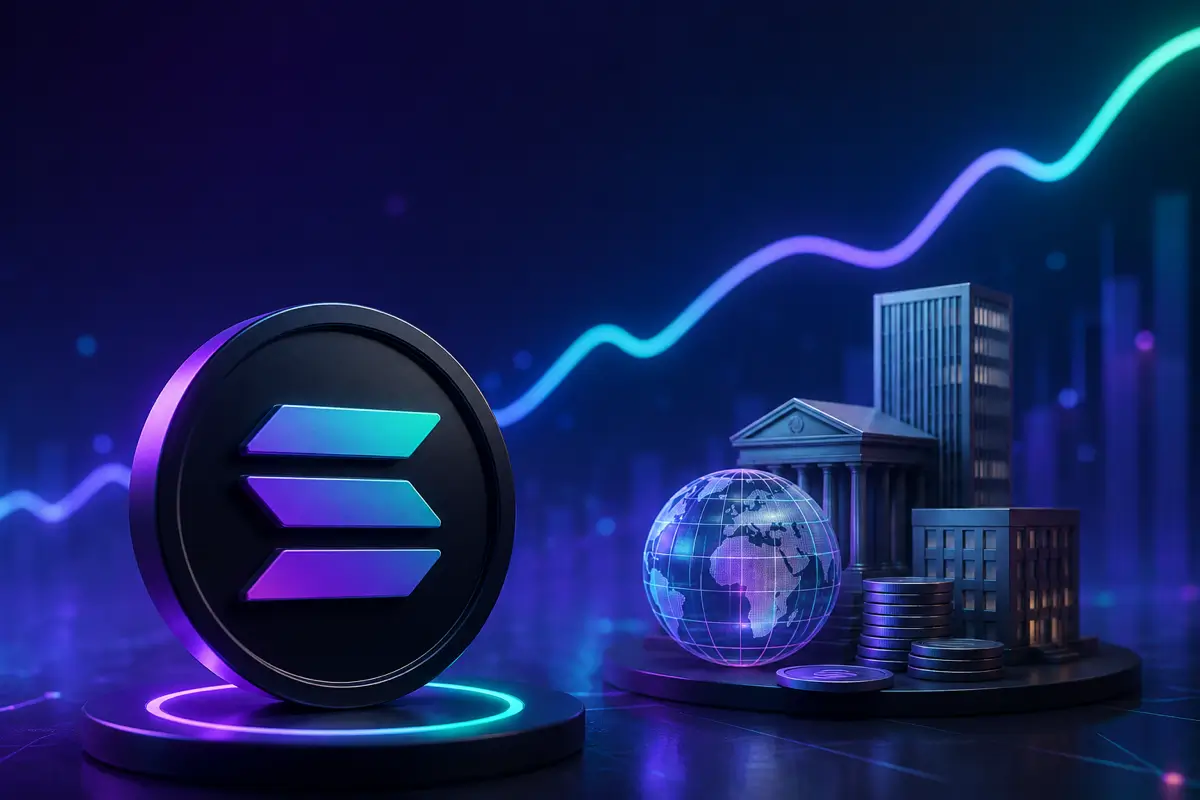
“Finality” is the point at which a transaction is treated as permanent and cannot be reversed. With the upgrade, the confirmation and settlement path would be 85 times faster. Alpenglow replaces Solana’s existing consensus system with two new components, called Votor and Rotor, that manage how network validators agree on which transactions are valid.
Validators are the computers that check and approve activity on the network. Under the current system, they exchange large volumes of voting data before a transaction is considered final. Alpenglow combines that voting data into a single compact certificate, similar to replacing many separate approval documents with one signed record.
The Solana developer group Anza first introduced Alpenglow in May 2025, and the proposal later received support from roughly 98% to 99% of participating validator stake. Live validator testing is underway, with mainnet activation possible as early as the third quarter of 2026 if testing goes well, according to Solana.
What Is Driving the RWA Boom
Alongside the technical upgrade, Solana has become the leading blockchain for tokenized real-world assets, or RWAs. This term covers traditional financial instruments, i.e. stocks, bonds, credit, that are issued and traded as digital tokens on a blockchain instead of through a stock exchange.
Solana’s total RWA value crossed $3 billion for the first time in June 2026, and total tokenized asset spot volume reached $5.77 billion in the second quarter, a quarterly record. Solana’s June 2026 recap put the network’s RWA value at $3.6 billion and its share of global on-chain tokenized equity volume at 95%.
Tokenized equities now trading on Solana include shares of publicly listed companies as well as privately held firms. Thus, tokenized asset firm Ondo Finance expanded its round-the-clock tokenized stock offering on Solana to 16 assets, adding AMD, Intel, TSMC, and SpaceX. Because these tokens trade on a blockchain rather than through a stock exchange, they can change hands at any hour, including weekends, without going through a traditional broker or clearinghouse.
Why It Matters for Payments and Fintech
Traditional stock trades settle through a clearinghouse — an intermediary, such as the Depository Trust & Clearing Corporation (DTCC) in the United States, that confirms and finalizes trades between buyers and sellers, typically within one to two business days. For now, tokenized equity trading remains a small fraction of overall stock market volume, and regulatory treatment of tokenized securities still varies by jurisdiction.
However, faster blockchain finality combined with round-the-clock tokenized trading raises a question for the payments industry: whether a parallel settlement system is forming outside conventional stock exchange infrastructure, and what that could mean for firms that currently rely on bank- and clearinghouse-based settlement rails.
The scale of adoption through the rest of 2026 will depend partly on whether the Alpenglow upgrade reaches mainnet on schedule and performs as tested.