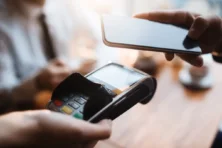
As Black Friday shopping frenzy kicks in, we wonder which payment trends will pay off?

Low sales are not always a sign of a poor assortment or bad service. Sometimes the problem is with payment options. Diversity is a key notion in today’s civilized societies. It should also rule over your payment gateways.
Think about it. You catch clients’ attention with a bright ad, offer a fair price, they add items to their carts, and then… leave it at the checkout stage. This happens very often, in fact. According to the Baymard Institute, 70.22% of all shopping carts end up unordered. Payment issues are among the significant factors of abandonment.
Leaving aside the 42% of US online shoppers who abandon a cart just because they are browsing, Baymard’s data on the remaining reasons looks like this.
10% of customers don’t finish their purchases because their credit card is declined. If they had more options to pay, that wouldn’t be the case at all.
9% frankly admit they left because there weren’t enough payment methods.
A staggering 40% abandon their full shopping carts due to high extra costs. Those include third-party fees and taxes. The additional fees are charged not only by the delivery services, but also by banking institutions or mobile wallet providers. Imagine that adding some payment methods with low commission fees may bring more completed orders. Tempting, isn’t it?
Let’s learn more about the popular payment trends that bring the most benefits to merchants.
APMs
This abbreviation stands for alternative payment methods, which are increasing rapidly today. People do not use credit cards as often as they did just a while ago. According to Worldpay’s Global Payments Report 2026, digital wallets such as Apple Pay, Google Pay, and PayPal accounted for 56% of global e-commerce transaction value in 2025.
That alone might urge you to consider other payment options for your store. Furthermore, the number of scams aimed at stealing bank details when customers fill in their debit or credit card credentials scares people off too. It is no wonder that wallets and other APMs keep taking share from cards. If you wish to remain competitive, you simply have to ride with this tide.
For instance, bank transfers (also known as account-to-account or pay by bank payments) that allow consumers to approve a digital transaction using online banking are very popular in Europe. Another option is a cash-in service. The cash-in cards are loaded in advance of the purchase by customers themselves and are welcomed by those whose income is not tied to a debit card.
Buy now, pay later
If you think that distrust of credit cards signals about the readiness of customers to wait till they have saved the whole purchase sum, you’re mistaken.
People are still willing to spend more money than they actually have now, but in other ways. One of them is paying in installments.
Many retail stores offer traditional credit lines. With their long application forms and monthly interest, they just don’t suit modern customers’ needs. On the contrary, flexible solutions like Klarna’s Pay in 4 or Pay in 30 days offer the same convenience with more affordability.
Interest-free installment programs are gaining popularity among consumers and significantly increase sales. According to Adobe, buy now, pay later drove $747.5 million in US online spending on Black Friday 2025, about 6.3% of all digital sales that day, and 80.7% of it happened on mobile devices. Worldpay forecasts that BNPL will reach $500 billion in global e-commerce value by 2030.
The borrowed sum gets divided either in fixed equal portions or uneven amounts as chosen by the customer. Conditions depend on a payment plan, so offering a few different options is only a plus for a merchant.
So that the buyer doesn’t procrastinate with their payments, an interest-free period usually has short-time limitations. For instance, Klarna’s Pay in 30 days option gives shoppers 30 days after the order ships to pay free of charge.
Try before you buy
Who doesn’t like samples, especially the free ones? Supermarkets offer some new products to taste, tech stores have some gadgets displayed for testing too. Car dealers offer test drives.
In case with the clothing, trying the item on before you buy it is essential for most customers. Makeup and accessories require some testing too. Yet not every buyer has the time to go proper bricks-and-mortar shopping. Even more, people are not willing to. If only they had other options… Well, now they do. Try before you buy keeps changing its shape, and more of it now happens on a screen.
For instance, Stitch Fix employs a stylist, who helps to create individual looks. The chosen clothes are shipped to the customer along with a ready-made return bag.
Amazon Fashion relies on AI-powered features such as virtual try-on and personalized size recommendations, while customers still get free returns across the apparel department.
Accessories brands like Warby Parker let buyers try frames on virtually in the app. An AI-powered tool scans the customer’s face, captures their style preferences and measurements, and then recommends glasses. Glasses are among those accessories that are really hard to choose without trying on. Thanks to try-before-you-buy, those limitations are not an obstacle.
Cosmetics brands such as Birchbox offer subscriptions for boxes of various beauty samples that you can try at home. If you like them, you can order more online at a discount.
Mobile payments
According to Adobe, 56.4% of US online holiday sales in 2025 were made on mobile devices, and on Black Friday 2025 the share was 55.2%. Worldpay’s data shows that smartphones accounted for 57% of global e-commerce spend in 2024, up from 19% in 2014.
However, not all physical store owners offer convenient m-commerce options. Nor do the e-commerce retailers cater to the flexible needs of mobile payers. After all, Baymard’s research shows that mobile shoppers are easier to lose during the cart and checkout stages than desktop ones.
As m-commerce is enabled via the use of mobile wallets such as Apple Pay, Google Pay, or PayPal, their use keeps rising. Worldpay reports that digital wallets accounted for 33% of in-store spending worldwide in 2025.
Therefore, you should definitely consider mPOS terminals and mobile wallet payment gateways for your business. Not to mention that mobile optimization for your checkout page is a must (mobile-friendly fonts, zoom options, etc.).
Instant shopping
Everyone likes the speed of purchases. The fewer stages your shopping cart has the better. What’s even quicker? Let your customers skip adding items to the shopping cart at all. Solutions like Instant Shopping may help. Express checkout buttons such as Apple Pay, Google Pay, and Shop Pay already let buyers pay in a single tap.
AI assistants are adding their own version of this. Google introduced agentic checkout in Search and AI Mode on November 13, 2025, with Wayfair, Chewy, Quince, and select Shopify merchants among the first to take part. According to Adobe, AI-driven traffic to US retail sites grew 758% year over year between November 1 and December 1, 2025.
It doesn’t mean that shopping cart should leave your website altogether, but if buyers need only one item, let them order it instantly.
The omnichannel shopping
Retail is tricky. Every customer group has their own preferences. Be sure to consider as many of them as you can. Don’t give up on traditional experiences too early. There’s still a place for the human touch in retail customer service.
According to a Harvard Business Review study of 46,000 shoppers, 73% of them used multiple channels during their shopping journey. And yet, many people simply love going shopping. Taking out your friend as a “fashion expert” and trying out crazy looks is fun.
However, the same study revealed that omnichannel shoppers spent 10% more online and 4% more in stores than single-channel customers. Each channel has its own strengths. In physical stores presenting every item beautifully is impossible, most of them just hang on a long clothing rack. They may go unnoticed. In online stores, on the other hand, every clothing item is presented separately on a flattering background, or worn by a beautiful model. Moreover, the website can automatically suggest suitable accessories or similar items.
Therefore, when you combine the two experiences (physical and virtual), customers tend to spend more in both.
For instance, “endless aisle” experiences, where retailers provide mobile devices in-store for shoppers to search out-of-stock products and have them delivered to their homes, allow retailers to expand their product range without extending floorspace.
Automated stores
The most advanced retailers should try combining cutting-edge technologies with bricks-and-mortar shopping experiences. Let your customers pick the item in person, see it, feel it, try it on if applicable. And then – integrate automatic checkouts so that they don’t have to waste even a fraction of a second on making payments.
A brilliant example is Amazon’s Just Walk Out technology, which was developed in Amazon Go. In 2018, the company’s first cash-free store opened in Seattle. Consumers need to scan their phone on the way in, add items to their bag, and walk out. Amazon sensors identify the user via their phone, and cameras track what items they add to their bag. Charges go directly to the shopper’s Amazon account. Amazon closed its Go and Fresh stores in January 2026, and the technology now runs in more than 360 third-party locations across five countries. Of course, this is not a cheap solution.
At least, you can partially automate the order and payment processes via self-service touch-screen tabs. It is already widespread in the restaurant and food catering industry. If you combine self-service with flexible payment terms like adding mPOS or other payment options mentioned before, you’ll attract a wider range of consumers.