Image source: Original visual created by the author for this article
Poker promotions rarely begin and end with the public post people see first. A short social media post may draw attention to the promotion, but eligibility for the prizes usually depends on several factors: age, location, and recent account activity can all be requirements to actually participate. Keeping that in mind helps turn a giveaway into a structured participation flow.
A Frontiers study on social media marketing activities and customer intentions examined how social identification and satisfaction can shape continuance, participation, and purchase intentions. The poker version needs extra clarity because participation often starts outside the platform and then has to be matched to an account. Poker players are used to having clear information with known conditions; giveaway creators need to think about what they’ll look for, what kinds of questions they’ll engage with, and how to structure the giveaway to make it accessible.
From Social Attention to Account Context
Many iGaming giveaways ask for a small additional action. This can take the form of a follow, a reshare, or answering a simple question. This helps encourage genuine engagement and reduces entrants who haven’t read the details, but the platform generally also benefits from having an account requirement, such as a recent deposit, so that the promotion does not float away from the product itself. This matters especially in the world of poker because casinos depend on establishing strong relationships with their players and creating a sense of satisfaction and connection.
Poker has a lot of different variants, meaning it attracts a variety of players – which increases the need for thoughtful promotions. This page on online poker gambling has cash games, Zone Poker, Sit & Go’s, and multi-table tournaments. That makes the campaign logic easier to read. A person may first notice the social promotion, then check the poker page to understand the account environment behind it: what formats exist, how entry routes differ, where support material sits, and how account activity connects to play. The promotion directs the user’s attention to the main platform. The platform then gives the promotion a concrete destination.
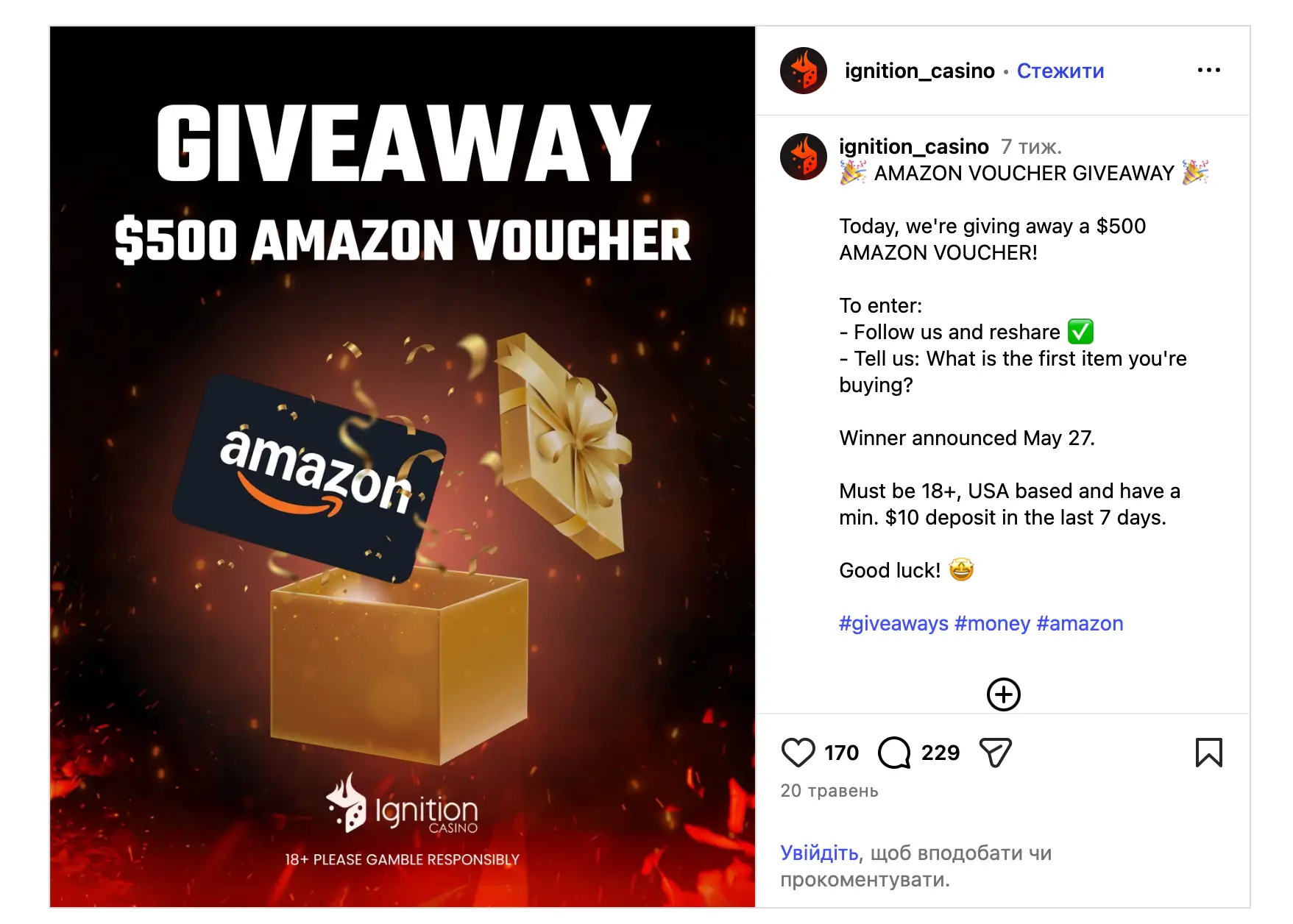
We can see this logic in Ignition Casino’s Amazon voucher giveaway post. The post asks users to follow and reshare, then answer what first item they would buy if they won. It also lists some requirements they must meet to be eligible, including being 18+, and having made a minimum $10 deposit to the platform in the last 7 days. The social action is public and quick, while the requirements are listed clearly.
Why Deposit Timing Changes the Campaign
Deposit timing is often the part that readers miss. In practice, it defines who the campaign is speaking to. A recent deposit requirement narrows the audience that will focus on the giveaway, which changes what the promotion’s objectives are. Requiring a recent deposit clarifies that the purpose of the giveaway is the loyalty, retention, and satisfaction of existing customers, more than a way to reach new customers.
That does not make the campaign complicated. It makes the structure visible. Once you start looking at the eligibility requirements and classifying the promotion based on who it is trying to reach, it’s much simpler to interpret the intent behind it.
Clear Promotions Separate the Moving Parts
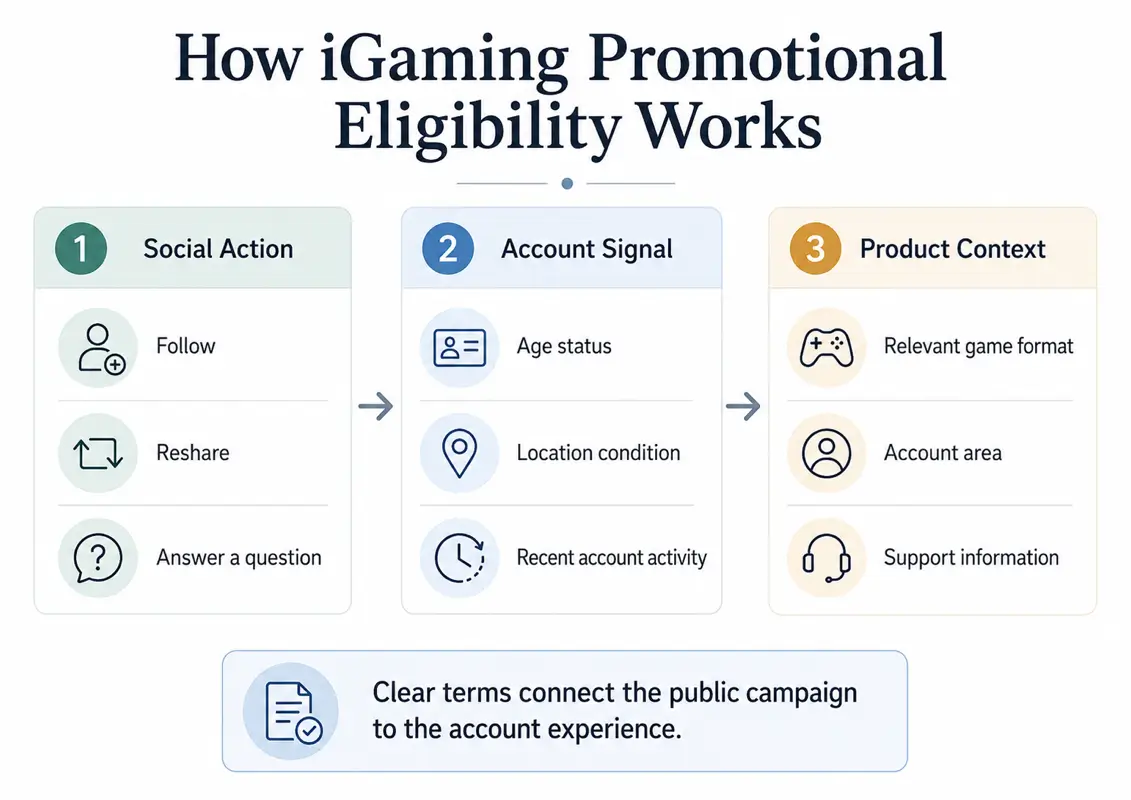
The best poker promotions do not ask each sentence to do multiple jobs. They separate the moving parts so the reader can understand the campaign without translating it:
- The social action creates engagement.
- The account conditions define eligibility.
- The product page explains the relevant experience.
This structure keeps the promotion from becoming vague. It also helps explain why account-based campaigns often mention recent activity. The platform is not only asking people to notice a post. It is tying that notice to a defined account state.
The product setting matters as much as the eligibility rule. A poker campaign works better when the reader can see the poker environment behind it. Formats such as cash games, fast-fold tables, Sit & Go’s, and tournaments all create different expectations. Some are built around quick entry. Others revolve around event timing or table availability. A clear product page helps users see those differences before they decide how the campaign relates to them.
What Finance Readers Should Notice
Poker promotional eligibility sits at the meeting point of marketing, payments, and account design. The marketing layer attracts attention. The payment layer can create a recent activity signal. The account layer decides whether a person fits the stated conditions. The product layer gives the campaign somewhere real to land.
These promotions are worth reading beyond the headline prize. The most useful information is often found in the connection between the public instruction and the private account condition. A follow or reshare may start the interaction, but eligibility depends on rules that have to be stated plainly enough for users to understand before taking part.
For operators, clarity reduces friction. For users, it reduces guesswork. For finance readers, it shows how digital entertainment platforms connect social engagement with account-based participation. They let a person see the campaign, understand the condition, recognize the product setting, and decide whether the instructions apply to their account. That is where social content becomes a structured platform interaction, the kind described in PLOS One’s work on consumer online brand-related activities.