The US midterm elections to Congress on November 3, 2026, could affect the fintech sector and digital asset markets through a potential shift in the balance of power in the legislative branch and temporary regulatory uncertainty.
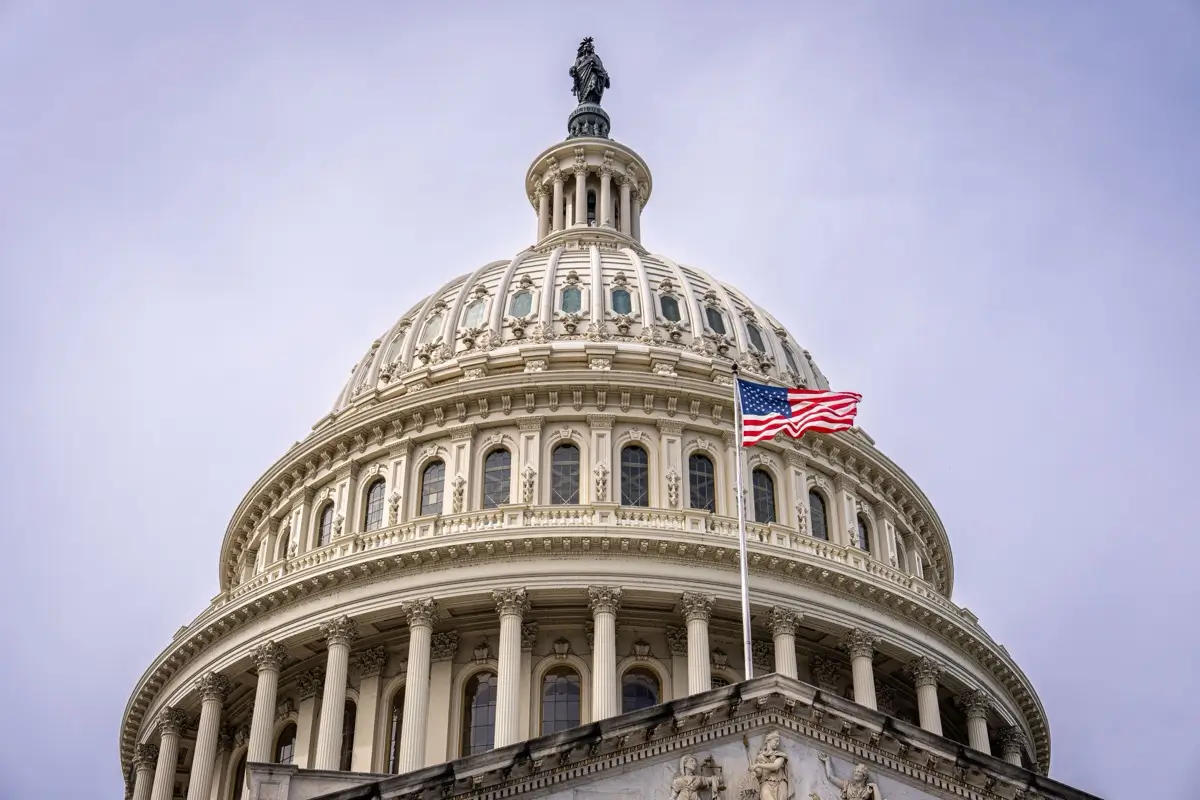
One of the major events for currency traders, investors, and the crypto and fintech communities today, November 3, 2026, is the US midterm election. The vote could become a turning point for Donald Trump’s second presidential term and the Republican Party’s political influence.
For PaySpace Magazine Global readers, the key question is how the US election results could affect financial markets, both in the United States and globally.
Stock Markets Typically Benefit from Political Changes
During the election period, markets may become more volatile and increasingly sensitive to news from Washington. Meanwhile, analysts and prediction markets are pricing in various scenarios involving political gridlock or potential compromises between the Donald Trump administration and the newly elected Congress.
However, historically, US stock markets have generally performed well following congressional elections. Since 1950, the S&P 500 has tended to rise by approximately 13% over the six months following the vote, compared with its level on election day and six months before the election.
This may primarily reflect greater economic and political stability. Regardless of the election outcome or which party gains power, the announcement of the results removes some of the political uncertainty investors face before the vote.
However, the 2026 cycle is different because artificial intelligence-related stocks now account for 39% of the S&P 500’s weighting. We are currently witnessing a sharp decline in Big Tech stocks. Alphabet, Google’s parent company, for example, lost 12.6% in a single day. This decline triggered widespread selling across the AI sector and dragged down even gold and silver, traditionally regarded as safe-haven assets. Global market losses are estimated to have reached approximately $3 trillion.
The AI sector could also become a focal point of political debate during the elections. Democrats and Republicans, in particular, have different views on policies governing data center operations and semiconductor exports to China.
Currencies and Precious Metals Respond Differently
Trends in the foreign exchange, gold, and silver markets are less straightforward. Gold typically records modest gains in the period leading up to congressional elections. This year, however, its value has fallen by approximately 2.3%. Meanwhile, the US dollar remains relatively strong, which also differs from the pattern typically observed during pre-election periods.
The election results could have a particularly significant impact on gold and other precious metals through their implications for the US budget, inflation, interest rate policy, and international relations. For example, if the elections create greater uncertainty or intensify concerns about rising US debt, gold could benefit from its role as a potential source of stability in investment portfolios.
In the FOREX market, the euro also continues to trade under the influence of the US economic and political agenda. As of Tuesday morning, the EUR/USD pair was trading slightly below 1.1200, having edged down from its recent local high.
Expectations surrounding the Federal Reserve’s future monetary policy and Treasury yields remain additional sources of support for the US currency. Markets are considering the possibility of an interest rate hike in December, making the dollar more attractive to investors. The euro, in turn, is facing pressure from France’s debt problems and political uncertainty in the eurozone’s largest economy.
Despite these developments, the state of US public finances cannot be overlooked. According to International Monetary Fund estimates, US gross government debt could exceed 140% of GDP by 2031. Investors will be watching how newly elected lawmakers approach the federal budget deficit, tax policy, and funding for specific government priorities. These decisions might have an impact on the performance of US Treasury securities in the future, the value of the US dollar, and the state of the stock market.
Regulation of Crypto Assets at Stake in the 2026 Elections
Depending on the outcome of elections, whether the Republicans will keep control over Congress, or the Democrats will receive majorities in one or both chambers, plans for deregulation, tax incentives, and more control over the markets may change.
Failure of the Republicans to keep their majority in one of the two chambers of Congress would greatly reduce their and Donald Trump’s personal influence over the introduction of new laws. Democrats, meanwhile, would gain greater leverage to advance their own legislative agenda.
The election results could therefore shape the future of key initiatives in the crypto sector, including the CLARITY Act and other regulatory measures. Changes in the composition of the House of Representatives and the Senate could affect both the speed of legislative proceedings and the direction of proposed legislation.
The Future of the CLARITY Act Remains Uncertain
The Democratic and Republican parties have significantly different positions on the CLARITY Act (Digital Asset Market Clarity Act) and the broader crypto ecosystem.
The Republican Party aims to establish a regulatory framework that provides businesses with a friendly environment and clearly demarcated spheres of jurisdiction. Democrats, meanwhile, though do not deny the necessity of business-friendliness, strongly emphasize stronger investor protection, measures against illicit financing, and ethical restrictions on public officials.
These differences became particularly apparent in September 2026, when the CLARITY Act failed a procedural vote in the Senate. The vote was 49 in favor and 50 against, while at least 60 votes were required to advance the initiative.
Republicans are the main authors and supporters of the CLARITY Act. They seek to provide regulatory protections for non-custodial DeFi developers and introduce more flexible financing rules for crypto startups. Republicans also previously passed the GENIUS Act, establishing a federal regulatory framework for stablecoins.
However, in the summer of 2025, more than 70 House Democrats also supported the initial version of the CLARITY Act. In subsequent stages, ethical restrictions on government officials and President Donald Trump became a major point of contention.
Democrats argued that the ethics provisions relaxed by Republicans would allow senior officials to profit from their own crypto ventures, alluding to Trump’s involvement with World Liberty Financial. Democrats therefore called for significantly stricter anti-corruption amendments as a condition for supporting the CLARITY Act.
At the same time, the traditional wing of the Democratic Party remains broadly skeptical of digital assets. Its members argue that the CLARITY Act, in its current form, weakens retail investor protections and creates loopholes for financial misconduct. More moderate Democrats may nevertheless be open to a compromise if Republicans address their concerns about consumer protection.
Will Bitcoin Fall After the US Congressional Elections?
Beyond legislation, congressional elections can also have a direct impact on cryptocurrency markets. According to analysts’ calculations, previous election periods have often coincided with significant crypto market declines. However, the relationship is not straightforward.
Elections are not necessarily the cause of these downturns. For example, in 2022, the FTX cryptocurrency exchange collapsed shortly after the vote, sending Bitcoin down to approximately $16,000 in response to the negative developments in the crypto industry.
Additionally, it is important to point out that mid-term elections in the US occur every four years at the same time as Bitcoin halvings. Therefore, the change in value of cryptocurrencies has always been defined not so much by political processes but rather by the established pattern of Bitcoin mining. The timing of these events, though, can create a misleading impression of a direct connection.
Meanwhile, the cryptocurrency market has experienced substantial capital outflows since mid-May this year. As of June 2026, Bitcoin was trading at approximately $64,000. Its price has since climbed above $76,600. However, the price increase has not prevented investors from withdrawing substantial amounts from the crypto market.
In particular, significant single-day outflows have recently been recorded from spot Bitcoin ETFs. At the end of October and the beginning of November, investors withdrew $643.3 million and $398.6 million from these funds in a single day, respectively.
Stablecoin market capitalization has also declined by approximately $11 billion in the month leading up to the elections.