Agricultural finance and financial inclusion remain major topics in Kenya’s fintech and banking sectors, as lenders and investors look for new ways to fund smallholder farmers. Against this backdrop, fintech platform Kaleidofin announced the first close of a local currency securitisation programme focused on smallholder agriculture in Kenya.
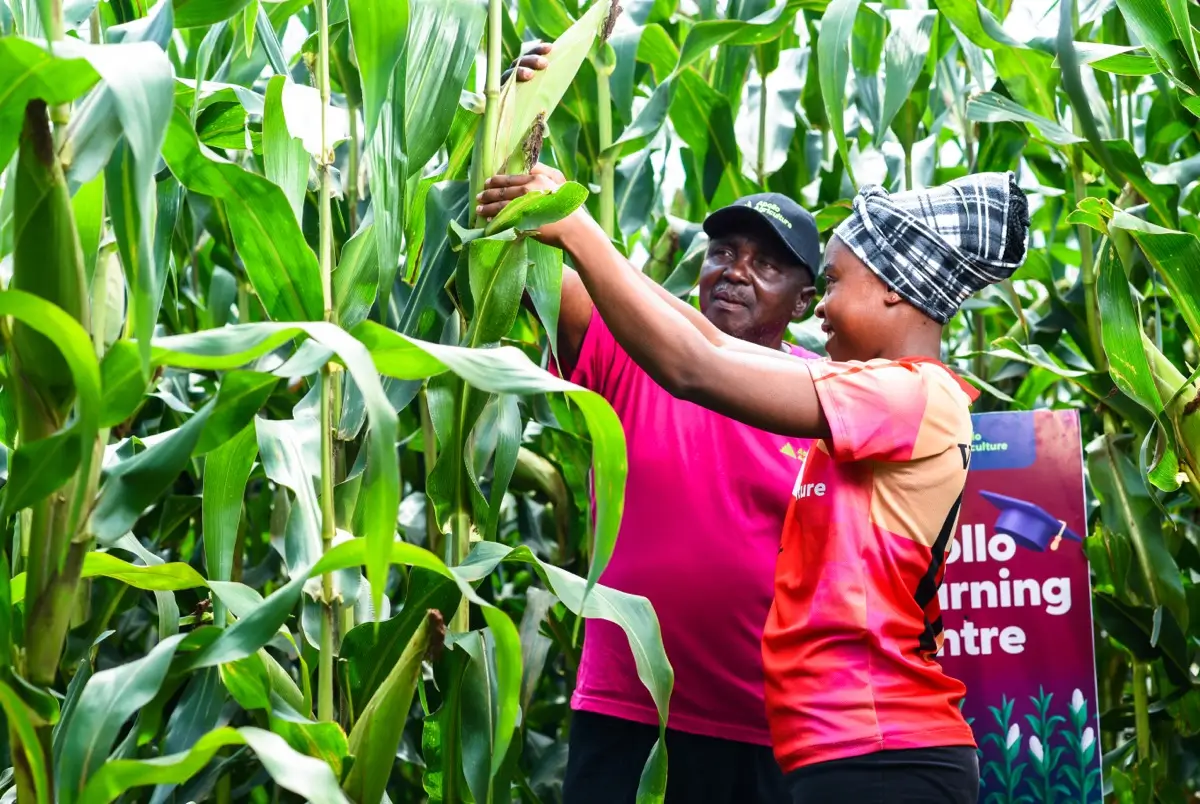
Image source: Kaleidofin Private Limited
The transaction involved KES 370 million in smallholder farmer input loans originated by Apollo Agriculture. According to the companies, KES 276 million (about USD 2.1 million) was raised through the sale of receivables linked to a portfolio of 23,839 farmers. The portfolio included 51% women borrowers and around 22% first-time borrowers.
The investment was made by the IDH Farmfit Fund, a blended finance fund focused on smallholder agriculture financing. The securitisation received a BBB-investment grade rating from Agusto.
“This transaction demonstrates how innovative financial structures can unlock capital for smallholder farmers at scale,” said Roel Messie, CEO of IDH Investment Management, manager of the IDH Farmfit Fund. “Building investable opportunities in agriculture requires both capital and enabling infrastructure, and this partnership brings those elements together.”
Kaleidofin said the structure was arranged through its “ki platform”, which is designed to support debt capital market transactions. The platform uses loan transaction data, bureau data, and alternative data to assess risk through its proprietary “ki score” system.
“We designed the Kaleidofin platform to function as scalable market infrastructure for traditionally excluded customer segments such as smallholder farmers, women entrepreneurs, clean energy and small business. By enabling customised structuring and data-driven risk insights via ki score, we are building the foundations for institutional capital to flow into sectors such as smallholder agriculture in a sustainable way.”
Sucharita Mukherjee, Co-founder and CEO of Kaleidofin
Apollo Agriculture provides financing, farm inputs, insurance and advisory services to smallholder farmers in Kenya. The company uses satellite imagery, machine learning models and mobile-based data collection to assess borrowers who may not have formal collateral or credit histories.
“This is a meaningful step in building efficient, scalable funding for smallholder agriculture and validates our tech-enabled business model.” said Eli Pollak, CEO of Apollo Agriculture. “By converting receivables into working capital, we are able to lower our cost of funds and expand access to affordable, local currency financing for farmers.”
He also explained that financing in local currency was critical for farmers, as it protected them from FX volatility, which can dramatically increase debt repayment burdens. A lower cost of funds means Apollo can now offer more affordable loan terms, reducing the financial pressure on farmers and making it more likely they can repay, reinvest in their farms’ efficiency and possibly agritech innovations, and build long-term financial resilience.
The companies said the securitisation programme could eventually mobilise about KES 2.37 billion and reach more than 130,000 farmers over several years.
The transaction also received support from FSD Africa and the UK government-backed MOBILIST programme. British International Investment provided technical assistance to Apollo Agriculture through its BII Plus programme.
“This transaction showcases how well-functioning market infrastructure can catalyse institutional capital for sectors traditionally considered high-risk, like smallholder agriculture. FSD Africa’s role has been to help build the foundations — from regulatory clarity to investor confidence — that make transactions like this viable and repeatable. We see this as a blueprint for how structured finance can unlock sustainable, large-scale funding for inclusive growth across Africa.”
Dr. Evans Osano, Chief Financial Markets Officer at FSD Africa
Kenya has seen continued growth in digital lending and fintech-based agricultural finance in recent years. The Central Bank of Kenya and the Communications Authority of Kenya have both reported increasing use of mobile financial services in rural areas, creating broader use of digital credit products and alternative data models in agriculture finance.
According to the Kenya National Bureau of Statistics (KNBS), agriculture contributes around 22.4% of Kenya’s GDP directly and another 27% indirectly through links with manufacturing, distribution and other sectors. The sector also employs more than 40% of the country’s total population and more than 70% of rural residents.
Official data also shows that access to credit remains limited for many smaller agricultural businesses and farmers. The 2024 Kenya FinAccess Household Survey reported that 15.2% of adults in Kenya still rely mainly on informal financial mechanisms, while formal credit access remains uneven in rural areas.