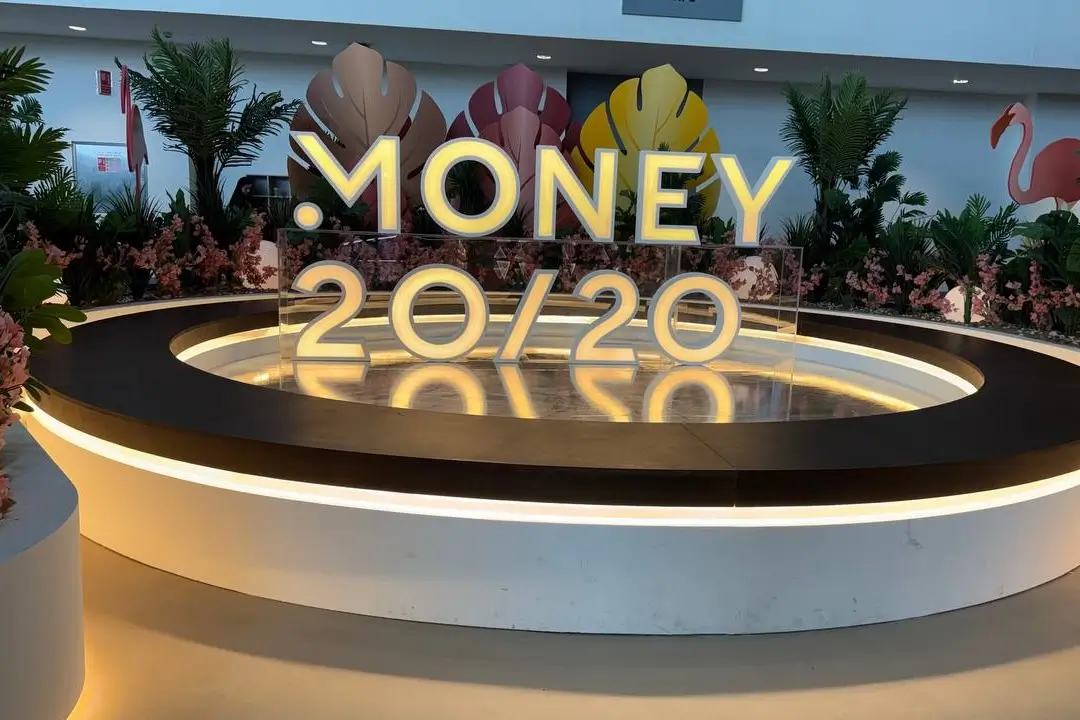
Money20/20 Middle East closed its active three-day run in Riyadh this week, bringing the fintech community a set of regulatory announcements from the Saudi Central Bank (SAMA), a new unicorn in the Kingdom’s payments sector, and cross-border card interoperability with Qatar.
Saudi Arabia Embraces Alipay and Apple’s Tap to Pay
On the closing day of Money20/20 Middle East, SAMA confirmed Alipay+ will now be accepted for international visitors in Saudi Arabia. Fintech enthusiasts have been waiting for this move for a year, since it was in September 2025 when the regulator signed an agreement with Ant International to bring Alipay+ onto the Kingdom’s national payment system, mada.
“We are deeply honoured to support the ambitious goals of Vision 2030 and build on the strong digital infrastructure by SAMA to enhance payment connectivity and boost Saudi Arabia’s status as a global tourism hub,” said Douglas Feagin, President of Ant International at the time. “Tourism is a powerful force for economic growth and cultural connectivity. Through such joint innovations across public and private sectors, we can unlock more opportunities and help local businesses and communities flourish, while creating a more seamless experience for global consumers.”
With acceptance now enabled as planned, merchants across Saudi Arabia can take cross-border QR payments from wallets linked to the Alipay+ network. The latter, in turn, connects more than 1.7 billion user accounts across partner wallets in dozens of markets. Besides, Alipay+ and its partner wallets have recently linked to Mastercard Wallet Pay global solutions portfolio that greatly boosted its interoperability.
SAMA also announced plans to enable Apple’s Tap to Pay on iPhone in Saudi Arabia. This payment tool would let merchants accept contactless card and digital wallet payments directly on an iPhone without additional hardware. These major announcements remind constant visitors of the monumental atmosphere of last year’s event, when Google Pay and Google Wallet went live in the Kingdom through Al Rajhi Bank and Riyad Bank.
At the same time, 2026 edition of Money 20/20 Middle East showed a change in how companies are gaining access to Saudi Arabia’s payments market. Last year’s major announcements were largely about companies entering the market. This week, however, the regulator was more often at the centre of the news. SAMA set out rules for which wallets and payment methods can operate in Saudi Arabia, while banks, fintechs and card networks continued building services on top of that framework.
Payment Interoperability in Gulf Is Increasing
The Kingdom’s push toward regional interoperability was felt before the last-day grand announcements too. On day two, the central bank governors of Saudi Arabia and Qatar processed the first cross-border card payment between the mada and HIMYAN networks live on stage. The agreement between SAMA and the Qatar Central Bank allows cardholders from each country to use their domestic-scheme cards in the other market.
Efforts toward payment infrastructure interlinking across the Gulf are part of common vision defined back in 2021. Then The GCC central banks established a regional Real-Time Gross Settlement framework (GCC-RTGS) to link the national payment systems of the six GCC states and support cross-border settlement. In parallel, the Arab Monetary Fund developed Buna as a wider Arab cross-border payment network.
Visa also extended its presence in the local market. The payment company deployed the Visa Acceptance Platform on local cloud infrastructure last year. But now, it was certified for the Saudi Central Bank’s (SAMA) New E-commerce Payments Interface. It allows Visa to process e-commerce transactions locally in Saudi Arabia as part of its work with SAMA’s national payments infrastructure.
“As digital commerce continues to scale in Saudi Arabia, payment capabilities must evolve to support local market requirements while delivering seamless experiences for consumers,” commented Ali Bailoun, Senior Vice President and Group General Manager for Saudi Arabia, Bahrain and Oman, Visa.
Impressive Funding Round Creates Another Saudi Unicorn
Day two also delivered the event’s largest funding announcement. Saudi payments firm barq closed a $329.5 million Series A round. Its valuation surged to $1.85 billion as the firm became Kingdom’s newest unicorn.
The round gathered prominent investors such as Noon Investments, Sohar International Bank and the M20 Fund. barq, founded in 2023, was licensed by SAMA in January 2024. By corporate data, the startup has surpassed 15 million users across more than 210 nationalities and has processed more than SAR 440 billion since launch. The company used the event to deepen its partnership with Mastercard. It also used this attention focus opportunity to announce new collaborations with UnionPay International and Geidea. New collaborations should help the fintech expand card acceptance and merchant coverage in the Kingdom.
Embedded Finance & AI Were High on the Agenda
Beyond the main regulatory and funding announcements, several themes came up in discussions repeatedly during the event.
One panel closely looked at embedded finance. Expert speakers from Baystreet Advisors, BharatPe Payments, J.P. Morgan and Geidea discussed how banks and platforms are using financial services to support growth.
NextGen Money panel focused on what could come after buy-now-pay-later. Executives from Surfin Meta Digital Technology, ValU, Baysys and Alinma Bank discussed how lenders are looking to offer credit closer to the moment when customers need it.
The Capital Stage also looked at the role of governments in building financial infrastructure. Officials, including a representative from Saudi Arabia’s Ministry of Investment and a senator from Nigeria’s Capital Market Committee, discussed how governments can help shape the systems that support financial services.
Meanwhile, Checkout.com Chief Marketing Officer Rory O’Neill discussed how companies can move AI beyond experimentation and use it in practical ways. That inevitably led to discussions about infrastructure and how consumers’ relationship with money is changing due to tech innovations.