Why should you add more alternatives to your business solutions? Read about their types and statistics
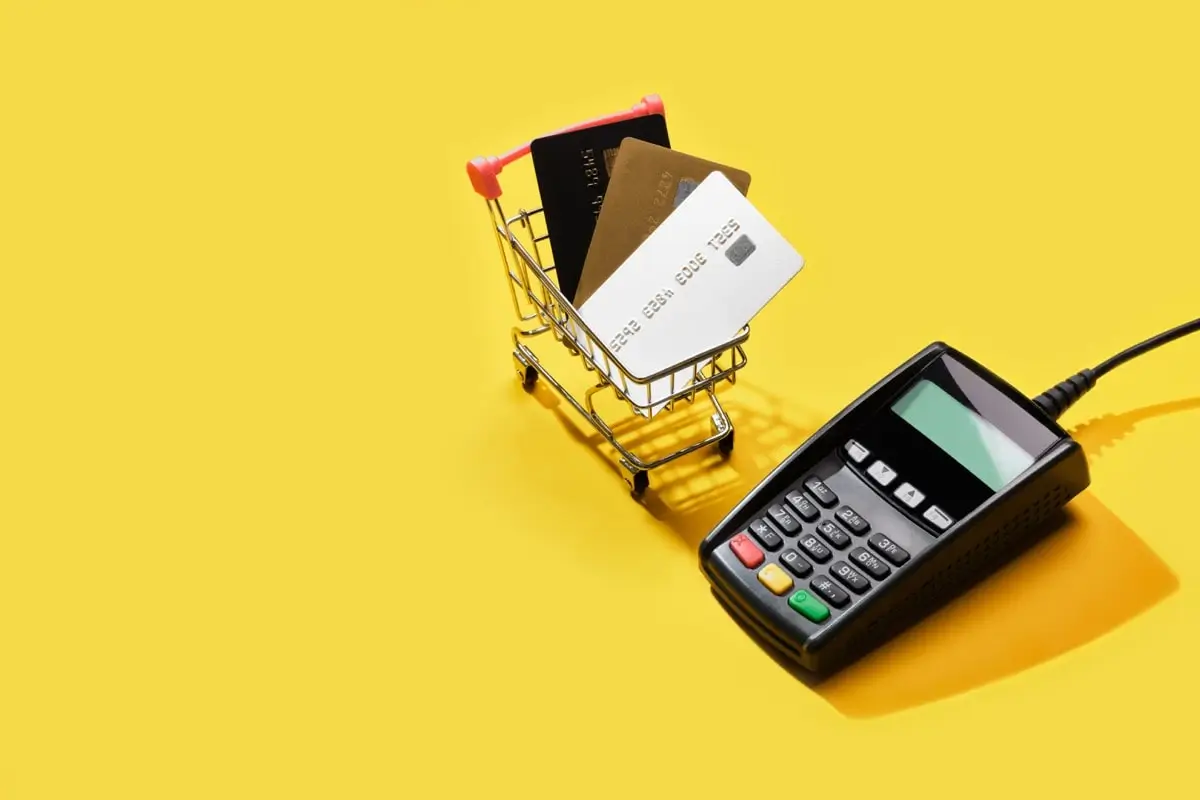
Payment options gain the crucial attention of marketing experts. It appears that a lack of flexible and secure methods results in enormous shopping cart abandonment levels. Neither a great assortment, nor can low prices help a business that doesn’t provide convenient payment modes.
Traditions of the product-money exchange reshape over time. While back in the middle of the twentieth century, bank magnetic stripe cards were a novelty, today we are witnessing the global transition to a cashless economy. Although debit and credit cards still lead the payment ratings in local stores, e-commerce is quickly promoting alternative payment methods (APM).
APM is any mode of paying for a product or service that doesn’t involve cash or a traditional bank account.
Some of them have already gained great popularity and turned from the alternative methods to mainstream. Think of PayPal, Apple Pay, WeChat Pay, etc. However, they are not the only popular solutions.
Types of alternative payment methods
Bank transfers
They allow consumers to approve a digital transaction using online banking. Money is sent from one bank account to another quickly and securely. You don’t have to enter your card number and CVV code every time. You log in to your online account instead.
The European market has introduced a few major solutions for secure bank transfers. While Europeans were slow to embrace mobile payments which are incredibly popular in China, they have long preferred bank transfers for their online shopping.
SOFORT used to be the dominant online banking method in many countries such as Germany, Austria, Switzerland, and Belgium. Klarna, which acquired it in 2014, discontinued the standalone service in 2025 and folded it into its “pay in full” option (previously known as Pay Now), where customers pay at once by bank transfer.
iDEAL is another popular bank transfer network. Consumers can pay using their mobile banking app or the online banking environment of their own bank. Account-to-account payments, led by iDEAL, make up 64 percent of e-commerce value in the Netherlands. The network is now moving to Wero, and the migration is expected to be completed by the end of 2027.
GiroPay used to support all major German banks and allowed direct online transfers from the customers’ bank accounts, but it was shut down in December 2024. Now, Wero, the pan-European payment app of the European Payments Initiative, which unites more than 55 banks and payment service providers, is available in Germany, France, and Belgium.
Digital wallet-based solutions
e-Wallets can be funded from a bank account or by email. They offer a fast and efficient checkout experience.
They can be applied to mobile apps creating a basis for the mobile payments. Google Wallet, Apple Pay, Samsung Wallet and others turn smartphones and NFC wearables into a wallet. Highly portable and protected by biometric identification, mobile payment devices have become mainstream.
Another option is paying online with an e-wallet. PayPal, Alipay or Mercado Pago allow consumers to receive payments, withdraw funds, and pay for purchases. Their registration procedure is usually faster than those of traditional banks. They’re available 24/7 and work on trusted platforms.
Instant financing
This type includes various flexible payment systems including an open-end line of credit and monthly installments without a fixed term commitment.
Klarna is one of the best-known providers. Customers have to fill in an application form once. It requires only personal details without banking information. The credit decision is instant. That’s much simpler than a regular credit application. Then the customer makes a purchase with a minimum payment. The debt incurs flexible terms. Customers can make monthly payments online or in the app. Global e-commerce volumes of buy now, pay later services grew from $2.3 billion in 2014 to an estimated $300 billion in 2025.
Instant financing usually works on more favorable terms than those credit lines offered by stores and banks. In this modern fast-paced world, many customers prefer to buy products as soon as they see a good deal. This has triggered the rise of credit card use. Yet now all impulsive buyers have an opportunity to get quick loans.
“Try it before you buy it”
The revolutionary and convenient way to pay for clothing items. Instead of visiting the shop, buyers can order clothes online, try them on in the comfort of their homes, check if they combine with the rest of the wardrobe, ask advice from their friends or family without dragging them out shopping and pay only for those clothes that fit them.
Cash-in
Prepaid cards that offer cash-in solutions run on traditional networks like Visa and Mastercard. There are also prepaid accounts that don’t run off the credit card system.
Cash-in APM cards are loaded in advance of the purchase. Prepaid debit cards work like credit cards but instead of borrowing money (like you do with a credit card), you’re spending your own money. They are popular among people with low credit scores, younger consumers, or those with limited resources.
Many people earn their money unofficially and don’t have a valid debit card. Instead of carrying cash around, they may use cash-in accounts. These banking solutions are notably popular in the developing nations along with cash-on-delivery payments. For example, cash on delivery still accounts for 23% of online spending in the Philippines and 16% in Vietnam.
Cryptocurrencies
Crypto remains a niche option among alternative payment methods. Direct crypto payments, where a merchant receives tokens without any conversion, made up just 0.19% of global e-commerce value in 2025. At the same time, this is the fastest-growing payment method online. Worldpay forecasts a 16% annual growth rate until 2030, when direct crypto may reach about $31 billion. Most consumers pay with crypto through traditional rails. Crypto cards convert tokens into fiat at the moment of purchase, so the merchant simply receives a card transaction. According to Visa, spending on Visa-issued crypto cards rose by 525% in 2025. Stablecoins, which are pegged to currencies like the dollar or the euro, are expected to make an impact mainly on B2B and cross-border payments in the short term. Only around 10% of merchants worldwide accept crypto directly, so it makes sense to offer it if your target audience already uses it.
Which payment methods should you offer as a seller
The common mistake of the starting business is to get as much payment methods as possible, but it is rarely a road to success. A huge variety will only confuse potential customers as well as increase the chances of them leaving the cart not paid. The wise thing here to do is to choose only a couple of them, but the ones that your customers will definitely use. Before rushing into choosing the alternative payment methods I would advise to figure out what specific regions/countries you are planning to target. Once you do that, it will get much easier to choose payment method(s), since as it was mentioned in the article, each region has its own, sometimes unique, widely used local payment method.
For example, if you are an online clothes store targeting Germany and Belgium, while choosing APMs you can get Klarna and PayPal, which are very popular there, optionally also Wero, but there is definitely no need for you to have iDEAL (local payment method for the Netherlands).
So I would say that the step to effective payment processing for your business are the following:
1) Make sure you know your target market;
2) Understand your clients needs in terms of payment options on this market;
3) Choose APMs that fit your needs.
4) If it is more than 2-3 APMs you need at once, consider applying to PSP that can offer them all and with only one application and one integration.
Now that you know which APMs are popular all over the world, let’s take a look at the scope of their use.
Statistics
Many people today rarely use cash. According to a Federal Reserve survey, the average American keeps about $69 in cash on hand. Therefore, a growing share of transactions happens with the help of fintech.
Moreover, people don’t need cash as much as they did before. A great portion of all shopping takes place online. According to Worldpay Global Payments Report (2026), global e-commerce was worth $7.6 trillion in 2025 and is expected to reach $11 trillion by 2030. It is growing by 7.5% a year, more than twice as fast as in-store payments (3.4%).
The report reveals changes in payment methods too: direct card payments now constitute only 31% of global e-commerce value, while digital wallets lead with 56%. The survey among more than 63,000 consumers in 42 markets shows how different the local payment mix is from country to country.
One of the reasons is the increasing likelihood of online fraud. People are afraid to buy online at unfamiliar websites. They may choose goods, add them to a shopping cart, and bail out at the payment stage if they need to enter sensitive banking information. There are a number of scams aimed at stealing bank details when customers fill in their debit or credit card credentials. According to Experian’s 2025 Identity and Fraud Report, 61% of consumers name stolen credit card information among their top fraud concerns.
Therefore, wallets, bank transfers, and other alternatives keep gaining ground. Buy now, pay later apps, for example, accounted for 4% of global e-commerce value in 2025 ($300 billion), and direct bank-to-bank payments for 7%.
The Worldpay Global Payments Report (2026) predicts the significant rise of e-wallet use: from 56% in 2025 to 63% in 2030 in e-commerce. Its popularity with POS sales is expected to increase from 33% in 2025 to 42% in 2030.
Currently, the biggest mobile payment platforms are:
- Alipay (over 1.4 billion users);
- WeChat Pay (over 900 million users);
- Apple Pay (an estimated 600+ million users);
- PayPal (440 million active accounts).
The growth of mobile payments is predicted to continue steadily. By 2030, payment apps are expected to account for 46% of global in-store payment value, up from 37% in 2025.