We’ve considered the weak and strong points of these systems, so the choice is yours
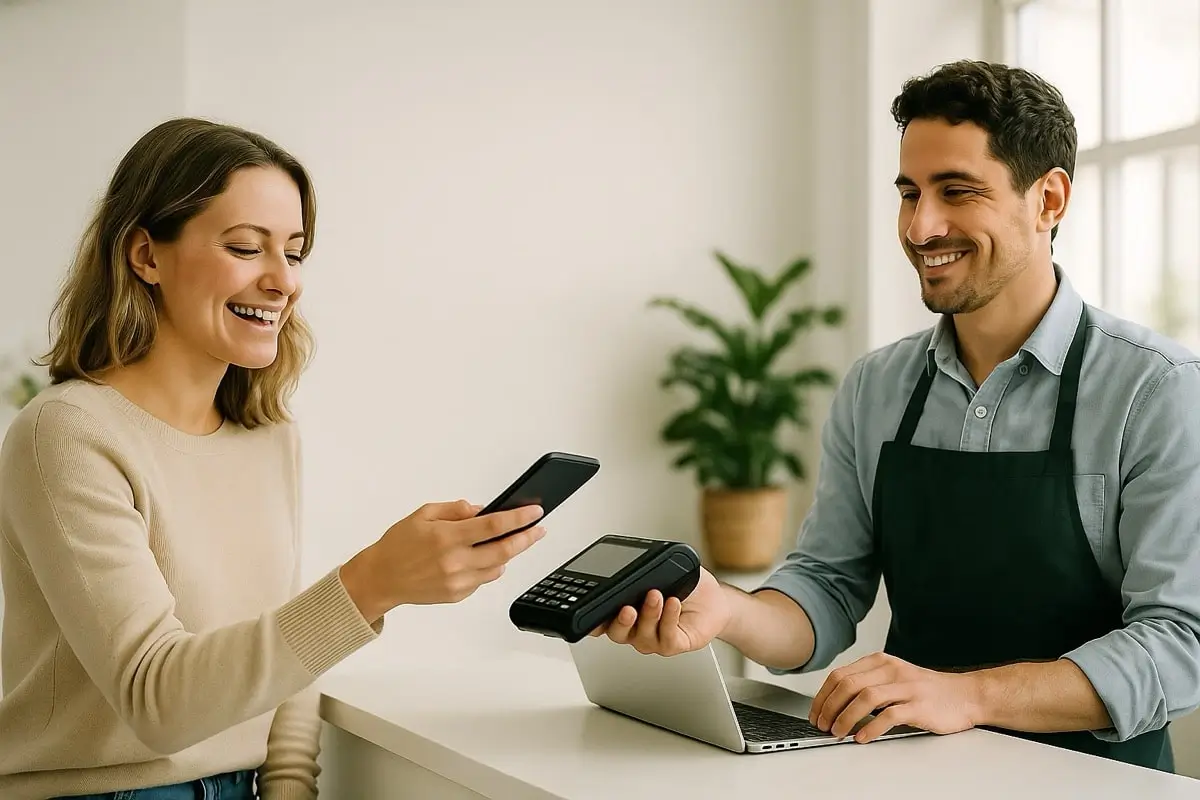
In 2026, people can forget about billfolds and bank cards. It is much easier to pay for your purchases with your phone or even your watch. There are three most used systems — Apple Pay, Google Pay, and Samsung Wallet app (formerly Samsung Pay).
Why is it so convenient? Because all you have to do is link a card to one of these wallets. It will give you the ability to pay via contactless for goods and services all over the world. This guide covers what each wallet does today, how to use Apple Pay and its rivals, and what’s changed since these services first launched.
Technology and availability
Apple Pay, Google Pay, and Samsung Wallet all rely on NFC (Near Field Communication) for contactless payments. That’s a change from a few years back. Samsung Pay used to pair NFC with its own Magnetic Secure Transmission (MST) technology, which let a phone mimic a card’s magnetic stripe at old-style swipe terminals. Samsung began phasing MST out starting with the Galaxy S21 in 2021, and it’s no longer included in current Galaxy devices — a sign of how thoroughly NFC terminals have taken over at checkout worldwide.
In 2024, Samsung folded Samsung Pay into Samsung Wallet, a single app that also stores IDs, digital keys, tickets, and loyalty cards alongside payment cards, much like what Apple and Google have done with their own wallets.
Which one is best: With MST gone, all three systems now depend on NFC-enabled terminals, so the playing field is far more even than it once was. Samsung Wallet’s edge today comes from how much beyond payments it handles, not from payment-terminal compatibility.
Security
If you’re used to working with mobile payments, you might know that this system uses a special feature to protect sensitive data (we’re talking about card details), called tokenization. When a user adds a card to the app, it creates a virtual account number to hide the actual card number from the merchant and others. When a user taps their phone to perform a transaction, it sends this tokenized virtual number along with a cryptogram, which acts as a password.
Apple uses Face ID, Touch ID, or a passcode for authentication. This is central to how to use Apple Pay securely on any iPhone, once your card is added to the Apple Pay app.
Samsung Wallet uses fingerprint or PIN authentication (iris scanning, once a Samsung Pay staple, has been phased out on newer Galaxy models).
Google Pay/Google Wallet requires a fingerprint, face unlock, or PIN to unlock the phone, plus authentication to confirm a transaction.
Which one is best: All three remain secure, but Apple Pay is still a touch more comprehensive thanks to the consistent Face ID experience across Apple Pay, Apple Card, and Apple Cash on compatible iPhones.
Other ways to pay
A phone is not the only way to pay. You can use one of these:
- Apple Pay: Apple Watch (in-store payments); iPad and Mac (to buy items online); Safari on iPhone, iPad, and Mac. This is one of the most common questions people search for: how to Apple Pay from a browser rather than in person.
- Google Pay: Works with Wear OS watches, and online checkout wherever the “Buy with Google Pay” button appears.
- Samsung Wallet: Galaxy Watch models, plus the same in-app browser-checkout support as its rivals.
With Apple Pay you can still perform browser transactions using Safari, authenticating with Face ID or Touch ID. Google Pay’s browser checkout button now appears across most major browsers, including Chrome, Safari, and Firefox, and acceptance has grown substantially since the early days.
Which one is best: All three remain roughly equal here. The real differentiator now is which merchants and banks support each wallet in your country.
P2P payments
Apple Pay supports peer-to-peer payments through Apple Cash, sent via Messages. It remains limited to US users with Apple devices, however, so it’s not useful for sending money to Android-using friends.
Google Pay’s P2P feature, once called Google Pay Send, was discontinued in the US when Google shut down the standalone Google Pay app there in June 2024, folding its remaining features into Google Wallet, which does not currently offer P2P transfers domestically. Google Pay news out of India and Singapore is different, though: the Google Pay app (and its UPI-based P2P transfers) is still very much alive in those markets, since Google explicitly kept it running there to serve “unique” local needs. Therefore, Google Pay India remains one of the country’s dominant UPI apps.
Samsung, meanwhile, added its own tap-to-send-money feature to Samsung Wallet in the US in 2025, letting users transfer funds by tapping phones together — a feature Samsung Pay never had.
Which one is best: It depends heavily on where you live. In the US, Samsung Wallet’s new tap-to-send feature and Apple Cash both beat Google Wallet, which dropped P2P entirely. In India, though, Google Pay is the P2P leader by a wide margin.
A note on regulation
In the EU, Apple agreed in 2024 to open up the iPhone’s NFC chip to third-party wallet and payment apps, free of charge, ending a long-running antitrust case with the European Commission. That means EEA-based iPhone users are no longer required to use Apple Pay or Apple Wallet for tap-to-pay. Rival wallet apps can now request the same access. It’s a meaningful shift after a decade in which Apple Pay was the only game in town for iPhone tap-to-pay.
Separately, Google has increasingly woven Google AI (Gemini) features into its broader payments and Wallet ecosystem, starting from smarter fraud detection to AI-assisted spend insights, though this sits alongside, not inside, the core Google Pay app.
To sum up
Apple Pay largely remains the dominant option for Apple device owners, tied tightly to the iPhone. Android users can generally use Google Pay/Google Wallet, and if you have a Samsung device, you can choose between Samsung Wallet and Google Wallet, though you’ll have to set one as default.
It’s impossible to say one wallet definitively beats the others across every criterion. Samsung Wallet has broadened furthest beyond payments alone, folding in IDs, keys, and now P2P transfers. Apple Pay remains the most seamless and secure option, especially now that Face ID and Apple Cash cover most everyday needs. Google Pay/Wallet’s story has split by geography: pared back in the US, but still the P2P and everyday-payments leader in Google Pay India and a handful of other markets.