Payment gateways streamline e-commerce expansion in Indonesia, enhancing transparency, boosting merchants’ revenues, and promoting financial inclusion. As a result, the local fintech sector is flourishing, with some of the payment gateway providers turning unicorns and attracting major VC funding.
Indonesia’s fintech industry has been scaling rapidly in recent years. Its growth is driven by consumer demand, strong inflows of VC capital, favourable regulations, and a robust local tech community. Surging digital payment adoption also plays a key role.
The country’s digital payment market is expected to reach $366 billion in 2025, continuing to grow with a robust CAGR of 14% through 2030. Embedded finance sector in Indonesia, which encompasses online payment gateways, is forecasted to multiply its revenues from $2.16 billion in 2024 to $8.79 billion by 2029.
Indonesia Fintech Momentum
One can clearly see that the fintech sector is flourishing in Indonesia just by taking a glance at the state of local VC funding. In 2024, startups focusing on the development of financial technologies secured $459.5 million, almost half of the total $1.1 billion investments on record. This amount was divided across 28 deals, bringing an average funding round size to over $16 million (slightly below the global average but significantly above the regional one). In addition, the largest Indonesian fintech funding rounds attracted three times as much in 2024.
Indonesia’s fintech sector has grown explosively since the 2010s. While in 2011, the country hosted only about 50 fintech companies, today this number has increased well over 300. Among Indonesia’s nine unicorn startups, six are fintech firms (Akulaku, Kredivo, Ajaib, Ovo, Dana, and Xendit). That illustrates investors’ interest and confidence in the local financial technologies promoters and the overall ecosystem that supports such firms.
Payment Gateways in the Fintech Ecosystem
Indonesia’s maturing fintech market is catering to the needs of local businesses as well as the wider regional commerce ecosystem. Payment gateways, being a connection point between acquiring banks and merchant platforms, play a crucial role in the development of the fintech industry as well as e-commerce.
Indonesia’s payment ecosystem consists of several local super apps (GoPay, OVO, Dana, LinkAja, ShopeePay), hundreds of small fintech innovators, traditional banks (Bank Mandiri, BCA, BRI), and local subsidiaries of global payment providers.
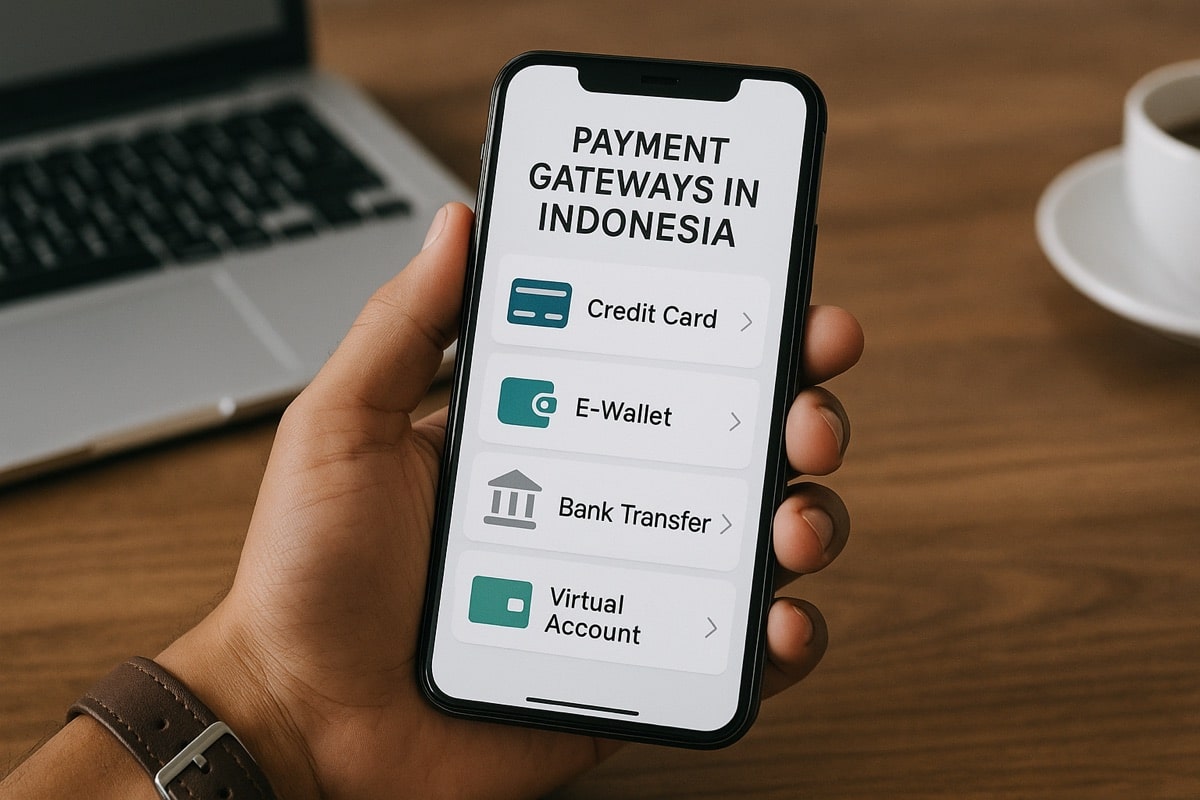
This diverse ecosystem supports transactions via multiple payment methods, including e-wallets, bank transfers, cards, and Buy Now Pay Later (BNPL) services. However, as of 2025, digital wallets are a preferred payment method for the majority of Indonesian citizens. Almost all (92%) of consumers recently surveyed by Visa leverage mobile wallets at least once in a while, while almost one-fourth of all online purchases in Indonesia are made using e‑wallets.
Another interesting peculiarity of the national payment system of Indonesia is its QR code standard – QRIS (Quick Response Code Indonesia Standard). It enables interoperable payments across all major wallets and banks and is accepted by over 30 million merchants in the country, greatly enhancing payment convenience and financial inclusion. In 2024, QRIS transactions, which increased by 175.2% in volume, significantly contributed to a 36% year-on-year growth of digital payments processed in Indonesia (a total of 34.5 billion transactions).
Payment gateway providers in Indonesia need to take all this into account when developing a viable solution for the local market. And so they do. Due to the successful incorporation of all the popular payment methods in a secure, real-time infrastructure of payment gateways and well-localized gateway interfaces, both merchants and their customers can enjoy a seamless transaction process. Moreover, by leveraging ready-made white-label payment gateways, brands can get more control over their transaction flow and customer retention.
Popular Payment Gateway Providers of Indonesia
There are several fintech companies on a local market that create payment gateways among other multi-channel payment solutions.
Midtrans (GoTo Financial)
GoTo, the largest fintech group in Indonesia, offers services of a payment gateway provider Midtrans as its subsidiary. Midtrans is integrated into GoPay (digital wallet), GoBiz (merchant business platform), and Moka (cloud-based POS) platforms. This way, it can serve a variety of purposes and support multiple payment channels.
The payment gateway enables transactions using 25+ payment methods, including credit/debit cards, virtual accounts, bank transfers, QRIS, e‑wallets, ShopeePay, as well as automated payouts. Midtrans solution is available not only in Indonesia but also across Southeast Asia. As it supports transactions in multiple currencies, the payment gateway facilitates the cross-border expansion of Indonesian businesses.
As for the drawbacks of the solution, Midtrans pricing structure is not the most affordable on the market, as some newer alternatives offer more flexibility and lower cost. In addition, its availability is limited to certain e-commerce plugins and it may not support additional accounting systems or business software. At the same time, the payment gateway comes from an industry leader, providing more brand trust, reliability, and security than emerging startups in the segment. Besides, its tight connection to the Gojek superapp, with its 100 million monthly active users (MAU), is a significant benefit to consider.
Xendit
One of the local fintech unicorns, Xendit offers payment gateway services in Indonesia and the wider Southeast Asia region for web, mobile, and API interfaces, with an extensive e‑wallet and bank integration. The platform goes far beyond payment gateway solutions, also providing quick financing options, financial reports, and partner disbursal management. Xendit payment gateway enables businesses to accept 100+ popular online payment methods, including QR codes, direct debit, PayLater, e-wallets, credit cards, and even over-the-counter retail payments through popular outlets that help reach the rural population. Besides, Xendit handles local invoice and tax requirements compliant with Indonesian regulations, alleviating the regulatory burden on businesses. On the other hand, Xendit’s drawbacks include slow activation for some payment methods and occasional poor customer support. It also lacks additional business tools and may have higher fees for some users.
Doku
DOKU is one of Indonesia’s longest-established and most trusted payment gateways, widely regarded as a pioneer in the country’s digital payments ecosystem. It enables businesses to accept payments through multiple channels, including bank transfers, cards, e-wallets, and QRIS, via easy-to-deploy plugins and robust APIs. Complemented by built-in fraud detection and risk management tools, DOKU helps merchants scale securely while meeting local regulatory and operational requirements, making it a go-to infrastructure partner for both enterprises and growing SMEs in Indonesia.
By late 2024, DOKU had processed over 300 million transactions and served around 300,000 merchants, with about 6 million e‑wallet users in its ecosystem. The company also holds six different banking licenses from Bank Indonesia, covering gateway services, domestic transfers, remittance, e‑money, QRIS operator, and PPOB, making it one of the most fully‑licensed payment providers in the country.
To Conclude
Payment gateways are central to Indonesia’s thriving fintech ecosystem, enabling seamless, secure, and multi-channel digital transactions. By connecting merchants, consumers, banks, and e-wallets, they support e-commerce growth, enhance financial inclusion, and drive the adoption of emerging payment methods like QRIS and digital wallets.
Leading providers such as Midtrans, Xendit, and DOKU exemplify the sector’s innovation, handling millions of transactions, integrating diverse payment channels, and offering advanced fraud protection. As fintech unicorns emerge and VC investment flows continue, payment gateways remain indispensable infrastructure, empowering businesses to scale efficiently while reinforcing Indonesia’s position as a regional digital payments leader.