Dreams have a logic all their own — familiar places that feel subtly wrong, impossible physics that seem completely normal until you wake up, emotions that linger long after the images fade. Capturing that specific, slippery quality in a piece of art has always been difficult, because dreams resist the kind of clear description that most creative work relies on.
This is where text to image AI genuinely shines, since it can hold contradictory, surreal details together in a single coherent image in a way that’s hard to achieve by hand. Dreamina’s advanced image generation capabilities make it possible to render that dreamlike unease or wonder with real visual nuance, rather than defaulting to generic “weird” imagery.
Why dreams are genuinely hard to visualize well
The instinct when illustrating a dream is often to make everything bizarre at once, but real dreams rarely feel that way from the inside — they feel mostly normal, with just one or two details quietly off.
The most convincing dream visuals keep most of the scene grounded and familiar, letting a single impossible element carry all the unsettling or wondrous weight.
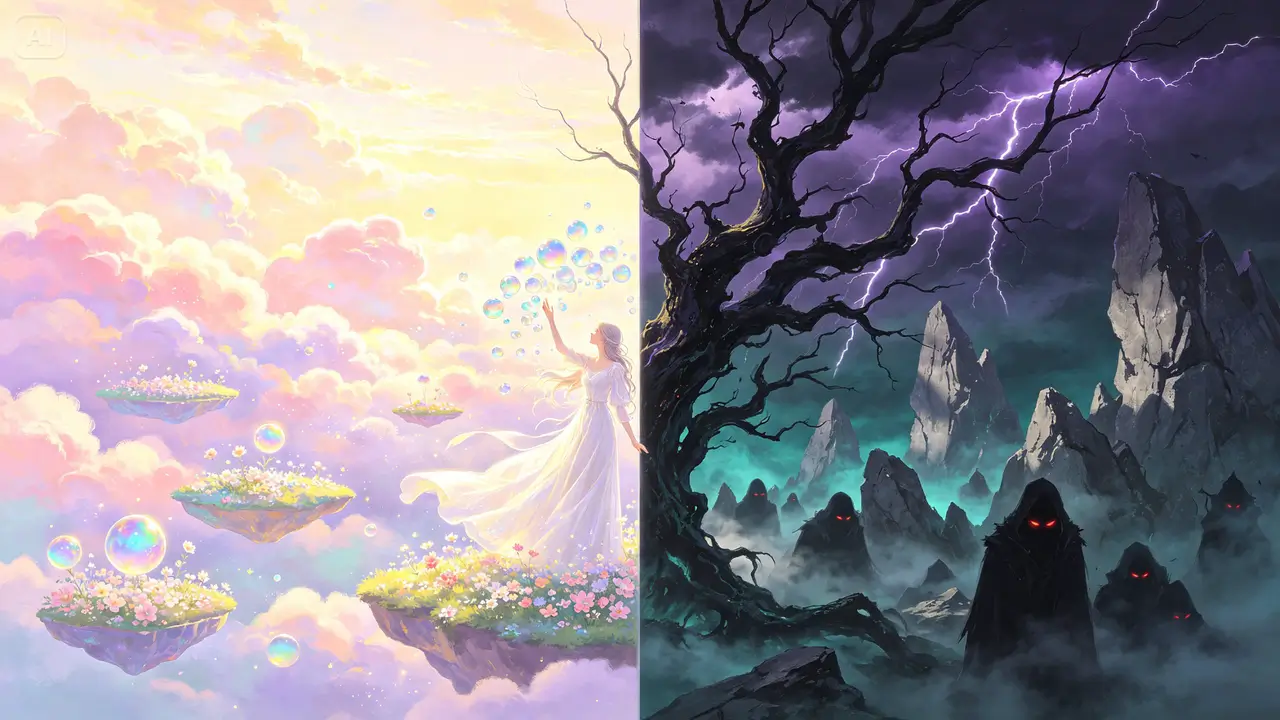
Separating dream imagery from nightmare imagery
Dreams and nightmares call for very different visual choices, even when the underlying surrealism is similar:
- Dreams often lean toward soft light, pastel or desaturated color, and gentle impossible details
- Nightmares lean toward harsh contrast, shadow, distorted proportions, and a sense of confinement or pursuit
- Both benefit from at least one recognizable, grounding element amid the strangeness
Letting scale and proportion do the unsettling work
Dreams often distort scale in ways that feel deeply familiar once you see them rendered — a hallway that’s too long, a doorway too small, a sky pressing too close. Describing these proportion shifts explicitly in a prompt is one of the most reliable ways to create genuine dream logic rather than generic surrealism.
Where dream and nightmare artwork finds an audience
This style has a devoted creative niche:
- Personal dream journal illustration projects
- Album art or poster design for atmospheric, introspective music
- Concept art for horror or psychological fiction
- Gallery-style art prints exploring memory and the subconscious
Creating the visualization with Dreamina
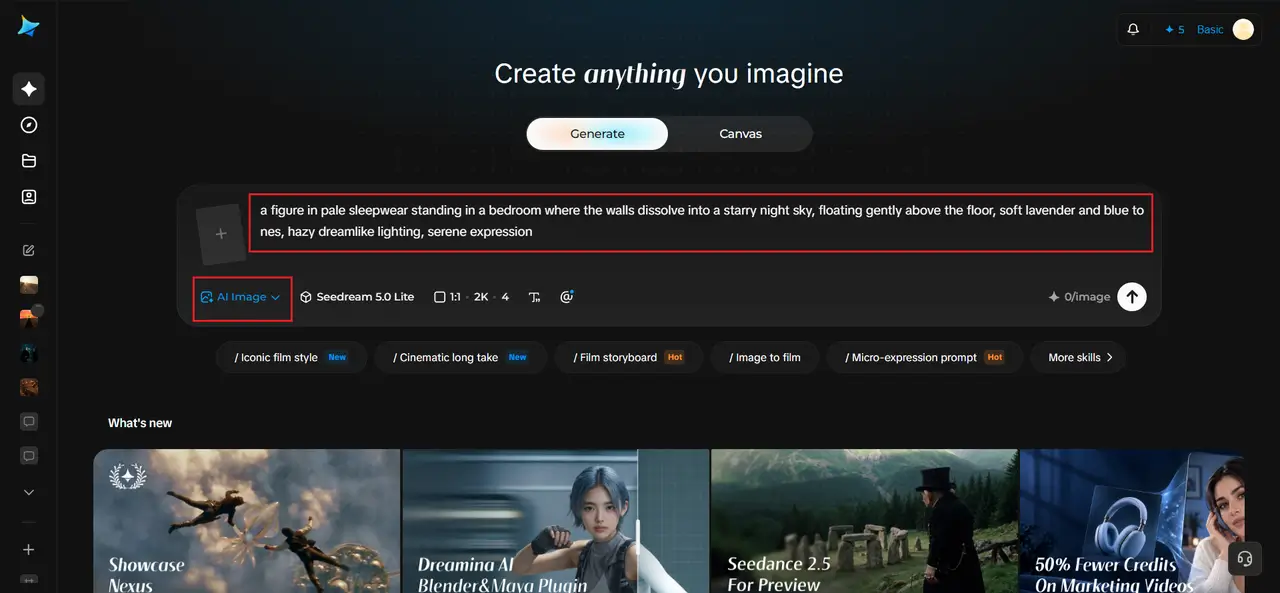
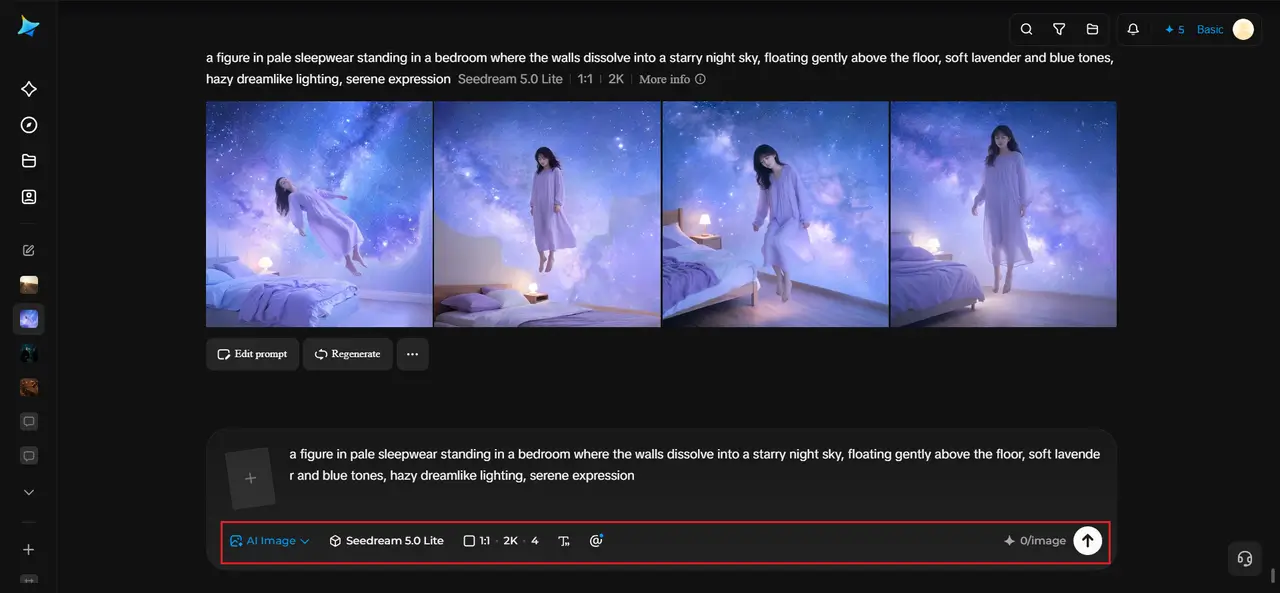
Step 1: Write a text description
Open Dreamina and describe the dream or nightmare scene with attention to the one impossible detail, the lighting, and the color temperature.
For a version centered on a person within the dream, try: a figure in pale sleepwear standing in a bedroom where the walls dissolve into a starry night sky, floating gently above the floor, soft lavender and blue tones, hazy dreamlike lighting, serene expression
If you have a photo of a real space the dream is loosely based on, upload it as a reference image to ground the impossible elements in something familiar.
Step 2: Adjust parameters and generate
Select Image 5.0 Pro by Seedream 5.0 Pro as your model for its ability to blend realistic detail with surreal, impossible elements convincingly. Choose a square or portrait aspect ratio for an intimate, contained dream scene, and pick 1K for early exploration or 2K for a finished gallery-quality piece. Tap Dreamina’s generate icon to produce the image.
Step 3: Customize and download
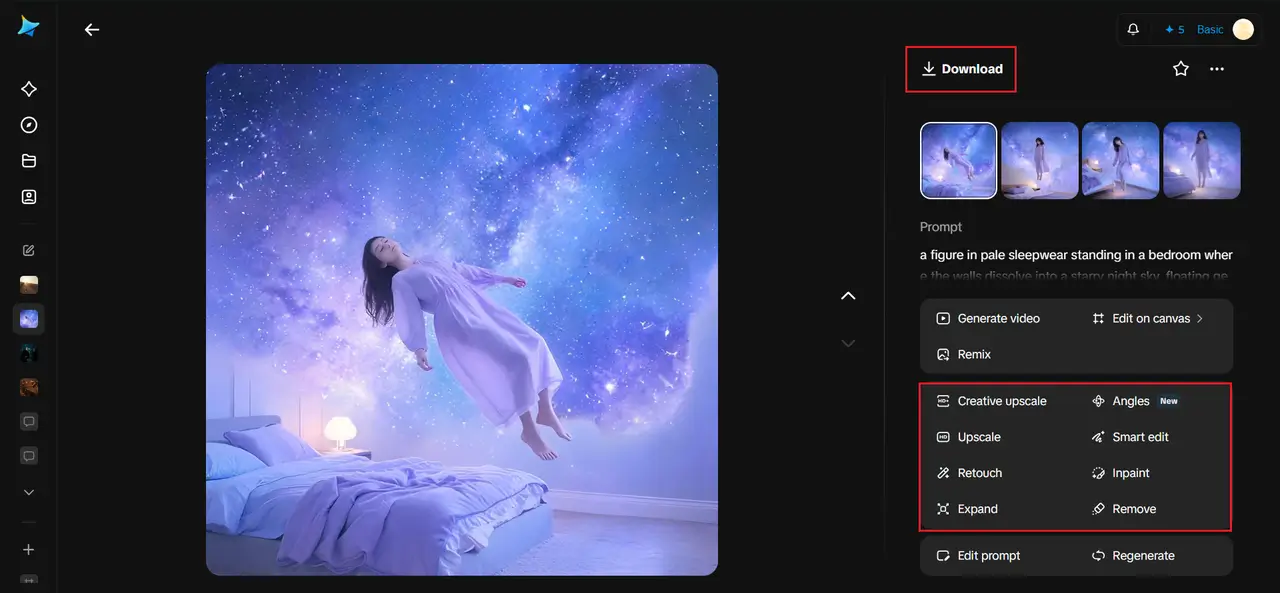
Use Dreamina’s editing tools to refine the mood — inpaint to adjust the one key surreal detail, expand the canvas if the scene needs more open, hazy space around it, remove any element that feels too literal or grounded, and retouch color grading to push the tone further toward dream or nightmare. Once it feels right, click download to save your finished piece.
Dreamina’s model lineup for surreal, atmospheric art
Dream and nightmare imagery asks a model to hold realism and impossibility together in the same frame, which is a genuinely demanding balance, and Dreamina’s models handle it differently. Seedream 5.0 Pro, the newest and most advanced model on the platform, is especially capable of blending grounded, realistic detail with surreal distortions of scale and light, making it the strongest choice when a dream scene needs to feel emotionally believable despite its impossibility.Nano Banana offers a softer, more painterly rendering that suits gentler, more whimsical dream imagery over unsettling nightmare content. GPT Image 2 provides another option for testing a different emotional read on the same dream concept, useful for deciding how far to push a scene toward unease versus wonder.
Choosing the one impossible detail that carries the scene
Rather than piling on multiple surreal elements, the strongest dream visuals usually center on a single striking impossibility — a floating object, a room without walls, a door leading somewhere it shouldn’t. That restraint is what keeps the image feeling like an actual dream rather than a chaotic collage of random strange things.
A second scene shifting from dream to nightmare
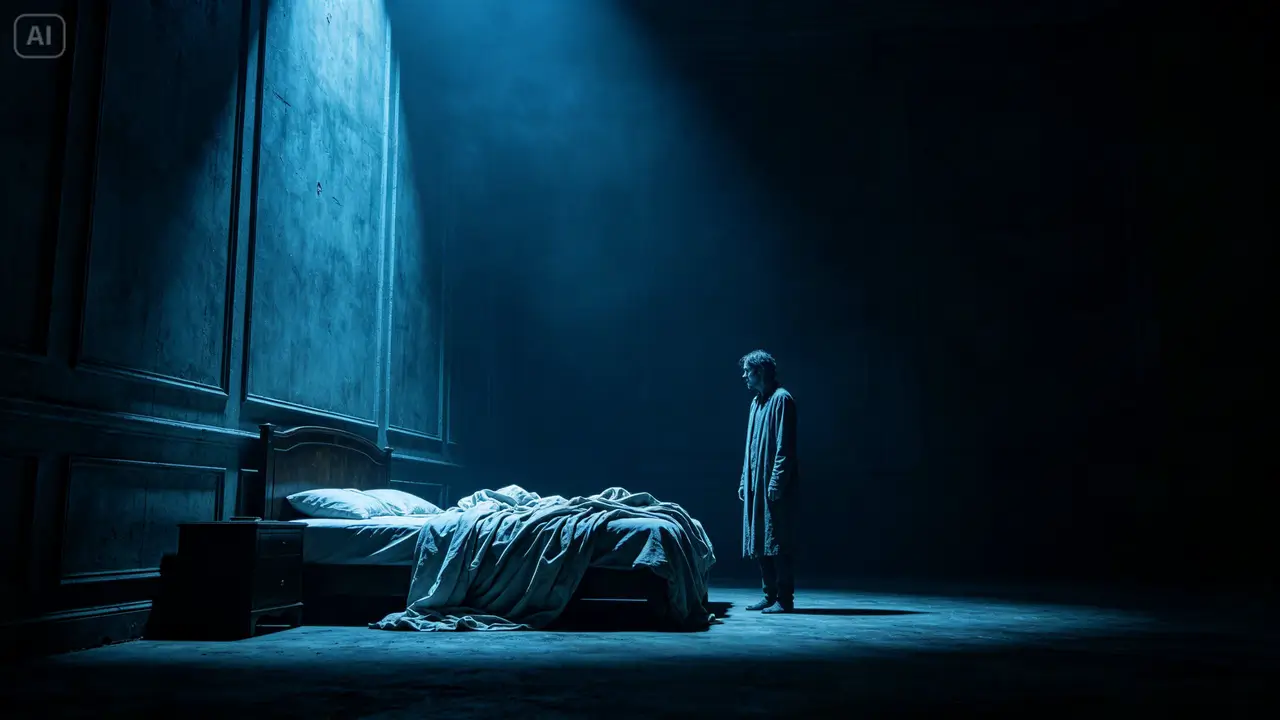
The same setting can shift dramatically depending on tone. Here’s a related prompt, connected to the first by setting but pushed toward a nightmare instead: a surreal nightmare version of a bedroom where the walls stretch impossibly tall into darkness, a figure standing frozen beside an unmade bed, harsh cold blue lighting, deep shadows, unsettling sense of scale.
Keeping the same room and blue color family ties the two images together, while lighting, contrast, and mood pull them in opposite emotional directions.
Using color temperature to control emotional tone
Color does enormous emotional work in dream imagery. Soft lavender, warm gold, or gentle pastel tones read as wondrous or nostalgic, while cold blues, sickly greens, or high-contrast reds and blacks push a scene firmly into nightmare territory, even with a similar composition underneath.
Approaching the theme with care
Nightmare imagery in particular can lean into genuinely disturbing territory if pushed too far, so it’s worth keeping the surrealism suggestive rather than graphic — the unsettling feeling should come from atmosphere and distortion, not explicit or violent content.
Conclusion
Dreams resist easy description precisely because they operate on their own internal logic, which is exactly why generated imagery is such a good match for capturing them. With one carefully chosen impossible detail, deliberate color and light choices, and Dreamina rendering the delicate balance between the familiar and the strange, even the hardest dream to describe in words can finally become something you can actually see.