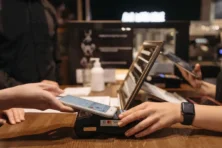
Alipay serves Chinese consumers in hundreds of stores and organizations
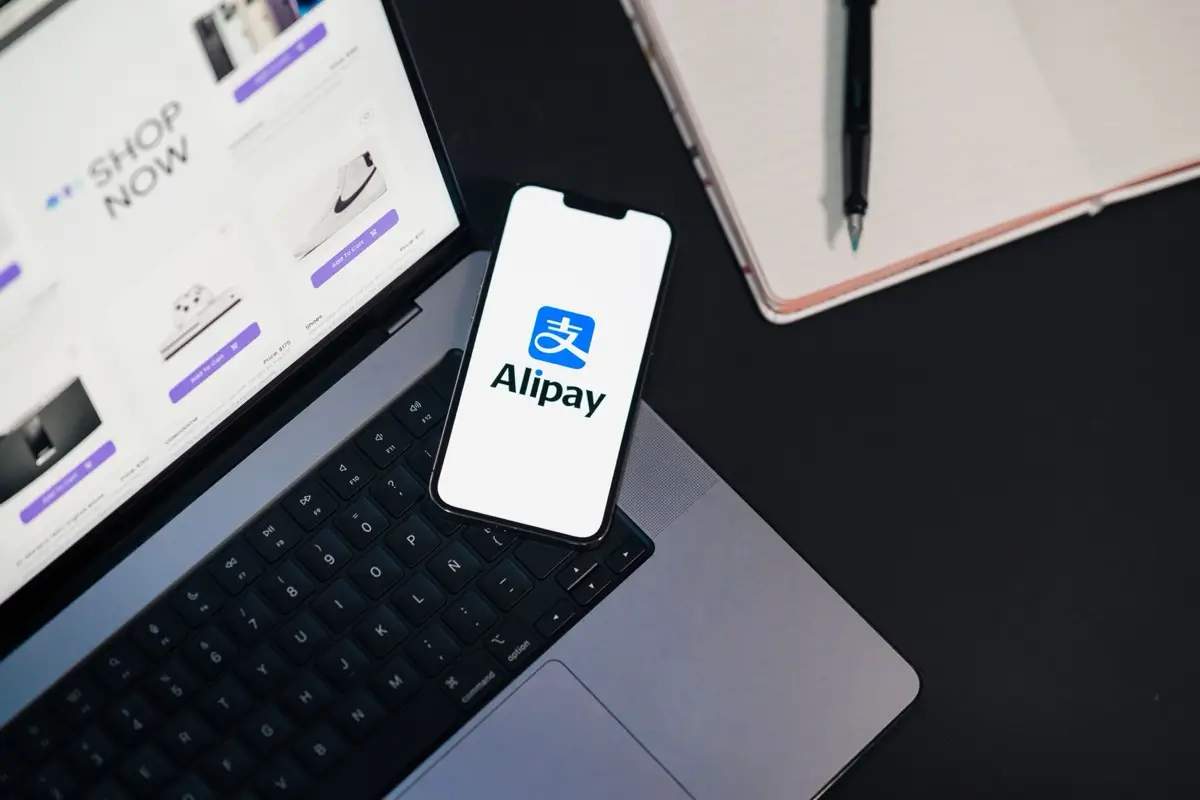
Alipay is one of the prevalent Chinese mobile payments systems. Created by Alibaba, it has eventually outgrown the limits of internal Taobao transactions. Today the Alipay app serves Chinese consumers in millions of stores and organizations. It is internationally accepted as a secure payment means as well. Through the Alipay+ gateway run by Ant International, the wider network is accepted in more than 220 markets, and Chinese tourists can use this payment alternative in many of them. Nevertheless, its expansion in Western democracies remains cautious. Many experts suspect that the Chinese state authorities have access to user data collected by both the Alipay and WeChat platforms.
Whether it is true or not, Alipay China, the domestic version of the platform, remains a daily reality for the Chinese. The number of cashless digital transactions there is among the highest in the world. Since credit cards have never been popular in China, mobile apps are the best alternative to physical wallets. Digital payments are accepted practically everywhere while cash is used less and less. Whether you are a tourist eager to explore the wonders of China, or a business owner wishing to attract Chinese clients and expand your sales to the most vibrant consumer market in Asia, you’ll encounter Alipay sooner or later.
Back to basics
So, what is Alipay in practical terms? To begin with, it is a simple-to-use app which is compatible with most devices. Luckily for international users, it cooperates with the most widespread financial systems of the world. Therefore, Alipay international users with Visa, Mastercard, JCB, Discover or Diners Club cards can tie them to the given app, and a Chinese bank account is not required for basic payments. Visitors from many countries can also pay in China with their home e-wallets connected to Alipay+. Installing the app and choosing a valid payment channel requires a registration.
The authorization process begins with inserting a cell phone number. It is used for sending a verification code needed to proceed with entering personal data. The required information is common for most payment systems. Alipay asks the user to fill in their name, surname and credit card number(s). Foreign visitors also confirm their identity with a passport. Information security is protected by a password selected by the user, and the app supports biometric login as well.
The app interface is quite intuitive and can be easily used by not tech-savvy consumers. Most functions work via QR-codes scanning. The two hot buttons are “Scan” and “Pay”.
While paying in-store or at some physical facility, the employees will offer you scanning their unique QR-code. Then they can enter a necessary sum and receive your payment. Additional password confirmation is applicable in such cases to avoid unauthorized transactions.
Many supermarkets or restaurants have their own scanners placed at the pay desk. Alipay users can hit a “Pay” button and generate a payment barcode. No password is required after scanning to allow such type of payments. Every Alipay payment of this kind is practically instantaneous.
Additional functions
Another available main button is called “Collect”. Pressing it enables the owner to collect the debts from individual borrowers. That’s right, not only is Alipay a payment solution for business or service spheres, it is also often used for the interpersonal money exchange. If someone owes you money, you can generate a QR-code with the “Collect” option. The debtor then scans it and pays the specified amount back. The amount can be inserted by both sides either before or after scanning.
So that this function is easier to use within a circle of friends, colleagues, or family members, Alipay allows the creation of chats within the app. The “Friends” button opens the contacts list of people the user knows who use Alipay. The user can choose to add them to a chat. There is a special “Transfer” option within the chat. This way, friends can arrange a loan by chatting and immediately transfer money without leaving the app. Visitors who rely on a foreign card may find that some of these person-to-person features are limited, since such cards are primarily intended for paying registered merchants.
Alipay provides a thorough tracking history of all the user’s transactions. The profile data contains the details of all incoming and outgoing payments. The app also shows the account balance.
NB. The Alipay account balance comprises only the money stored directly in that account. Information about the linked credit/debit cards is unavailable here. Their balances are seen only via their separate banking apps.
Nevertheless, money from the Alipay account can be withdrawn to the credit card or vice versa. For instance, it may be useful if the user lends money a lot. All the sums “collected” land on your account balance. However, if you need to use a credit card outside of Alipay or the sum on your bank card is insufficient, money transferred from the account can be a lifesaver.
Super app
Uniting numerous services in one digital environment is popular nowadays. Technology companies around the world have been exploring the super app concept. The tendency originates from the Chinese super apps such as WeChat. The Chinese population is used to that multi-functionality, they find it convenient and apply that principle wherever they can.
Alipay is not exclusive. So, what is Alipay used for besides simple transactions? It features many useful services from partnering organizations, and many of them work as mini programs inside the app.
You can order a taxi cab directly from the Alipay app. Didi service provides all the usual features of a ride-sharing app (choosing the destination place on a map, automatic identification of one’s location by GPS etc.). Naturally, payment is done via Alipay at the end of the trip.
Users can also order food from the Alipay interface, borrow a bike, buy travel tickets, reserve a seat and pay for entry to many cultural events, or a movie theatre. If you don’t want food take-out, you can still use Alipay to scroll down the list of the nearest cafés and restaurants. The app assists you all the way to the dining place with step-by-step instructions.
Public transportation is another sphere where Alipay has changed daily routines. Hangzhou was among the first cities to introduce a scanning method for entering underground stations, and the approach has since spread to many other Chinese cities. Passengers no longer need any tokens or plastic cards for a ride. Just a cell phone with the Alipay app is enough. It helps users to avoid queues and facilitates the work of the underground employees.
Agentic payments
Alipay is also building payment tools for AI agents, which can search, choose and buy on behalf of the user. Its AI Pay service was introduced in 2025 and let users complete transactions through an AI agent by voice command, without switching between pages. In February 2026, Alipay reported that AI Pay had passed 100 million users. By May 2026, the service had processed 300 million transactions. In April 2026, Alipay extended AI Pay to third-party agents, which can buy and pay only after the user gives explicit authorization. In May 2026, Ant Group added an AI Wallet and Token Pay. The AI Wallet shows users the payments their agents make and lets them approve or review them. Token Pay is aimed at AI companies that charge for subscriptions and token top-ups. These services run on the Agentic Commerce Trust Protocol, which Alipay developed with partners so that AI systems and service platforms can verify each other, and on a security system built for agent-led transactions. Merchants are included as well. Alipay has added an AI agent to its Tap! devices, so a shopper can talk to a brand’s agent, place an order and pay in the same flow.
Pleasant bonus
Users of the Alipay platform enjoy numerous discounts at many stores and receive special little gifts during the Chinese New Year celebration period.
Furthermore, this app is a crucial part of the Ant Group fintech ecosystem created by Alibaba. Users gain access to Yu’e Bao, once the world’s largest money market fund. This can be used for investments, loans and even buying insurance. Ant also cooperates with many third parties to help their clients reach their financial goals smoothly.