Ukraine is among the global leaders in cryptocurrency usage; however, this has not yet led to a mass influx of global blockchain companies. Clear rules of the game, tax conditions, and regulatory certainty remain key factors for investors and technology projects.
To understand what effective crypto regulation should look like and what prospects Ukraine has for developing its blockchain industry, journalists from PaySpace Magazine spoke with Marc Boiron, CEO of Polygon Labs.
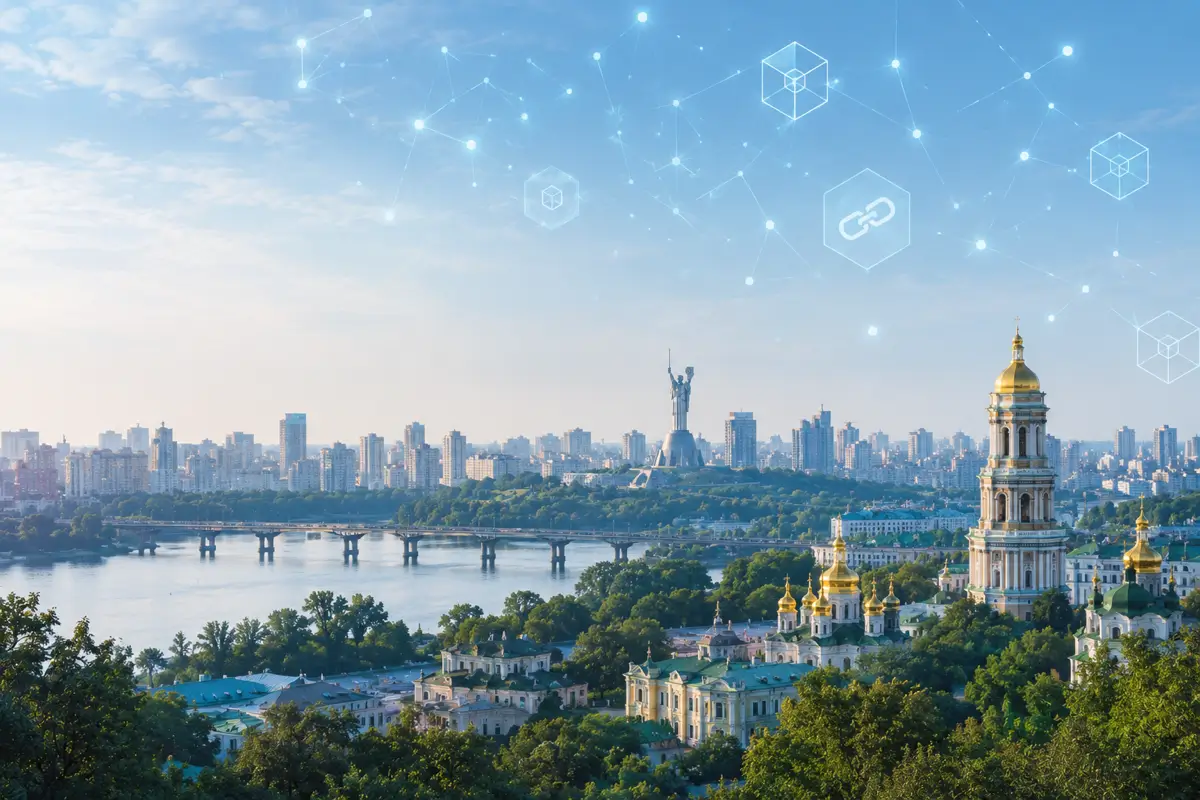
Image: AI-generated
Ukraine has high crypto adoption among the population. What prevents this grassroots enthusiasm from translating into major global blockchain projects setting up legal entities in Ukraine?
Ukraine has one of the highest rates of crypto adoption in the world, and that’s a huge strength. But there’s a difference between having a crypto-native population and being the jurisdiction where global blockchain companies choose to establish legal entities.
When founders and investors decide where to incorporate, they’re looking for regulatory certainty, predictable tax treatment, strong legal protections, reliable banking relationships, and confidence that the rules won’t change unexpectedly. Those factors often matter more than user adoption alone.
Ukraine has made important progress on digital asset regulation and has an incredible pool of engineering talent. The challenge is that companies making long-term decisions also have to think about operational stability, access to global capital, and the broader business environment.
What excites me is that Ukraine already has many of the ingredients needed to become a major blockchain hub. The talent is there. The entrepreneurial mindset is there. The crypto culture is there. As regulatory frameworks continue to mature and the country moves toward greater long-term stability, I think we’ll see more global blockchain companies seriously consider building a legal and operational presence in Ukraine, not just hiring talent there.
If a global Web3 company or a protocol like Polygon considers entering a new market, what are the top 3 criteria you look for in local regulation?
If we think about Polygon as payments infrastructure, the lens is slightly different from a typical Web3 company.
First, we look for regulatory clarity around payments and digital assets. Businesses need to know how value can move onchain, what licenses are required, and how compliance obligations apply. Payments only scale when companies can operate with confidence.
Second, we look for a regulatory environment that supports innovation and competition. The biggest opportunity with blockchain is making payments faster, cheaper, and more accessible. Markets that embrace new payment technologies tend to attract investment, talent, and infrastructure providers.
Third, we look for interoperability with the broader financial system. Successful payments networks don’t operate in isolation. We want to see clear pathways for banks, fintechs, payment providers, and blockchain companies to work together. The jurisdictions that get this right are often the ones that become hubs for innovation.
Payments infrastructure is built on trust. The markets that attract companies like Polygon are the ones that provide regulatory certainty, encourage innovation, and create a framework where traditional finance and blockchain technology can work together to deliver better outcomes for consumers and businesses.
Is MiCA a perfect blueprint for an emerging market like Ukraine, or should the country look for a more flexible, customized approach (like Dubai or Singapore)?
I don’t think it’s an either-or decision.
MiCA is an important milestone because it provides legal certainty and creates a common framework across Europe. For a country like Ukraine, alignment with MiCA makes a lot of sense, especially given its broader European ambitions and the benefits of regulatory compatibility with the EU market.
At the same time, every market has its own economic priorities and competitive advantages. Ukraine shouldn’t feel compelled to copy any framework word for word. Some of the most successful jurisdictions, including Dubai and Singapore, have adapted global best practices while building regulatory models that reflect their own goals.
The real objective is to create a framework that is clear, practical, and attractive to builders. Companies don’t choose markets because regulation is the strictest or the most flexible. They choose markets where the rules are understandable, innovation is possible, and there is confidence that the regulatory environment will remain stable over time.
For Ukraine, the opportunity may be to take the strongest elements of MiCA, maintain alignment with European standards, and at the same time create a framework that leverages the country’s unique strengths in technology, entrepreneurship, and digital asset adoption. That’s likely to be more effective than simply copying any single model.
What kind of regulator does a healthy Web3 ecosystem actually need? Should it be a strict supervisor or a supportive partner?
I don’t think those are opposing choices. A regulator’s job isn’t to be an industry’s cheerleader, and it isn’t to be an obstacle to innovation.
The most effective regulators set clear rules, enforce them consistently, and maintain an open dialogue with the market. That creates trust for consumers and certainty for businesses.
From Polygon’s perspective, the question isn’t whether a regulator is strict or supportive. The question is whether the rules are clear, predictable, and applied fairly. When that’s the case, companies can innovate responsibly and consumers are better protected.
The jurisdictions that have been most successful in attracting investment and innovation are typically the ones that combine strong oversight with constructive engagement. That’s a much better model than either extreme.
How crucial are ‘regulatory sandboxes’ for attracting foreign blockchain tech? Did Polygon have experience working within such frameworks?
Regulatory sandboxes can be very valuable, especially when policymakers and innovators are trying to understand new technologies together. They create a controlled environment where companies can test products, regulators can learn from real-world use cases, and both sides can identify risks before solutions are deployed at scale.
That said, I don’t think sandboxes are the primary reason companies choose to invest in a market. They can help accelerate innovation, but long-term investment is driven by regulatory clarity, legal certainty, and a clear path from experimentation to commercial deployment.
Across the blockchain industry, we’ve seen positive examples of regulators using sandbox-style approaches to engage with emerging technologies. Those programs often lead to better-informed policy decisions and stronger outcomes for both businesses and consumers.
Ultimately, a sandbox can be a great starting point, but companies build for the long term. What matters most is having a clear and predictable framework once a project moves beyond the testing phase.
Which sectors of the blockchain industry could thrive in Ukraine first, once a clear legal framework is established?
I’d focus on the sectors where Ukraine already has a natural advantage.
First, payments and stablecoin infrastructure. Ukraine has a highly digital population, a strong technology sector, and significant cross-border economic activity. Blockchain-based payments can make moving money faster, cheaper, and more efficient for both businesses and consumers.
Second, enterprise blockchain and tokenized assets. Ukraine has a deep pool of engineering talent and a strong tradition of building technology products for global markets. As more assets and financial services move onchain, there is an opportunity for Ukrainian companies to build the infrastructure that supports that transition.
Third, developer ecosystems and Web3 startups. Some of the most successful blockchain hubs started not by attracting large corporations, but by empowering local entrepreneurs and developers. Ukraine already has the talent base to become a significant source of innovation for the global blockchain industry.
More broadly, I think Ukraine’s greatest opportunity isn’t necessarily to become a crypto trading hub. It’s to become a builder hub. The country has world-class engineers, strong technical universities, and a proven startup culture. With the right legal framework, those strengths could position Ukraine as one of the most important centers for blockchain innovation in Europe.
What is your main piece of advice to Ukrainian policymakers drafting blockchain legislation right now? What is the single most important thing they shouldn’t mess up?
If I had to pick one thing, it would be this: avoid creating uncertainty.
Businesses can adapt to different regulatory models. What makes long-term investment difficult is when the rules are unclear, frequently changing, or open to multiple interpretations.
The most successful frameworks around the world aren’t necessarily the most permissive or the most restrictive. They’re the ones that give entrepreneurs, investors, and institutions confidence that they understand the rules and can plan for the future.
Ukraine has a unique opportunity to create a framework that protects consumers, supports innovation, and attracts investment. The key is making sure the rules are clear, consistent, and durable over time.
Ultimately, companies don’t invest because regulation is perfect. They invest because they have confidence in the environment. Building that confidence should be the priority.