
Image source: Unsplash (https://unsplash.com/photos/person-using-phone-and-laptop-computer-EMPZ7yRZoGw)
At times, fintech seems like an independent world. With rapid movements in payments, digital banking, financial apps, data platforms, and different investment forms, it’s easy to lose sight of the fact that even the most forward-thinking fintech company operates within a large, complex financial system.
That said, it is a great idea for those working in this area to understand the wider market context. Interest rates, currencies, tech stocks, consumer spending, as well as economic sentiment – all together they form a background to customer behavior and strategy of one’s business. Keeping them in check helps you see what is happening and why.
Market Movement Shows a Big Picture Context for Fintech Trends
Payments are just one area of the economy, as are digital wallets, lending platforms, investment apps, and financial software companies. Their development is closely linked to broader economic conditions; subscribing to Alpha Wire market updates could help fintech practitioners understand the financial environment surrounding their industry. For example, such updates could show how expectations about interest rates, currency changes, technology-sector performance, and economic sentiment have developed over time.
Why does such a broader picture matter? Because events that seem unrelated can, over time, influence how individuals and corporations use financial technology. Therefore, through Alpha Wire market updates, professionals may integrate that information into their overall information flow, connecting individual fintech events with trends across the financial markets instead of seeing each trend separately.
Interest Rates Influence More Than Lending
One reason fintech professionals watch financial market movements is changes in interest rates.
These changes can affect loans, investments, and business spending, among others. These changes could also affect the priorities of financial technology companies. For example, if people are saving more money, fintech platforms could pay more attention to tools that help manage money or compare rates.
In other words, one can say that interest rates can impact, among many others:
- Consumer borrowing through demand for loans and credits
- Saving behavior, in a way people rethink how they keep their money
- Business investment, which in turn affects the demand for financial services
- Company values, especially those of technology companies
Understanding rate settings can help explain changes in user behavior that might otherwise be seen as a shock to the system.
Currency Movements Matter in a Global Digital Economy
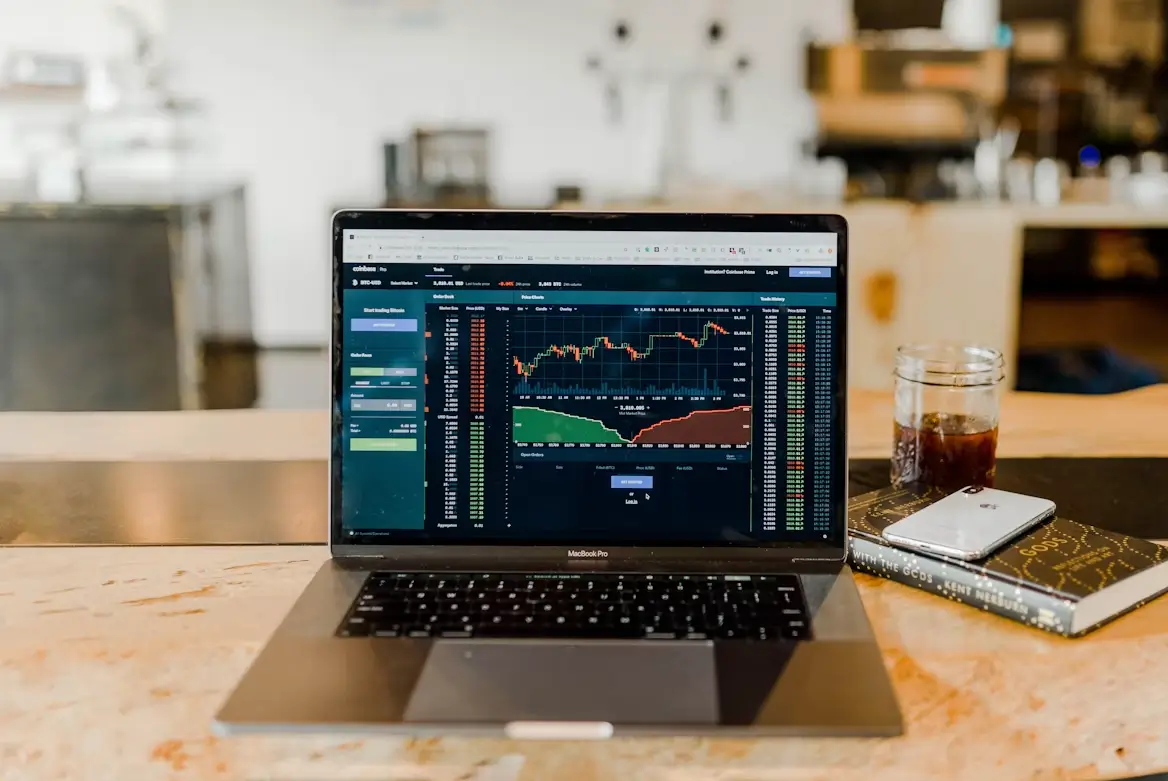
Image source: Unsplash (https://unsplash.com/photos/turned-on-macbook-pro-DfjJMVhwH_8)
Fintech companies are often multinationals, so their operations depend on foreign exchanges; therefore, the exchange market becomes a key factor. In addition, even if a company operates in only one country, it still needs to do business with international payment service providers, cloud providers, contractors, customers, and the like.
Exchange rate movements determine the costs of international money transfers and can drive the volume of products and services related to international money transfers. In addition, these fluctuations affect those earning income in foreign currencies.
For example, one of the main factors a fintech professional tracks in market trends is how money flows through a digitally connected global system.
Technology Stocks Can Reveal Investor Sentiment Flips
Fintech is closely tied to the wider technology industry, so investor sentiment toward major tech stocks can be informative for fintech professionals.
When investors are bullish on the tech sector, that excitement also affects subsectors like AI, financial software, digital commerce & payments. A shift in sentiment can also change how the market reacts to a company’s growth, margins, or innovation.
We should not assume that every fintech change is mirrored in tech stock performance. A more helpful way is to view tech stocks as a kind of mirror that can show how the overall market feels about innovation.
Consumer Spending Is a Reflection of Payment Trends
Consumer spending is one of the indicators most closely tied to payment services.
With every purchase, money moves somewhere in the financial realm. Financial applications, payment service providers, card networks, and digital wallets, among others, all rely heavily on how customers want to handle their transactions.
If a professional in this industry wants to make sense of what they see happening, watching consumer spending can be helpful for understanding :
- Which segments within commerce are seeing most growth
- How consumer preference is shifting between the digital and physical retail channels
- Places where a novel payment method could be very useful
- How much confidence the consumer has in spending his money
In fintech, it is easier to understand payment innovations from the perspective of those who make the actual payment decisions.
Investor Mood Can Give Meaning to the Overall Situation
In a sense, economic sentiment can drive decisions before those decisions start to show up in statistics and data.
People decide when to change their spending habits, companies decide when to alter their investment plans, and investors may decide which industries to focus on.
Educated observers in fintech would be well advised to track investor sentiment alongside other indicators.
One’s aim should not be to study every detail of financial market corners. Instead, it is enough to get just the feeling or flavor that one would miss when not being in contact with the market so that, for instance, a fluctuation in foreign exchange could be the reason for a drop in demand for international payment services or a change in central bank rates that could explain the popularity or drop in saving accounts or the combination of good consumer spending and a strong technology sector that could be a recipe for a boom in payment technologies.