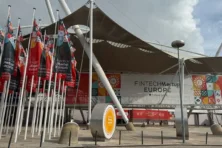
Bank of England Governor Andrew Bailey and IMF Managing Director Kristalina Georgieva warned at the IMF and World Bank meetings in Bangkok that the rise in cyberattacks could seriously undermine trust in the financial system.

Speaking on a panel devoted to online fraud, Bailey stressed that the central issue in the discussion about artificial intelligence is trust in technology and the need to maintain human control over it. He noted that modern finance depends entirely on technology and that without trust in money, society cannot function properly.
Bailey also pointed out that fraud is increasingly taking place through social media and apps, rather than only through traditional banking channels. He called on major technology companies to recognize their responsibility and take a more active role in tackling the problem. Technologies used by cybercriminals, he said, should also be applied to protect the financial system.
Georgieva shared these concerns. She noted that the scale of cyber fraud could push people to withdraw from the formal financial system. Those on the periphery are especially vulnerable: a loss of trust could completely deprive them of confidence in using financial services.
“I was born and grew up on the other side of the iron curtain. We didn’t trust the system. What did we do? I would have my dollars in a shoebox under my bed. And I worry, today, that unless we figure out how to get ahead of this curve, given the speed, the scale, and the cost of fraud growing up, we may end up with lots of people with shoeboxes under their beds,” Georgieva said.
Bailey referred to recent cases in which AI agents had hacked personal devices, as well as the story of a French supermarket where refrigerators overheated after a hacker breached its network.
“If you try to say what underpins this discussion about AI, for me it is the question of trust in technology and the question of human control to achieve that trust,” he said. “If we do not trust money, we cannot function as a society.”
These comments coincided with the release of the IMF’s latest Global Financial Stability Report. In it, cyber threats are identified as one of the systemic risks as the financial sector becomes increasingly intertwined with digital technologies. A major attack affecting payments, trading, or access to deposits could cause immediate losses and erode trust.
The report highlights three key drivers of rising risk: growing dependence on interconnected technologies, concentration on a few critical technology providers, and the increasing sophistication of cyberattacks. State-sponsored actors, ransomware groups, and insiders now have access to ever more powerful tools, including advanced artificial intelligence models that have shown strong capabilities in modeling network attacks.
This occasion featured the presentation of the Bangkok Blueprint for Fraud-Resilient Financial Services, a newly developed international set of principles devised by the International Monetary Fund and the World Bank in cooperation with the Bank of Thailand.
The document contains 12 main recommendations for countries around five domains: creating a strategic and legal framework, upgrading the entire fraud prevention process, using the existing risk management and enforcement systems, increasing national and international cooperation, and improving consumer protection and durability.
It’s important to note that the Blueprint is not a binding act but an advisory document aimed at assisting the governments, regulators, and financial institutions in their response to rising threats in the form of electronic fraud.