The decentralized finance (DeFi) sector is entering a new phase of rapid expansion in 2026, fueled by rising trading volumes, the growth of tokenized real-world assets, and increasing adoption of stablecoins across digital finance ecosystems.
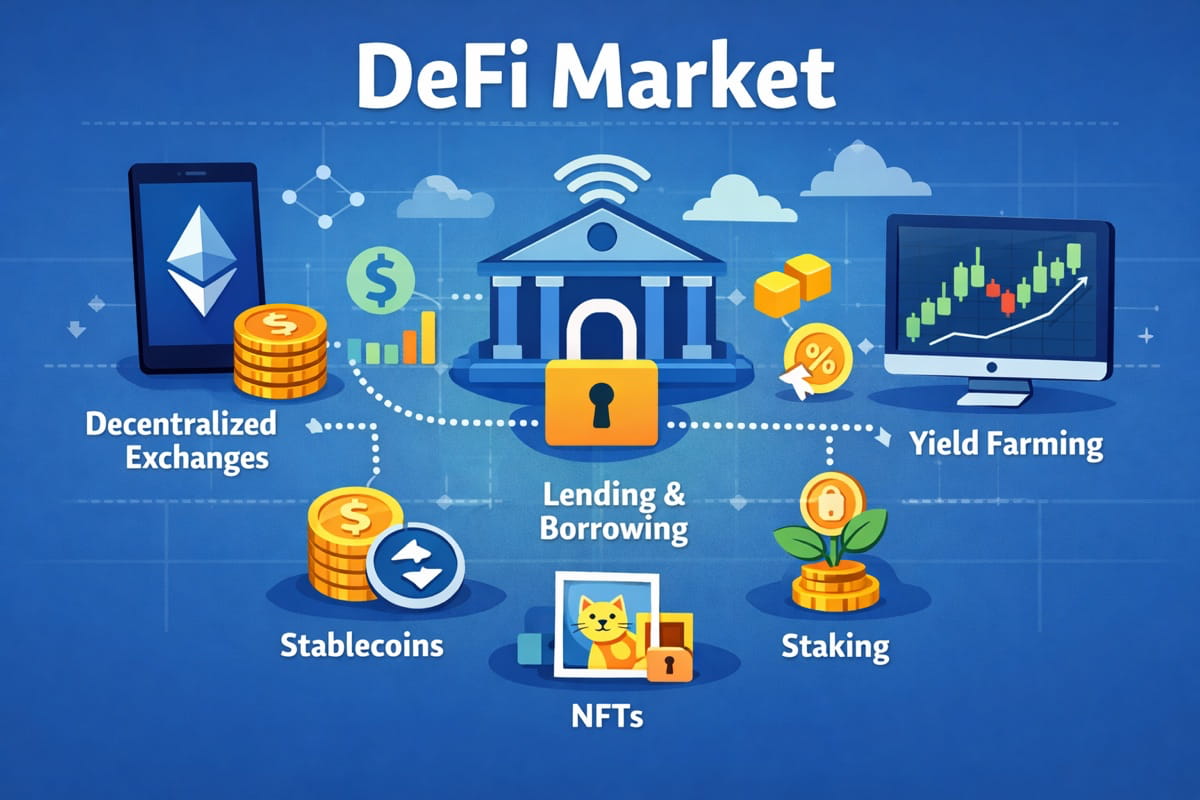
According to industry data compiled by NFTPlazas from multiple sources, the global DeFi market is projected to grow from approximately $26.9 billion in 2025 to about $1.4 trillion by 2033, representing a striking 68% compound annual growth rate (CAGR). The forecast highlights how blockchain-based financial services are moving beyond niche crypto communities toward broader use in global markets.
One of the strongest drivers of this growth is the surge in decentralized exchange (DEX) activity, particularly in perpetual futures trading. In 2025, trading volumes on perpetual DEX platforms jumped 346% year over year to $6.7 trillion, reflecting rising demand for decentralized derivatives markets that operate without traditional intermediaries.
Another fast-growing area within the DeFi ecosystem is prediction markets, which allow users to trade on the outcomes of future events using blockchain-based platforms. The sector recorded 233% year-to-date growth, making it one of the most rapidly expanding categories in decentralized finance.
At the same time, tokenized real-world assets (RWAs), including tokenized securities, commodities, money market funds, and other financial instruments, grew 139% year-to-date, signaling increasing interest in bringing traditional financial products onto blockchain infrastructure.
The growth of stablecoins, digital tokens designed to maintain stable value, is also helping accelerate the adoption of DeFi services. According to industry data cited by NFTPlazas, the total supply of stablecoins rose 49% in 2025 to reach roughly $300 billion in circulation. Stablecoins are widely used across DeFi platforms for trading, lending, and liquidity provision because they reduce the volatility associated with cryptocurrencies.
Another emerging trend is the rapid rise of tokenized stocks, which allow investors to gain blockchain-based exposure to publicly traded equities. The market capitalization of tokenized stocks increased by an extraordinary 2,695% within a year, reaching about $1.2 billion, suggesting growing demand for digital versions of traditional financial assets.
Despite the strong growth trajectory, the DeFi sector continues to face significant security challenges. In 2025 alone, decentralized platforms reportedly lost $512 million to hacks and exploits, highlighting ongoing risks in smart-contract infrastructure. Attacks targeting decentralized autonomous organizations (DAOs) accounted for more than $310 million of those losses, underscoring vulnerabilities in governance mechanisms and protocol security.
Due to the development of automated creative toools, not only DeFi sector, but also the wider financial industry is seeing a steep rise in AI-assisted account takeovers and friendly fraud that disproportionately impact small and mid-sized businesses.
Daniel Stanbridge, Chief Risk and Compliance Officer at payment processing platform Kurv, commented on the issue:
“Fraud no longer requires deep technical skill or weeks of planning. With widely available AI tools, someone can pull publicly available business information, generate realistic credentials, pass basic onboarding checks, process transactions, and disappear before the real owner even knows their identity has been compromised. What used to take coordination and expertise can now be done quickly and at scale. For a small merchant operating on tight margins, that kind of attack is not just inconvenient. It can freeze cash flow, damage credit, and create reputational harm that takes months to unwind.”
As the DeFi ecosystem expands, industry participants are increasingly focusing on improved security audits, better governance frameworks, and clearer regulatory standards to reduce risk and attract institutional investors.
Looking ahead to 2026 and beyond, analysts expect continued momentum in areas such as tokenization, decentralized derivatives trading, and blockchain-based financial infrastructure. If current trends continue, DeFi could become one of the fastest-growing segments of the digital economy, reshaping how financial services, from trading to lending and asset management, are delivered globally.