Lithuanian femtosecond laser startup LITILIT has begun developing a new production facility in Vilnius that is expected to manufacture up to 3,000 lasers annually within a few years of launch, as demand grows for precision manufacturing technologies used across semiconductor production, medical devices and advanced electronics.
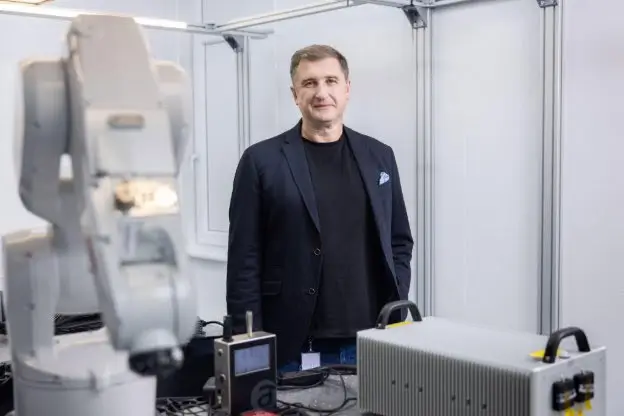
Nikolajus Gavrillinas, co-founder and CEO of LITILIT. (Image source: LITILIT)
The project, valued at approximately €6 million, is scheduled to complete its main construction and fit-out phase by the end of 2026. During its first year of operation, the facility is expected to produce up to 1,000 femtosecond lasers before gradually scaling to its full planned capacity.
Femtosecond lasers generate extremely short pulses of light measured in quadrillionths of a second. Because they can process materials with exceptional precision while generating very little heat, they are used in applications where even microscopic damage can affect performance. These include semiconductor manufacturing, precision electronics production, medical procedures such as eye surgery, and the fabrication of advanced industrial components.
The technology is particularly important for semiconductor production. Semiconductors are the foundation of modern electronics, powering everything from smartphones and data centres to electric vehicles and artificial intelligence systems. As chips become smaller and more complex, manufacturers increasingly rely on ultra-precise tools capable of cutting, drilling and processing delicate materials without causing thermal damage. The global semiconductor market size is estimated at $791.7 billion (as of 2025) by the Semiconductor Industry Association (SIA). It is growing by over 25% annually.
Despite their growing importance, femtosecond lasers remain relatively difficult and expensive to manufacture at scale. Much of the industry’s technology originated in scientific research environments rather than mass-production settings, creating challenges for automation and high-volume manufacturing.
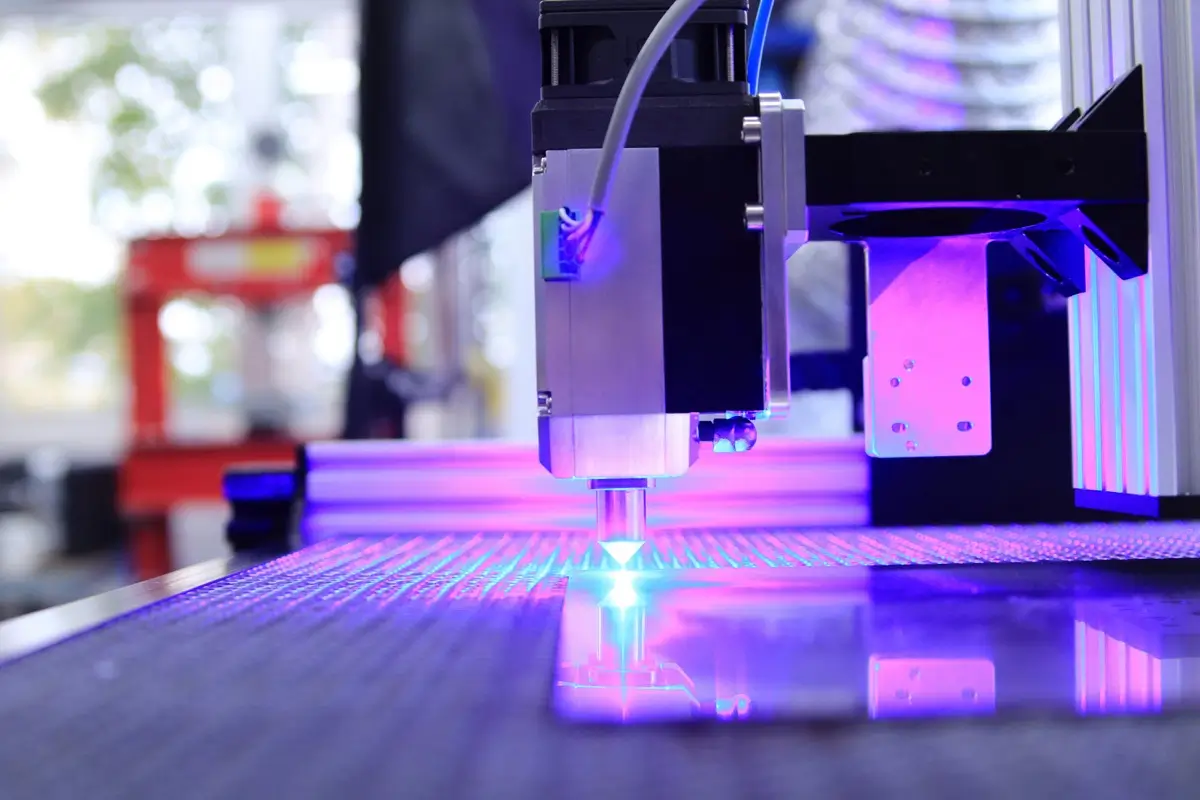
LITILIT is seeking to address that issue through a new production model built around automated manufacturing. The company is developing a large-scale femtosecond laser manufacturing facility designed to reach annual production capacity of up to 3,000 lasers, which it says would rank among the highest-capacity facilities in the sector. Major femtosecond laser manufacturers, including Coherent, TRUMPF, Amplitude, and Light Conversion, generally do not publicly disclose annual production volumes, making direct capacity comparisons difficult.
According to Nikolajus Gavrilinas, co-founder and CEO of LITILIT, one of the biggest barriers to broader adoption is the lack of scalable manufacturing methods.
“Traditionally, femtosecond laser architectures evolved from scientific systems. They can deliver strong performance, but are often complex to assemble, difficult to automate and dependent on highly qualified specialists. Our lasers are based on a purpose-built architecture with lower component complexity, modular design and a high level of automation. This allows us to organize assembly, testing and quality control faster and more efficiently,” Gavrilinas explains.
The facility will occupy 4,000 square metres and include two primary production areas: a CNC metal machining workshop and robotic assembly and testing lines for femtosecond lasers.
The company’s manufacturing approach is based on a patented ultrashort-pulse generation method originally developed in 2014 by LITILIT co-founder Kęstutis Regelskis at the Center for Physical Sciences and Technology (FTMC) in Vilnius. Founded in 2015, LITILIT has spent the past decade commercialising the technology. In 2022, the company raised €3.7 million from Taiwania Capital and Iron Wolf Capital, becoming the first recipient of investment from Taiwan’s $200 million Central and Eastern Europe investment fund.
“Our architecture achieves around 20% electrical-to-optical femtosecond efficiency, which is a strong result for this industry. In practical terms, this means lower energy consumption, reduced cooling requirements and reliable operation in industrial environments. The same architecture also allows us to build compact and robust lasers that require no maintenance and are robust to external disturbances,” Gavrilinas says.
Beyond Lithuania, the company plans to replicate the manufacturing model internationally through partnerships in other regions.
“Femtosecond lasers are becoming an essential tool for next-generation manufacturing, but wider adoption will depend on making the technology more accessible. With this factory, we are taking the first step toward a repeatable global production model – and we are proud to begin that journey in Lithuania, a country with a strong tradition in laser science and engineering,” Gavrilinas concludes.