What if you could pay for a holiday booking in Slovakia, a subscription in Portugal, or a marketplace order in Italy — all with the same app you use to split a lunch bill in Warsaw? For 21 million BLIK users, that future just got a lot closer.
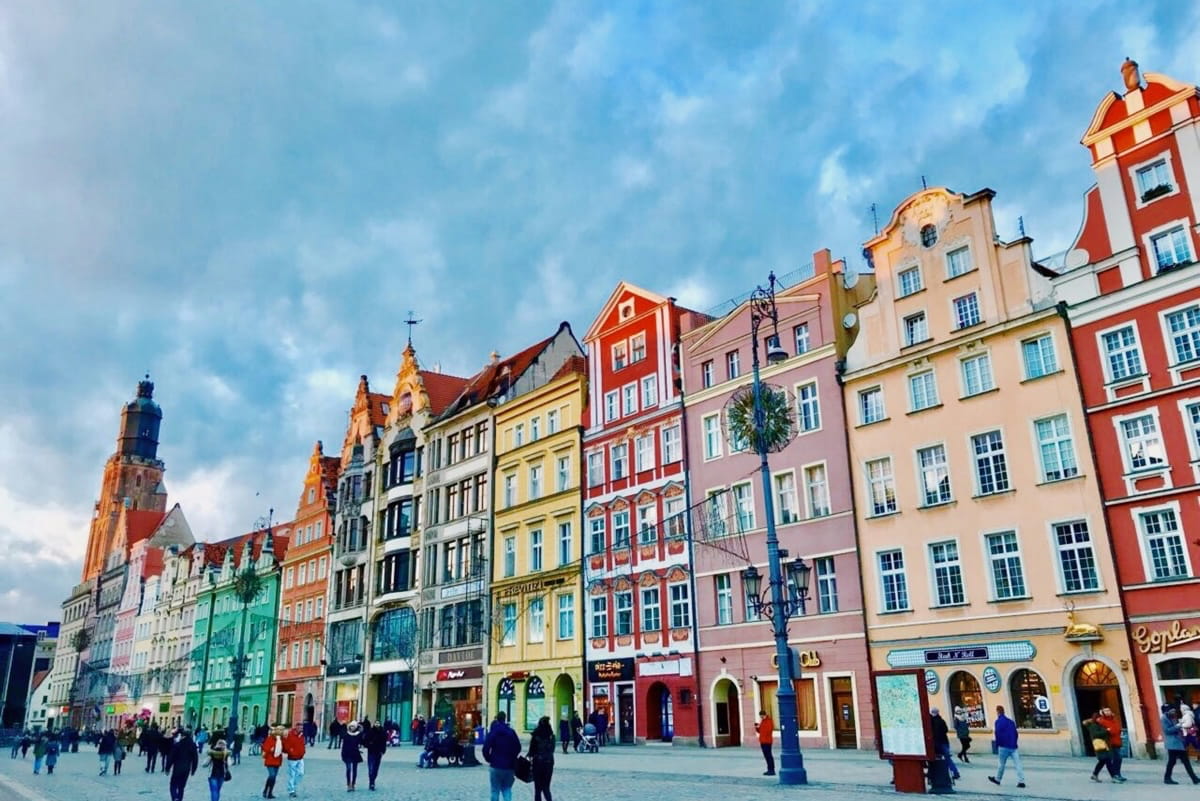
Poland’s homegrown mobile payment system BLIK has taken its most consequential step yet beyond its borders, enabling Polish users to make purchases at Slovak online stores — a quiet but landmark moment in the push for a unified European digital payments market.
The move follows BLIK’s launch in Slovakia in 2024 after its acquisition of Slovak platform VIAMO. Tatra Banka was the first Slovak bank to implement BLIK’s e-commerce solution, in partnership with PayU, a major online payment provider in Central and Eastern Europe. Now, the integration has deepened: Polish users can pay in euros at Slovak online stores, with the converted złoty amount displayed before they confirm, requiring no changes to their existing banking apps.
Initial pilot transactions have already been completed, with broader testing beginning in April 2026. The rollout is designed to be seamless by design. Merchants integrate once, and the cross-border layer works invisibly in the background.
For everyday users, the practical implications are immediate: booking travel, paying for digital services abroad, or shopping in foreign online stores can now be done through a familiar six-digit BLIK code, without setting up a foreign account or navigating an unfamiliar checkout.
The next phase, expected by the end of 2026, will flip the connection, enabling Slovak users to pay in Polish e-commerce as well. Over time, the ambition is to replicate this model across Europe, giving banks in participating countries access to a shared merchant network.
That ambition has a broader institutional backing. BLIK has been a member of the EuroPA Alliance since May 2025, a framework aimed at integrating European mobile payment systems and enabling users to send money directly to one another by phone number. The EuroPA network already has the potential to connect more than 100 million users across Europe.
The first demonstration of that potential came at Web Summit 2025 in Lisbon, where the very first test peer-to-peer transaction between BLIK and a European partner system was completed — a transfer sent from Portugal’s MB WAY to a Santander Bank Polska customer registered with BLIK. Future integrations are planned with Spain’s Bizum, Italy’s Bancomat, and the Nordic Vipps.
The timing is no accident. The cross-border transaction market in Europe reached €1.3 trillion in 2024, driven by intra-EU trade and global expansion and European e-commerce is projected to exceed €600 billion in 2026. BLIK is positioning itself not as a niche Polish product, but as an interoperability-first infrastructure that can slot into that ecosystem without requiring users to change behaviour.
Supporting local payment methods like BLIK can boost merchant conversion rates by up to 20% — a compelling argument for online retailers across the continent to pay attention.
For a continent long fragmented by incompatible national payment systems, BLIK’s expansion is a small but telling signal: the infrastructure for a genuinely borderless European payment experience is being built, one corridor at a time.