Forty eight hours ago news of US-Iran ceasefire, no matter how temporary it could be, looked like a real breakthrough. Now Iran is protesting against any deals again, Israel is still bombing Lebanon, ships that need to pass the Hormuz remain stuck, and oil is creeping back toward $100.
One of the most waited-for ceasefire in years is hanging by a thread. On Tuesday night, the United States and Iran seemingly agreed to halt what now is nearly six weeks of strikes, announcing they established a two-week truce brokered by Pakistan. That news for many market observers and consumers pressured by sky-high fuel prices felt like a genuine turning point. Markets surged. Oil plunged. World leaders exhaled. Then Wednesday happened.
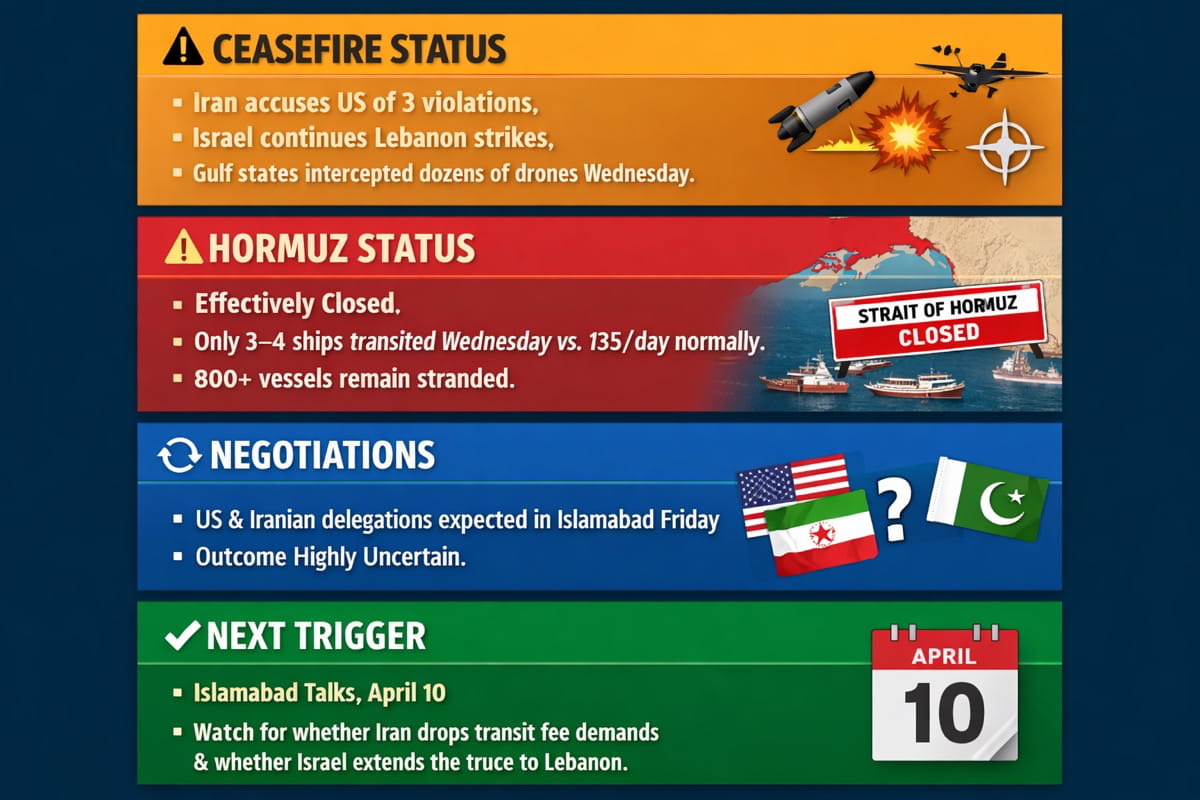
By Thursday morning, Iran’s parliamentary speaker was accusing Washington of violating the agreement on three counts. Israeli jets were still hitting Hezbollah targets in Beirut — strikes Israel insists fall outside the deal’s scope. And the Strait of Hormuz, the waterway through which a fifth of the world’s oil ordinarily flows, remained effectively closed to commercial shipping.
Ceasefire Details
The truce was publicly announced by Pakistani Prime Minister Shehbaz Sharif, as his country serves as an intermediary between Iran and the US in this conflict. It happened just few hours before U.S. President Donald Trump’s self-imposed midnight deadline on April 7.
Framed as immediate ceasefire, the alleged agreement was supposed to procure a two-week pause in hostilities between the US, Israel, and Iran basically in every region affected, including Lebanon. To the joy of energy markets, Iran also reportedly agreed to allow safe passage for cargo ships through the Strait of Hormuz during that window. Additionally, it was announced that both sides agreed to send delegations to Islamabad on Friday, April 10, for more substantive negotiations.
Trump spoke about the ceasefire as about something close to a total win. Meanwhile, Iran representatives explicitly stated it was “not the end of the war.” Netanyahu endorsed it first, then immediately said it wouldn’t apply to Lebanon. That’s where the already fragile ceasefire started to crack.
The Strait of Hormuz is like Schrödinger’s Cat paradox: theoretically open, but closed in practice
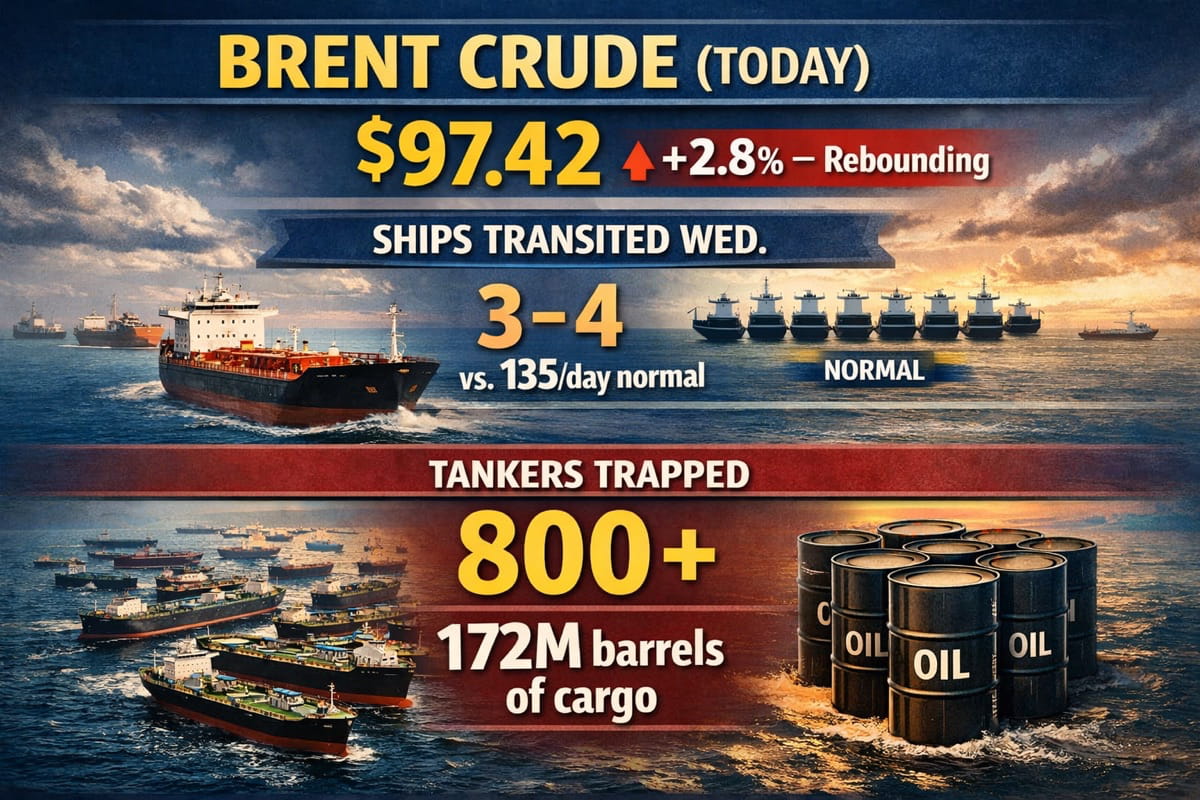
The Strait has been largely blocked since February 28, when the US and Israel launched strikes on Iran, killing Supreme Leader Khamenei. In retaliation, Iran’s IRGC warned off all shipping. More than 800 vessels — carrying some 172 million barrels of oil — are currently trapped inside the Gulf.
In a one-day short-lived ceasefire, only three to four ships have managed to transit the narrow waterway so critical for global energy. Iranian state media has given contradictory signals about its openness status: one outlet declared a full closure, while another published official safe-passage coordinates. An IRGC commander reportedly threatened to “attack and set ablaze any ship attempting to cross.”
Adding a new flashpoint: Iran and Oman are reportedly planning to charge transit fees — payable in cryptocurrency — for passage through the strait. The White House called any toll a “red line,” with press secretary Karoline Leavitt saying Trump’s demand for “complete, immediate, and safe opening” should be taken at face value. Greece’s prime minister called the fee plan “unacceptable” and a danger to the principle of freedom of navigation.
Markets: One Day of Euphoria, Now Pulling Back
Wednesday’s initial market reaction was historic in scale. WTI crude optimistically crashed by whole 16.4% — its steepest single-day fall since 2020, and settled at $94.41 a barrel. The Dow Jones Industrial Average in the meantime surged by 1,325 points, showing off its best session in a year. Asian and European markets followed suit: South Korea’s Kospi jumped nearly 7%, Japan’s Nikkei 5.4%, Germany’s DAX 5%. Treasury yields fell, airline stocks soared, and traders began pricing in a Federal Reserve rate cut later in 2026.
By Thursday, though, the mood had shifted. Brent crude climbed back 2.8% to $97.42 as Iran’s ceasefire accusations hit the wires. Analysts at Evercore ISI put it plainly: “A two-week pause is not a resolution. Financial markets will remain sensitive to any breakdown in talks.” JPMorgan’s trading desk had been optimistic, writing that the S&P 500 could surge further “as euphoria returns” — but that euphoria is now contingent on Friday’s Islamabad talks going somewhere.
The underlying stakes remain enormous. Before the war, the Strait of Hormuz was the main path for vessels that carried a fifth of the world’s seaborne oil, 20% of global LNG, and up to 30% of internationally traded fertilizers. Since the start, the Middle East military conflict has already sent US gasoline prices above $4 per gallon and had QatarEnergy declare force majeure on LNG shipments. Restoring normal flow — even under a durable ceasefire — will take weeks given the backlog of stranded vessels.
For now, the world watches Islamabad.