Governments worldwide are on track to spend $1.1 trillion on fossil fuel subsidies in 2026, a new report from the United Nations Development Programme (UNDP) finds. If oil prices climb to $110 a barrel, up from a current average of $88.60, that figure could even reach $1.43 trillion.
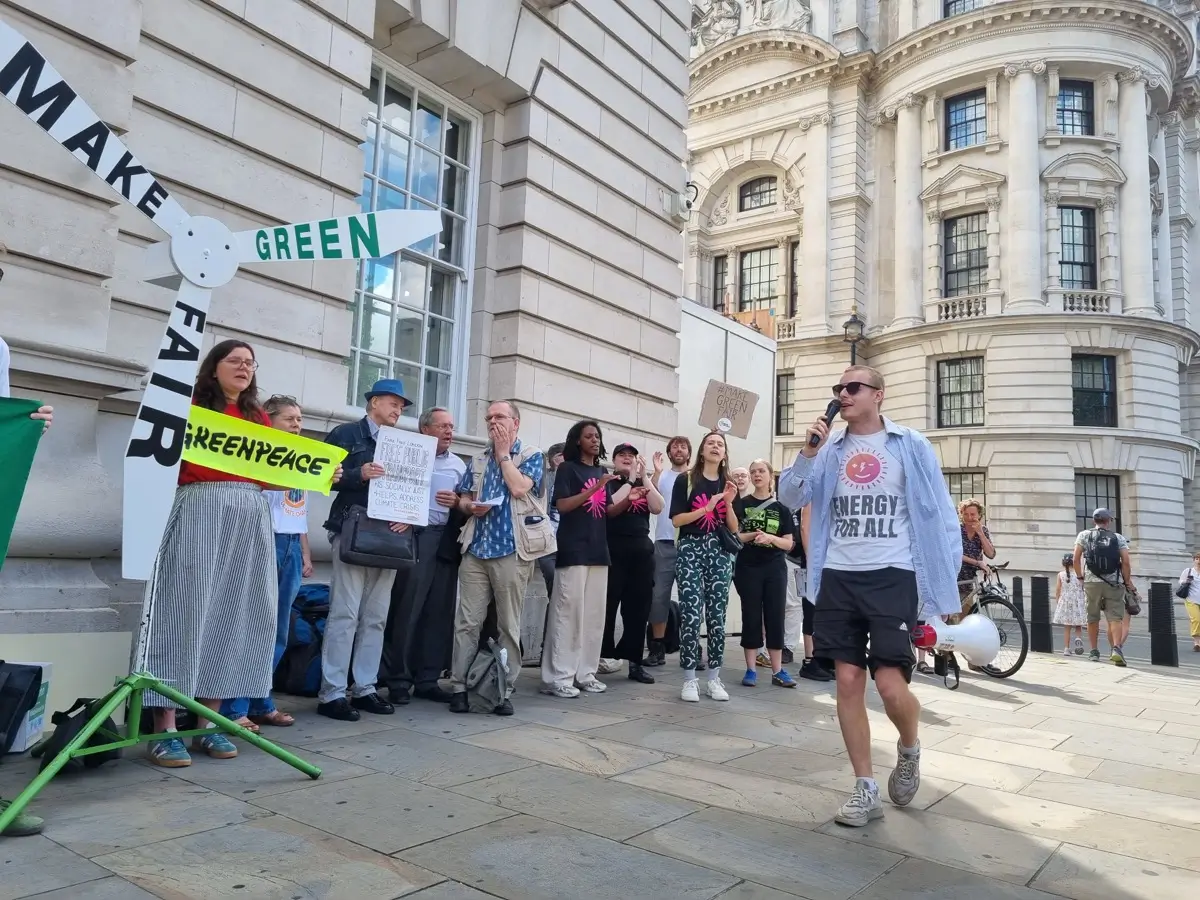
Image provided by 350.org
The UNDP Report
The UNDP released “Military Escalation in the Middle East: Cushioning the Global Shock,” on June 29, 2026, prior to the Hamburg Sustainability Conference. This report provides an overview of how countries have reacted to sudden increases in oil prices due to the conflict in the Middle East and disruptions that have occurred in the Strait of Hormuz.
The report indicates that without government intervention, the number of people who will fall into poverty will increase even more than is currently expected. Depending on whether or not an oil shock occurs, the UNDP estimates that there could be an additional 17 million to 45 million individuals who become impoverished.
The $1.1 trillion total is a $410 billion increase compared to what was planned in 2025. This increase is made up primarily of fuel subsidies, price caps, tax rebates, and other forms of government assistance designed to keep energy prices affordable for households and businesses. Subsidies had actually fallen by roughly half in 2024, as markets stabilized — a trend that has now sharply reversed.
UNDP Administrator Alexander De Croo framed the spending as a trade-off. “Money that should be building schools, hospitals, and clean energy systems is being used simply to keep economies afloat,” he said in the report, adding that “No country should have to sacrifice its future development to manage a crisis it did not create”.
Low- and middle-income countries carrying high debt loads face the greatest exposure, the report notes. Over half of the world’s 25 most climate-vulnerable nations are struggling with armed clashes, widespread violence, and/or severe humanitarian crises. Such fragile states, facing humanitarian crises and being unable to address climate change issues due to more pressing problems related to armed conflicts, are frequently overlooked in climate action efforts. The paradox is they endure the worst impacts of climate change despite contributing the least to its causes. UNDP is pushing for easier access to international climate financing and faster investment in renewables, arguing that energy security and the energy transition are, at this point, the same problem.
How Campaigners Are Interpreting These Figures
On July 1, climate campaign group 350.org, along with Fuel Poverty Action and other coalition partners, cited the UNDP figures during a demonstration outside the UK’s Department for Energy Security and Net Zero. They described the $1.1 trillion as governments “propping up the fossil fuel industry” — a characterization that goes further than UNDP’s own framing, which describes the spending as relief for consumers rather than direct support for producers.
350.org Executive Director Anne Jellema called for a permanent windfall tax on fossil fuel profits. “The $1.1 trillion that governments are pouring into fossil fuel subsidies this year is not a safety net, it is a ransom payment. Every dollar spent shielding the fossil fuel industry from the consequences of its own price volatility is a dollar not spent on the clean energy systems that can bring costs down for good,” Jellema said. She argued that redirecting subsidy spending toward clean energy, home retrofits and climate adaptation would offer a longer-term alternative to repeated crisis spending.
Therefore, 350.org is calling for a phase-out of public subsidies to fossil fuel companies and the introduction of a permanent, legislated windfall tax mechanism, rather than a one-off levy.