The best travel deal in the world might still lose the ground if accompanied by a clunky checkout. New research shows that flexible payment options like BNPL, digital wallets, or mobile money are quietly becoming one of the travel industry’s most effective sales tools.
New research from Peach Payments and PayJustNow, conducted by Phocuswright, makes the case plainly: give people more ways to pay and they’re more likely to book. Not just more likely — they tend to spend more too. It’s a simple finding with real commercial weight behind it.
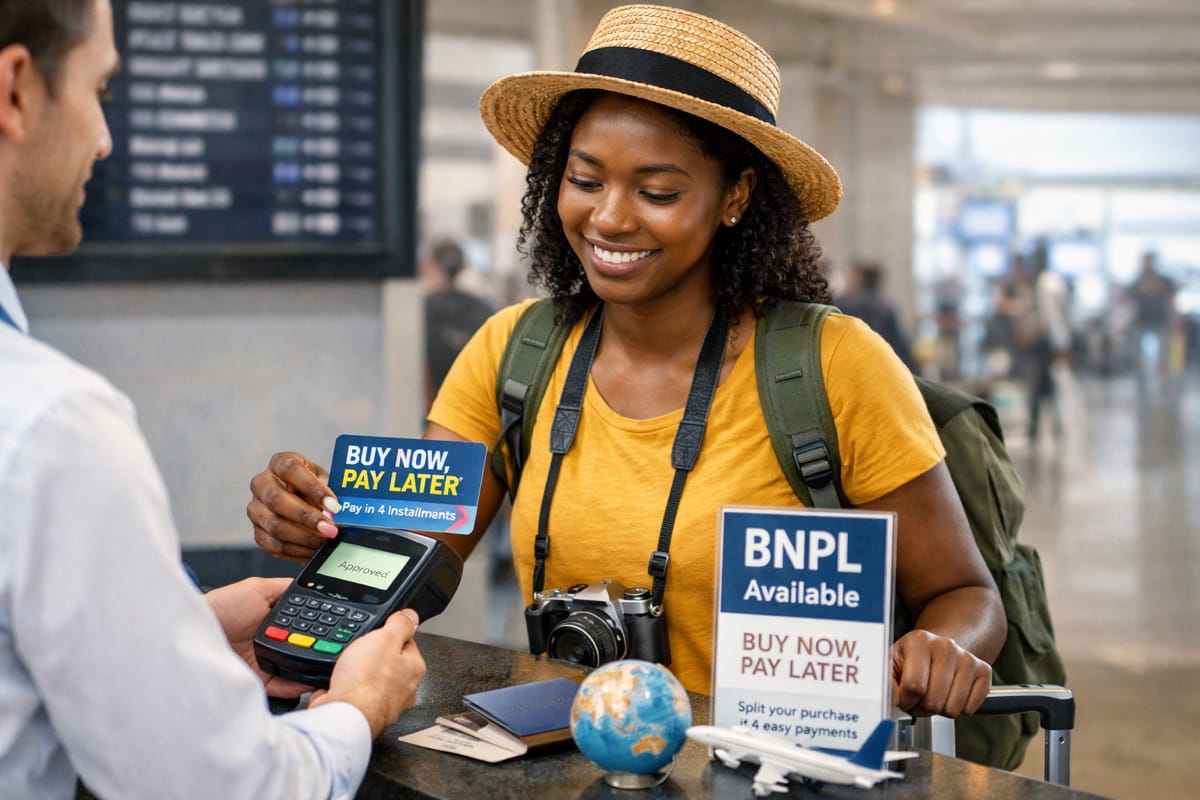
The clearest example right now is Buy Now, Pay Later. Travelstart doubled its BNPL share from 3% to 6% in a single year. In isolation those numbers look modest, but travel is a volume business — that kind of shift moves meaningful revenue. The psychology isn’t complicated: splitting a R8,000 flight into manageable instalments makes a trip feel possible in a way that a single upfront charge doesn’t. Commitment follows affordability.
“BNPL is playing a critical role in boosting loyalty and expanding access to more travellers who want cashflow-friendly payment options to secure their purchase,” said Daniel Hawkins, Executive Head of Marketing at PayJustNow.
Digital wallets are telling a similar story. Visa data shows nearly four in ten South Africans consider them the fastest way to pay, and when Travelwings added Apple Pay and Google Pay, transaction volumes climbed noticeably. That result is worth pausing on — the company didn’t change its prices, its routes, or its marketing. It just reduced friction at the moment of payment, and people responded. Checkout abandonment is often less about hesitation than about hassle.
Mobile money adds another dimension that’s easy to underestimate if you’re looking at South Africa through a purely banked-consumer lens. Africa accounts for around 74% of global mobile money transactions — a staggering share that reflects how deeply services like M-Pesa have penetrated daily financial life. With over 40 million users in Kenya alone, mobile money has brought digital payments to people who’ve never held a traditional bank account. For travel companies serious about reaching the full market, ignoring that channel is leaving real customers behind.
“As travel demand evolves in South Africa, payments will be a key area of focus for companies looking to improve conversion and better serve customer needs. Success will depend less on any single payment method and more on reducing friction across the booking process,” says Mitra Sorrells, SVP content at Phocuswright.
None of this is frictionless on the operator side, though. Running multiple payment methods means managing different systems, reconciling mismatched data formats, and absorbing varying transaction fees. Cross-border bookings bring their fair share of trouble to the table as well. Think of currency conversion costs, 3D Secure checks that quietly kill transactions before they complete, and settlement timelines that vary wildly by market. The customer experience can look spotless while all the messy stuff is hidden in the back-end. Merchants who want to succeed solve this entanglement through sophisticated payment orchestration and recon APIs from payment service providers.
“These solutions talk to multiple backend providers to ensure the settlement process is seamless,” says Peach Payments CEO Rahul Jain.
What the research ultimately points toward is that no single method wins the whole game. The companies gaining ground are the ones treating payments as part of the product itself — something worth designing carefully, testing continuously, and expanding deliberately. In a market where travel demand is growing but competition for that demand is fierce, the checkout screen has become a genuine differentiator.