Worldline says it’s now the first payment provider in Europe to bring Click to Pay into recurring billing — meaning one-click checkout no longer ends after the first purchase, but carries through the life of a subscription. The company announced the move today, but it will roll out on Global Collect, Worldline’s cross-border payments platform, only starting July 30.
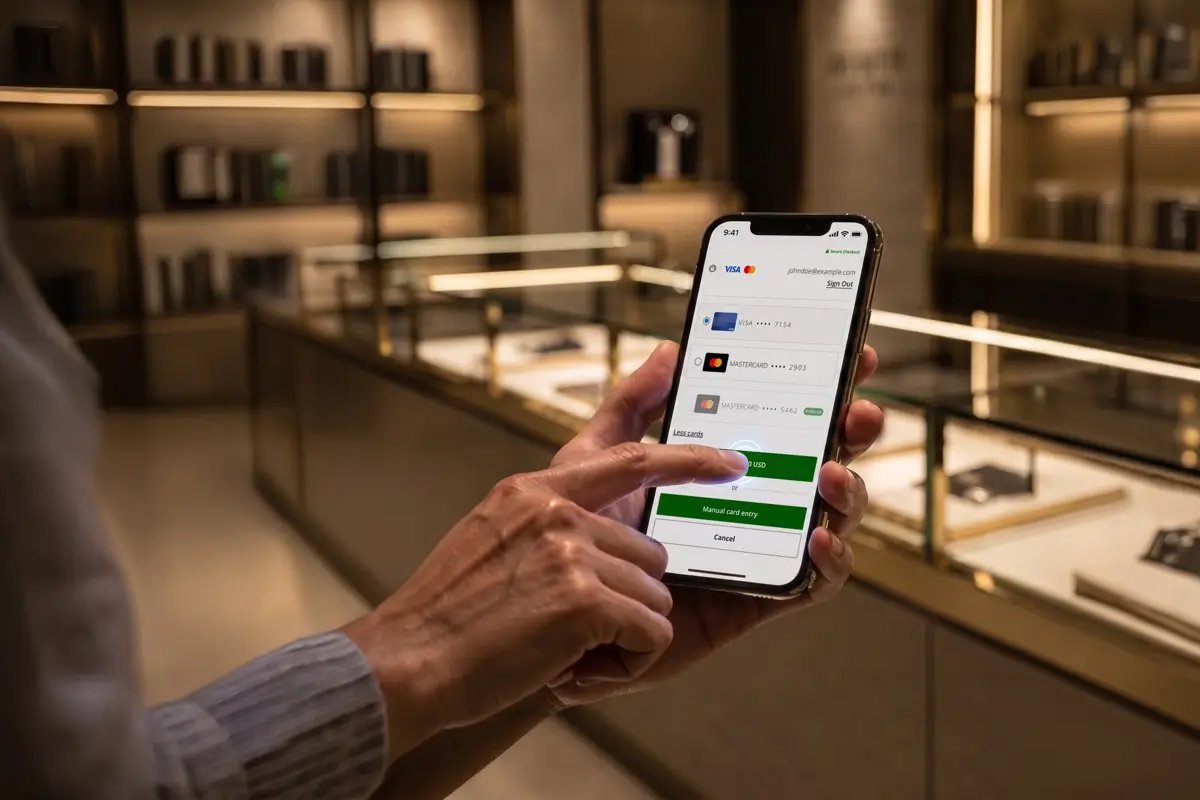
Image provided by Worldline
The target is a specific, well-documented leak in subscription revenue: involuntary churn. According to the company’s own press release, involuntary churn can account for up to 40% of total subscription losses, a figure that sits at the upper end of a 20-40% range cited across multiple industry studies, including data from Recurly and Paddle’s ProfitWell. Most of that loss traces back to expired or reissued cards rather than customers actively choosing to cancel. This is the exact problem Click to Pay’s tokenization model is built to solve, since the card network, not the merchant, keeps the credential current. Per Mastercard data, Click to Pay conversion rate is 93% while competing checkout solutions fare at 88%. It also reduces chargeback chances by 50%.
What Click to Pay actually does
Click to Pay is the consumer-facing brand for EMVCo’s Secure Remote Commerce (SRC) standard, jointly maintained by the major card networks. It’s based on the EMV SRC Specifications, which provide a common baseline for building Click to Pay e-commerce payment solutions, including a shared API and JavaScript SDK. The mechanism is simple in practice: a shopper enrolls a card once, the network tokenizes the credential and stores it in a vault that sits outside any single merchant’s systems, and from then on checkout becomes a single click across any participating site.
That network-level ownership is also why Click to Pay extends naturally to recurring billing. When a stored card’s details change, the token service provider keeps the credentials up to date automatically. Mastercard cites Netflix subscriptions as the everyday example of how this already smooths automatic payments today. What Worldline has done is package that lifecycle, i.e. enrollment, initial purchase, and ongoing recurring billing with auto-refreshing tokens, all into a single merchant-facing capability for cross-border subscription businesses specifically, rather than leaving card-on-file token maintenance as a separate back-end process.
Market size and scale of innovation the new product targets
Figures for the subscription and recurring payment market vary depending on who’s counting, but one widely cited global forecast puts it at around $170 billion in 2026, climbing to $281 billion by 2033. Europe accounts for a little over a quarter of that — second only to North America. The continent’s wider real-time payments infrastructure is moving in a similar direction: one estimate puts the EU market near $8 billion this year, with double-digit growth as instant-payment rules push adoption further. Card-based recurring billing remains the dominant rail for subscriptions specifically, which is the segment Worldline’s announcement targets.
Click to Pay itself isn’t new in Europe. It’s been around for years. Nor is the underlying machinery for keeping recurring-billing tokens fresh; Visa’s Account Updater and Mastercard’s Card-on-File Tokenization already do that job and are in wide use.
What does appear to be new is bundling the Click to Pay checkout and enrollment experience itself into a packaged capability spanning the entire subscription lifecycle, on a cross-border platform, marketed specifically at digital subscription businesses. A search of recent Click to Pay deployments turned up nothing matching that specific framing in Europe. Juspay’s recent Click to Pay global expansion through the Mastercard Engage program, for instance, was built around reducing one-time cart abandonment at the point of guest checkout, following its 2025 Brazil deployment, rather than extending into recurring billing. On that narrower reading, Worldline’s new product offering may be based on well-known underlying technology, but its new use case seems to be unprecedented in Europe, as neither European nor foreign global providers have not yet introduced Click to Pay for subscriptions in the region.
The agentic payments connection
The launch also follows closely on Worldline’s other recent milestone. On June 2, 2026, at Money20/20 Europe, Worldline, ING, and Mastercard announced what they described as Europe’s first end-to-end agentic payment transaction completed in a live production environment, processed across the Netherlands and Belgium on the Mastercard network. In the demonstrated use case, a merchant’s AI agent searched for and selected a gift purchase within a consumer-set budget, completing the transaction only after explicit consumer approval.
Notably, that announcement specifically flagged recurring transactions and delegated purchases within pre-set parameters as the next use cases the three companies intend to explore. The Click to Pay recurring billing launch is a more conventional, card-tokenization-based step in that same direction — automating renewal payments without requiring an AI agent in the loop. At the same time, it points to where Worldline’s subscription-payments infrastructure is heading next: toward billing that runs with progressively less manual intervention, whether triggered by a stored token or, eventually, by an authorized agent.
What it means for merchants
For digital subscription businesses, e.g. SaaS, streaming, gaming, and membership platforms that were named specifically in the release, the pitch is straightforward: fewer failed renewals from stale card data, and faster initial checkout for international customers. Gertjan Dewaele, Head of Product & Technology at Worldline’s Global Commerce division, framed it as protecting recurring revenue at both ends of the subscription lifecycle, from acquisition through retention.
“Being first in Europe to bring Click to Pay to recurring payments is a major step forward for subscription commerce. With Global Collect, we help international merchants convert more sign-ups into long-term revenue by reducing checkout friction and avoiding payment failures. The result is simple: better conversion, lower churn, and stronger revenue protection at a global scale.”
Gertjan Dewaele, Head of Product & Technology at Global commerce division of Worldline