The UNCHAIN Festival presented its fifth edition on 17 June 2026 inside the medieval walls of Oradea Fortress. This year, the fintech event drew the attention of more than 1,000 banking, payments, and insurance leaders from across Central and Eastern Europe, who gathered in Romania for the two networking days curated by organisers as a deliberate departure from the “cold, sterile” conference format. The conversations were heating up across four parallel stages: Main, Focus, Roundtables, and Innovation; their range spanning across general policy keynotes on monetary architecture towards more localized country-specific deep dives on Poland, Slovakia, Armenia, Georgia, Israel, and Ukraine.
Below is our team’s on-the-ground recap from UNCHAIN Festival along with the overview of key subjects that kept resurfacing in industry discussions.
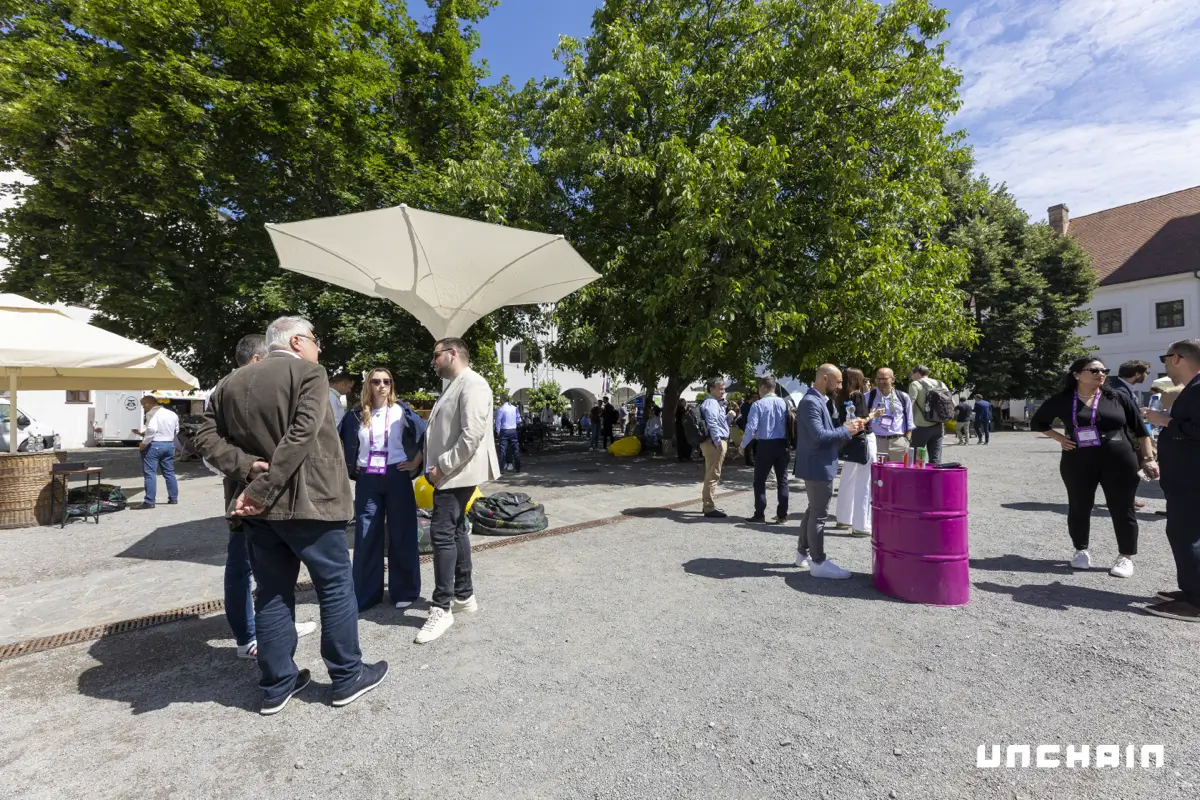
Participants gathering at Oradea Fortress. Image source: UNCHAIN
Starting with the essentials, we must say that the fifth anniversary edition of UNCHAIN Festival was a bustling mix of leaders from the financial and technology industries across more than 43 countries. It brought together 170 international speakers and representatives of central banks, regulators, financial institutions, fintech companies, and other technology providers dealing with European financial services development. The organizers estimate that about 250 organizations from the European financial ecosystem participated in this event for the first time, suggesting the local industry ecosystem is robustly expanding along with the UNCHAIN network. The newcomers included commercial banks, insurance companies, technology providers, and fintech startups and scaleups.
“This year’s edition demonstrated that UNCHAIN Festival has become one of the most relevant dialogue platforms for the financial industry in Central and Eastern Europe. The fact that over a thousand leaders from more than 40 countries chose to attend the event in Oradea confirms the growing need for collaboration between financial institutions, authorities, fintech companies, and technology providers during a period of accelerated industry transformation”
Alexandra Pollack, Founder & CEO of UNCHAIN Festival
As the event’s principal sponsor, Visa played a central role in fostering conversations that brought together established financial institutions, technology pioneers, and emerging innovators.
“For Visa, collaboration among banks, fintech companies, regulators, and technology providers is essential to help deliver simpler, faster, and more secure payment experiences for consumers and businesses. The digital transformation of the financial industry cannot be achieved by any single stakeholder. It requires a shared vision, common standards, and strong collaboration across the ecosystem. We are pleased to contribute to this conversation and support an event that brings these stakeholders together, helping accelerate innovation across the region.”
Catalin Cretu, General Manager, Bulgaria, Croatia, Romania, and Slovenia at Visa
The company’s continued support of the UNCHAIN Festival reflects its long-standing conviction that meaningful progress in financial services depends on bridging the gap between industry incumbents and new market entrants.
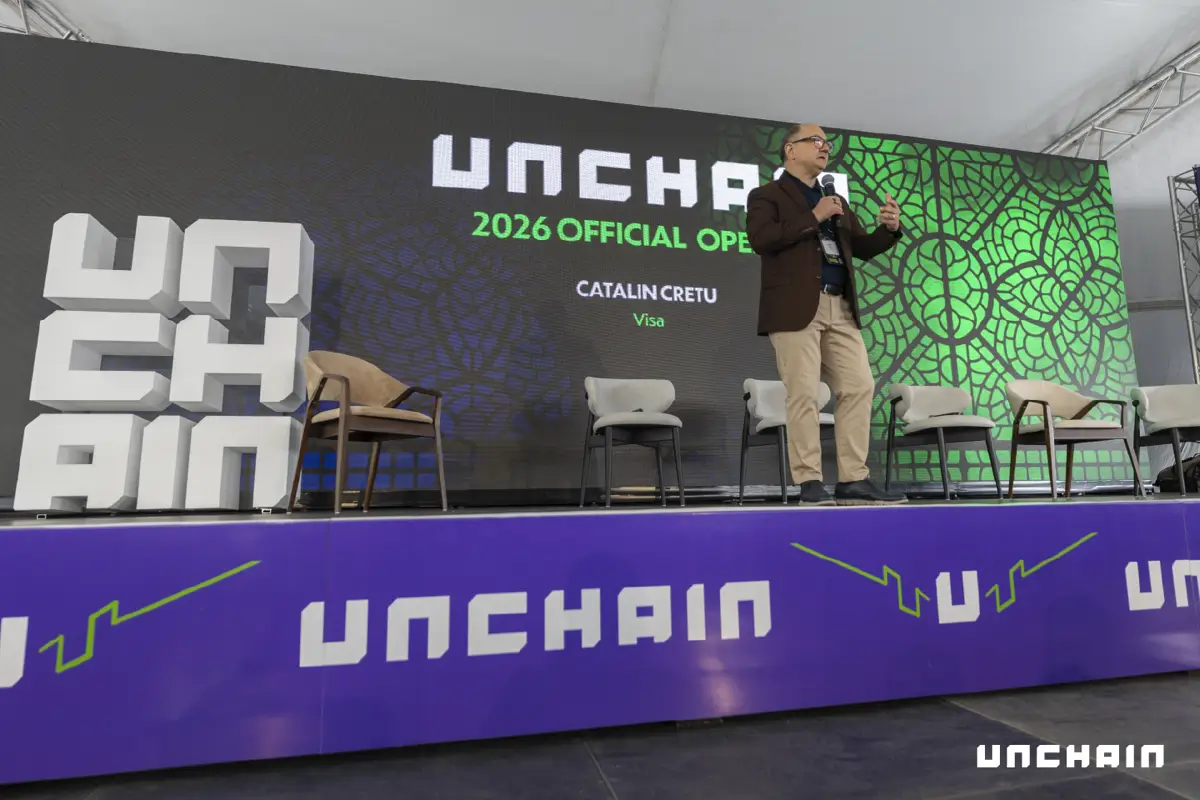
Image source: UNCHAIN
Main Topics Discussed at UNCHAIN Festival 2026
Throughout the two-day festival sessions, industry experts explored the main forces currently reshaping the future of finance. There was a lot to talk about, starting from the growing influence of artificial intelligence and payment automation to the evolution of the Digital Euro, stablecoins, asset tokenization, and instant payments. Besides top-notch fintech and blockchain innovations, conversations at UNCHAIN also addressed evergreen pressing challenges such as fraud prevention, alongside emerging opportunities driven by the energy transition and Europe’s evolving regulatory landscape.
“This year, we witnessed unprecedented interest in topics such as artificial intelligence, the Digital Euro, asset tokenization, and the future of digital payments. Beyond the conferences and debates, UNCHAIN Festival generated connections, partnerships, and projects that will continue to create value for the industry long after the event has ended”
Alexandra Pollack, Founder & CEO of UNCHAIN Festival
Innovation remained at the heart of the event. The Innovation Showcase provided a platform for fintech and insurtech startups to connect with investors, financial institutions, and potential strategic partners, opening the door to new collaborations and growth opportunities.
A recurring theme across all the discussions was the accelerating transformation of financial services. Speakers emphasized that AI, digital payments, automated financial processes, and next-generation financial infrastructure are set to redefine the way consumers and businesses access, manage, and interact with financial services in the years to come.
This year’s edition of UNCHAIN Festival also featured dedicated sessions on regional cooperation, banking infrastructure, insurance, emerging markets, green finance, and the role of women in the financial industry, as well as dozens of business and networking meetings that facilitated collaboration among organizations from across Europe.
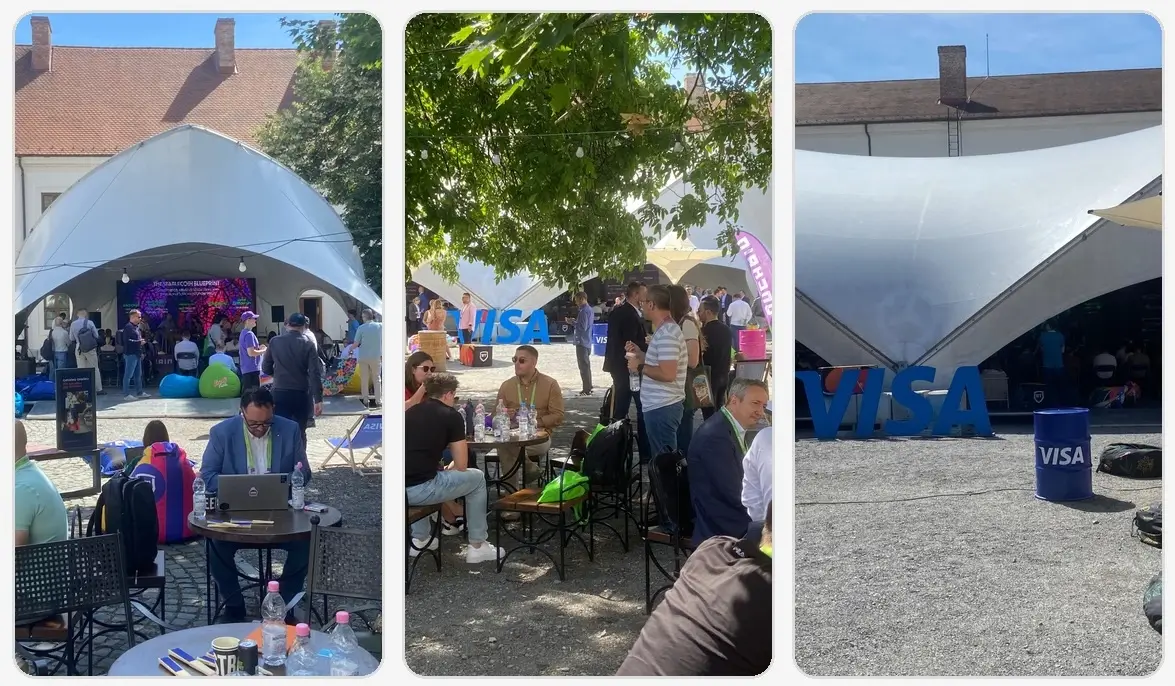
Select Session Highlights
Our team has visited several conference sessions focused on payments, digital identity development, data infrastructure management, and some dedicated market deep-dives. What stood out is that UNCHAIN Festival agenda this year carefully balanced pan-regional themes with granular, market-by-market regulatory and infrastructure discussion. For a business operating in a multinational yet economically, regulatorily and infrastructure-wise united region such as Europe, the combination of those two perspectives is essential.
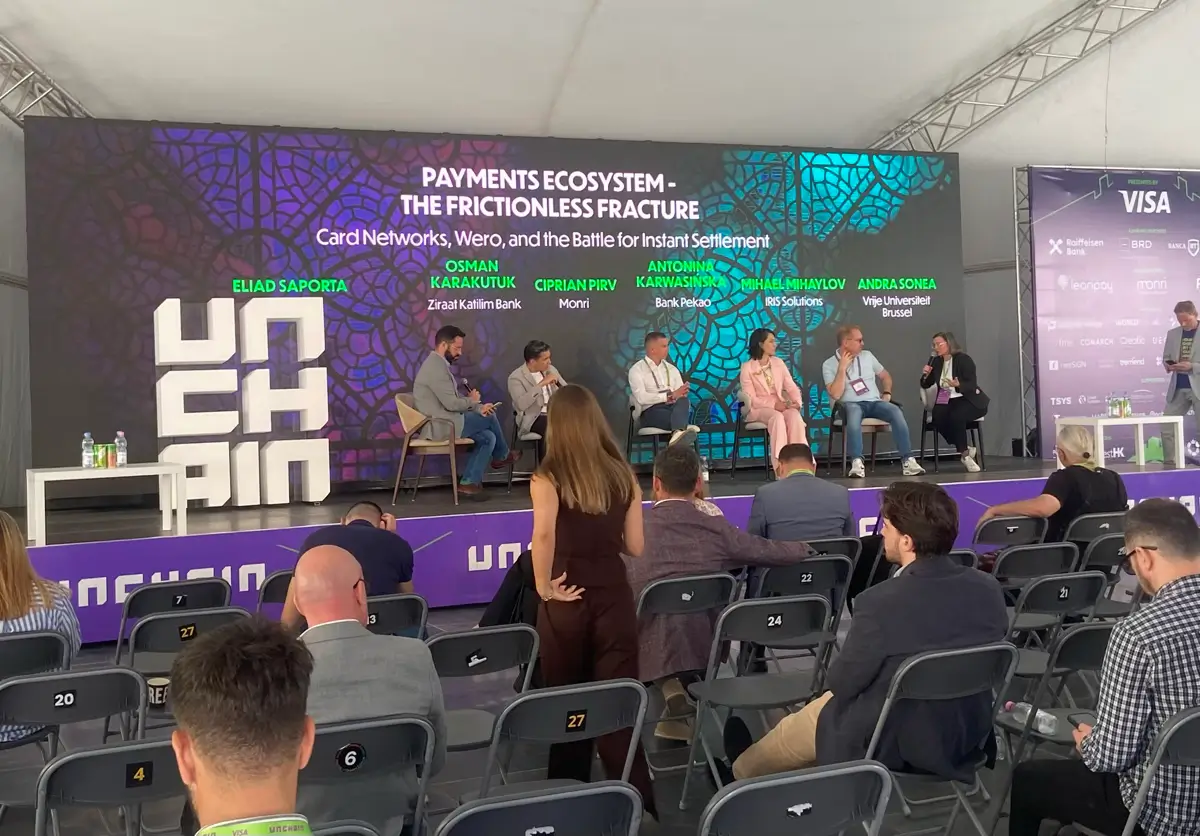
Payments Ecosystem — The Frictionless Fracture
On the Main Stage, the day’s payments-focused panel tackled card networks, the Wero wallet, and obstacles instant settlement faces in existing well-routed but direly needing modernization payment landscape. The session, titled “Payments Ecosystem — The Frictionless Fracture: Card Networks, Wero, and the Battle for Instant Settlement,” was moderated by Eliad Saporta, Founder and CEO of payments orchestration platform Coriunder.
The panel brought together:
- Osman Karakütük, Deputy General Manager of Treasury Management and International Banking at Ziraat Katılım Bank
- Ciprian Pirv, Country Managing Director at Monri
- Antonina Karwasińska of Bank Pekao
- Mihael Mihaylov, Co-Founder and COO of IRIS Pay, who also represents the Bulgarian Fintech Association
- Andra Sonea, PhD, postdoctoral researcher at Oxford Brookes University, whose background bridges academic network science with industry experience at IBM and FintechOS
The discussion centred on the tension between entrenched card-network rails and the push toward account-to-account instant settlement. Both payment models have their benefits and shortcomings. Both coexist in dominant payment method selections. However, the new speedy and cost-efficient payment models often fail to expand to their full potential as the market is already offering consumers a trusted and omnipresent card experience. Europe’s Wero wallet, backed by the European Payments Initiative, is repeatedly cited as the test case for whether bank-led alternatives can erode card-network dominance in the region.
Panelists representing both incumbent banks and independent payment processors weighed in on how quickly CEE markets are likely to move, given uneven instant-payments infrastructure across the region. One of the key takeaways is that Wero and similar account-to-account (A2A) payment rails face less of a technical barrier and more of a competitive one. Card networks remain deeply embedded in CEE merchant and consumer habits. They function well, and people have few reasons to try out new alternatives.
Wero is still in the rollout stage, having accumulated about 52 million registered users across a few European countries and supported only by select banks and merchants. Needless to say that both Visa and Mastercard users in the region count by hundreds of millions. They have mature infrastructure, practically universal adoption levels built over the years, and function as the backbone of retail payments, whether online or physical.
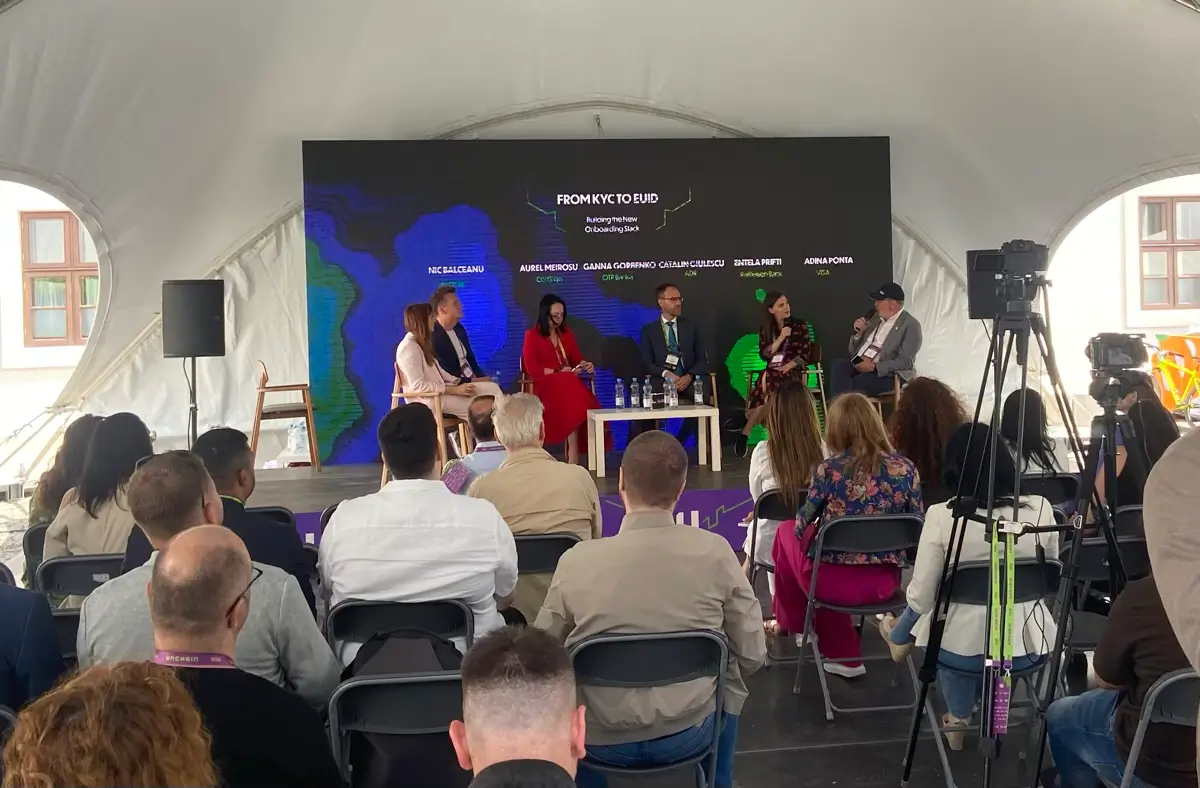
From KYC to EUID: Building the New Onboarding Stack
On the Focus Stage, a six-person panel examined how digital identity regulation is reshaping customer onboarding. As we know, European regulators have been working on the pan-region Digital Identification System and a digital ID wallet linked to it for several years now. With the new infrastructure emerging, e.g. one from LSEG Risk Intelligence, that serves as a new Identity Gateway infrastructure layer aimed at simplifying access to trusted digital identity schemes across multiple jurisdictions, payment industry professionals should get ready to move from traditional Know Your Customer checks toward the EU’s emerging digital identity (EUID) framework.
The panel, “From KYC to EUID: Building the New Onboarding Stack,” featured:
- Nic Balaceanu, Founder and CEO of Lendrise, and board member of the Romanian Fintech Association
- Aurel Meirosu, Manager of Business Development at certSIGN, a Qualified Trust Service Provider specialising in digital trust, electronic signatures, and identity solutions
- Ganna Gorbenko, Director at OTP Bank, an AML/CFT and financial crime investigations specialist
- Catalin Ciulescu of the Romanian Digitalisation Authority (ADR)
- Entela Prifti of Raiffeisen Bank
- Adina Ponta of Visa
With the EU’s digital identity wallet rollout advancing under eIDAS 2.0, the panel highlighted that onboarding is gradually shifting from a compliance cost centre to an infrastructure core that banks, trust providers, and regulators need to co-build. The presence of certSIGN and a Romanian state digitalisation official alongside bank compliance and card-network representatives reflected how cross-sector the identity question has become. Today, qualified trust providers, regulators, and incumbent banks are solving the same onboarding problem from different ends. Hopefully, such cross-segment panels would help them arrive at a common understanding and enable efficient solutions in this sphere.
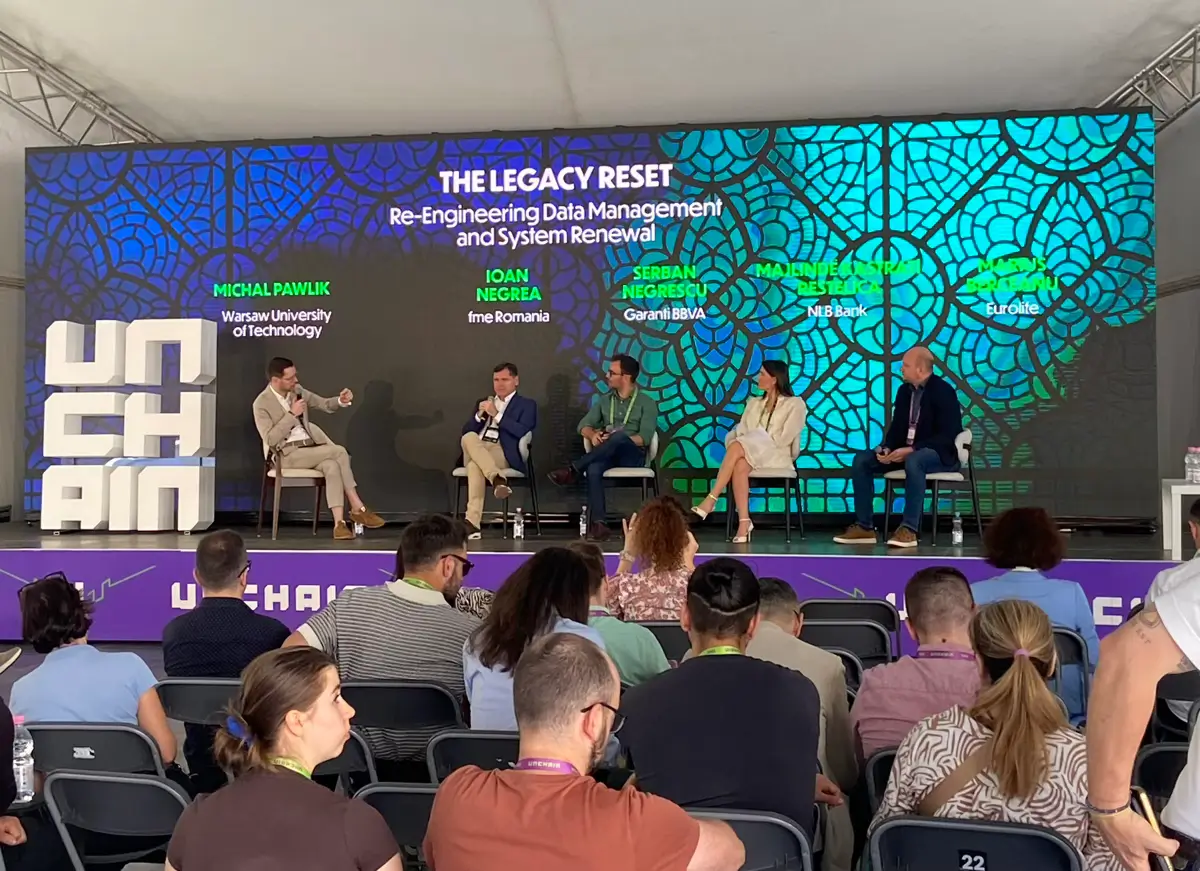
The Legacy Reset: Re-Engineering Data Management and System Renewal
Back on the Focus Stage, a five-person panel addressed one of CEE banking’s most persistent back-office problems: modernising legacy data infrastructure without breaking what already works. Insights gathered across previous editions of UNCHAIN Festival and distilled in its sector whitepapers show that all prominent regional banks are still navigating legacy “spaghetti” infrastructures, simultaneously experimenting with parallel core systems and AI-driven internal automation.
Upgrading banking core systems is not that easy, as they are the backbone of states and citizens’ daily vital activities. Any disruption in the process has heavy financial and even economic consequences, so it must be dealt with very carefully. Yet, the unbundling of legacy banking infrastructure is ongoing, and the rise of embedded finance is unstoppably leading to the convergence of payments, credit, loyalty, and data-driven decision-making.
“The Legacy Reset: Re-Engineering Data Management and System Renewal” brought together:
- Michal Pawlik, MBA Lecturer at Warsaw University of Technology and Director at UniCredit Polska
- Ioan Negrea of fme Romania
- Serban Negrescu, Director of Digital Transformation at Garanti BBVA
- Majlinde Kastrati Restelica, Chief Data Officer at NLB Banka in Prishtina
- Marius Berceanu of Eurolife
With Pawlik bridging academic fintech expertise and hands-on banking experience, and Restelica contributing a data-strategy lens from NLB’s Balkans operations, the panel addressed how banks across the region are re-engineering core data systems while keeping daily operations running — a theme that recurred elsewhere in the event’s agenda under banners like “Digital Transformation and System Renewal” and “Cognitive Capital.”
The CEE Monetary Frontier: Digital Euro, MiCA, and the Future of Sovereignty
European payment sovereignty has long been an essential topic on the industry agenda. It stretches far beyond traditional payment rails as well, since blockchain-based transactions are now gaining an edge in Europe on the background of legal clarity. Just in a few days, MiCA enters the implementation phase. Meanwhile, Digital Euro preparations accelerate, and digital asset regulation matures across Europe. Therefore, financial institutions and policymakers are entering a new era of monetary innovation.
One of the interesting discussion points flagged by Czech National Bank’s own Michal Vodrážka ahead of the panel was what does monetary sovereignty mean for non-eurozone CEE states? This point is often neglected, as some tend to forget that Europe on the whole is bigger and more fragmented than the EU alone. So, the panelists were right in asking and seeking to find the answers on what the non-euro CEE perspectives on the opportunities, and risks, of digital euro and USD, EUR, blockchain payments or local currency stablecoins actually are.
“The CEE Monetary Frontier: Digital Euro, MiCA, and the Future of Sovereignty” gathered a deliberately central-bank-heavy lineup on stage:
- Agathe Blaga, Deputy Director, National Bank of Romania
- Michal Vodrážka, Director of Payments, Czech National Bank
- Tamás Katona, Senior Policy Officer, National Bank of Hungary
- David Botchorishvili, Head of Fintech & Supervisory Technology Development, National Bank of Georgia
- Konrad Ślusarczyk, Head of Money Movement Solutions, Visa CEE
- Moderated by Cristina Reichmann, Partner at CMS Romania
Four sitting regulators from four different currency zones (RON, CZK, HUF, GEL) plus Visa as the leading industry voice united to discuss an important if somewhat uncomfortable subject: whether a digital euro and incoming MiCA licensing will finally standardize the region or simply formalize who gets left out of eurozone-style monetary tools.
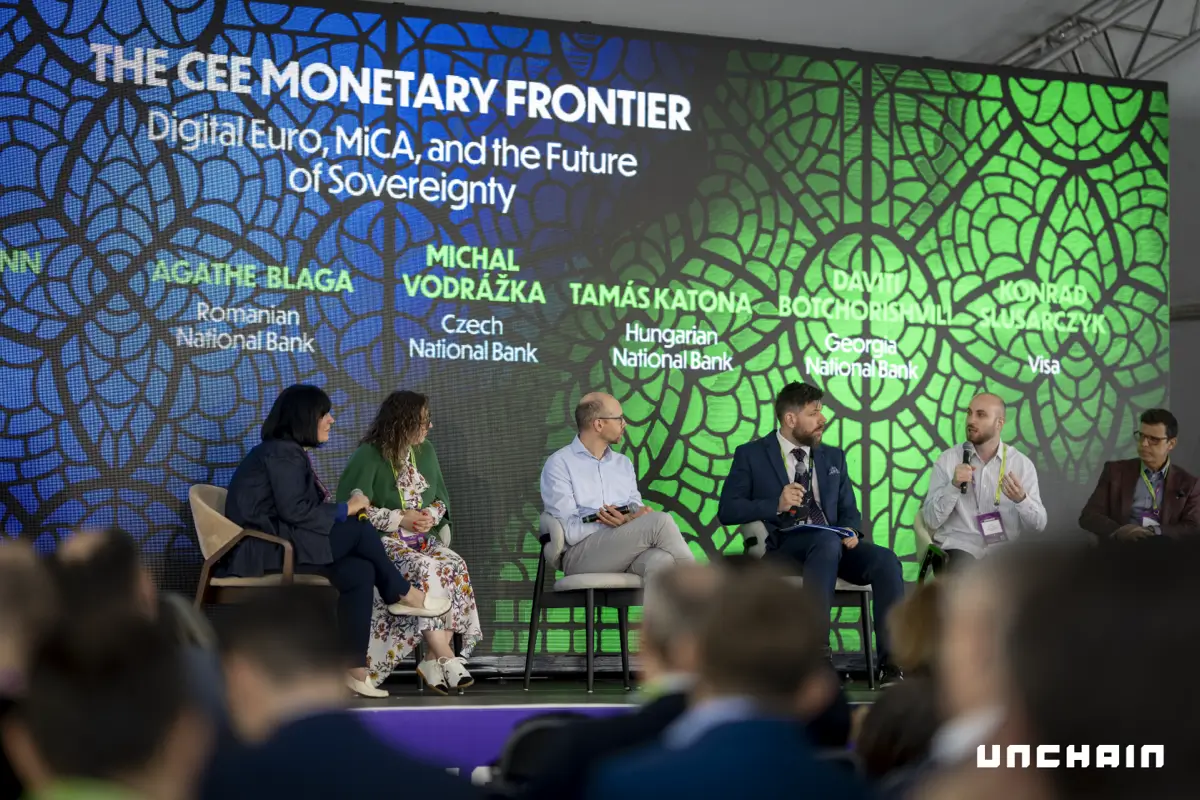
Image source: UNCHAIN Festival
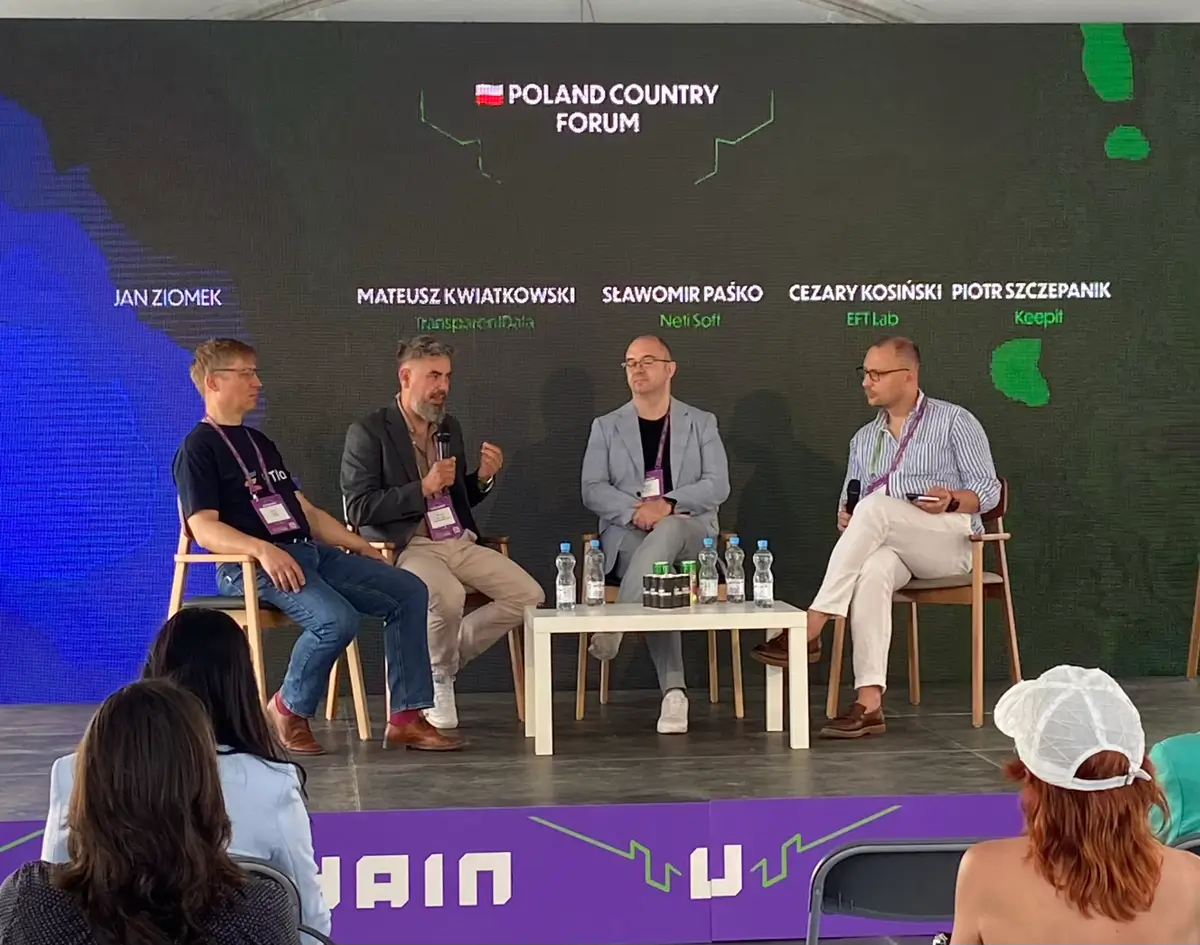
Poland Country Forum
The Roundtables Stage hosted a dedicated Poland Country Forum, one of several single-market deep dives running on Day One alongside Slovakia, Armenia, Georgia, Ukraine, Moldova and Israel sessions.
The panel included:
- Jan Ziomek, FinTech lawyer at Finnovatika Legal & Tax, formerly of the Polish Financial Supervision Authority
- Mateusz Kwiatkowski of TransparentData
- Sławomir Paśko of Neti Soft
- Cezary Kosiński of EFT Lab
- Piotr Szczepanik of Keepit
The conversation focused on the state of Poland’s fintech and regulatory landscape, drawing on Ziomek’s regulatory background and a mix of data, infrastructure, and software vendors serving the Polish banking sector. The latter currently has over 550 banking institutions with a total of 3.38 trillion PLN (about $894.719 billion) in assets under management and strong operational performance indicators.
On Day Two, the regional insight conversation continued with countries like Hungary, Romania, Bulgaria now under the spotlight. This kind of close individual examination was very helpful in raising awareness about each market’s needs, opportunities and challenges, allowing industry changemakers and payment innovators to make informed decisions.
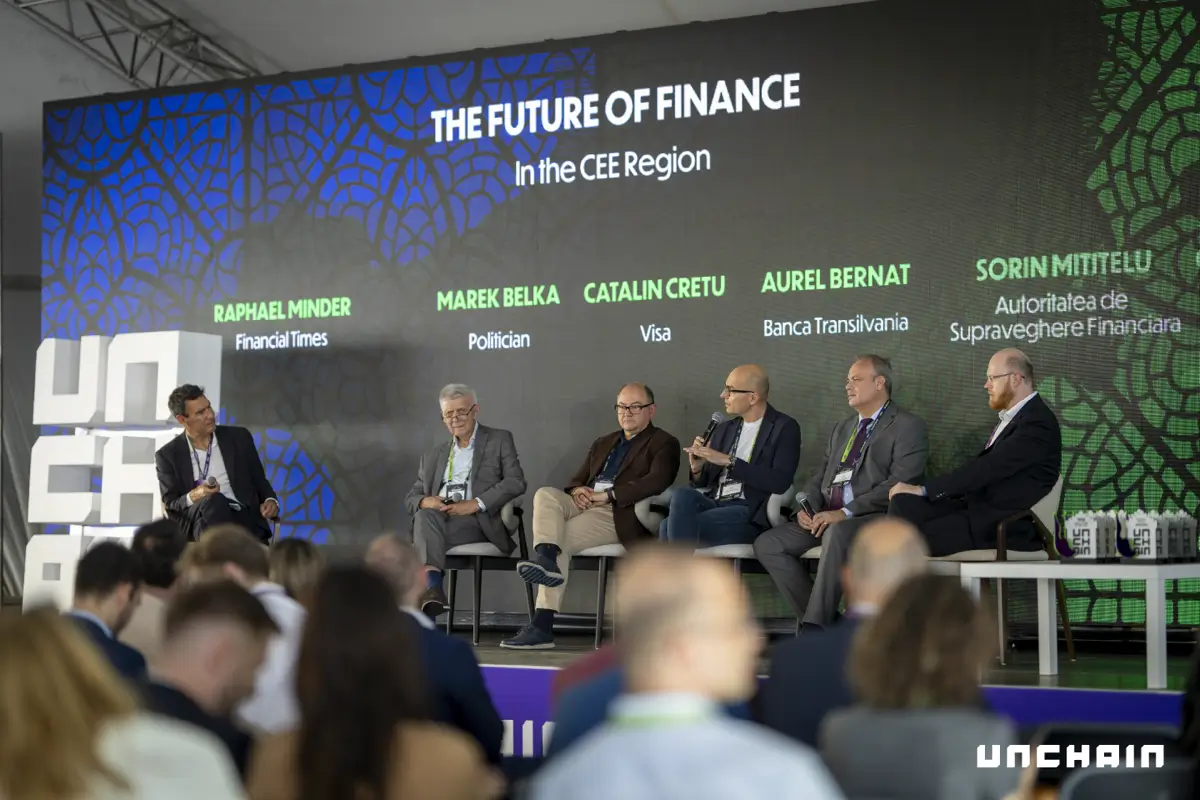
The Future of Finance in the CEE Region
The festival’s marquee session “The Future of Finance in the CEE Region” paired a heavyweight policy voice with payments and insurance-regulation leadership from Romania. The stage hosted:
- Raphael Minder, Financial Times journalist, moderating
- Marek Belka, economist and former Prime Minister and Finance Minister of Poland
- Cătălin Crețu, General Manager for Visa (Romania, Bulgaria, Croatia, Slovenia)
- Aurel Bernat, Executive Director, Banca Transilvania
- Sorin Mititelu, Vice President, ASF Romania (the Financial Supervisory Authority)
Belka reminded the audience about a geopolitical framing of monetary integration, arguing that the euro is not only about payments convenience or monetary policy. It is as much about security, and that point is most vivid in the examples of countries like Poland and Romania. There, deeper European financial integration strengthens resilience, lowers the cost of development, and provides greater protection against global uncertainty. Visa’s Crețu picked up the connective-tissue theme from the industry side, framing UNCHAIN itself as a venue that helps accelerate innovation across the region.
High Institutional Presence at UNCHAIN Festival Shows Industry Readiness for a Change Through Cooperation
Overall, large national institutions played a key role at UNCHAIN Festival 2026, with strong representation from Romania’s National Bank of Romania (BNR) and the Financial Supervisory Authority (ASF). They were joined by high-level representatives from equivalent central banks and financial supervisory authorities from more than 18 countries, including the Czech Republic, Slovakia, Hungary, Croatia, Serbia, Albania, Moldova, Georgia, Kazakhstan, and many others.
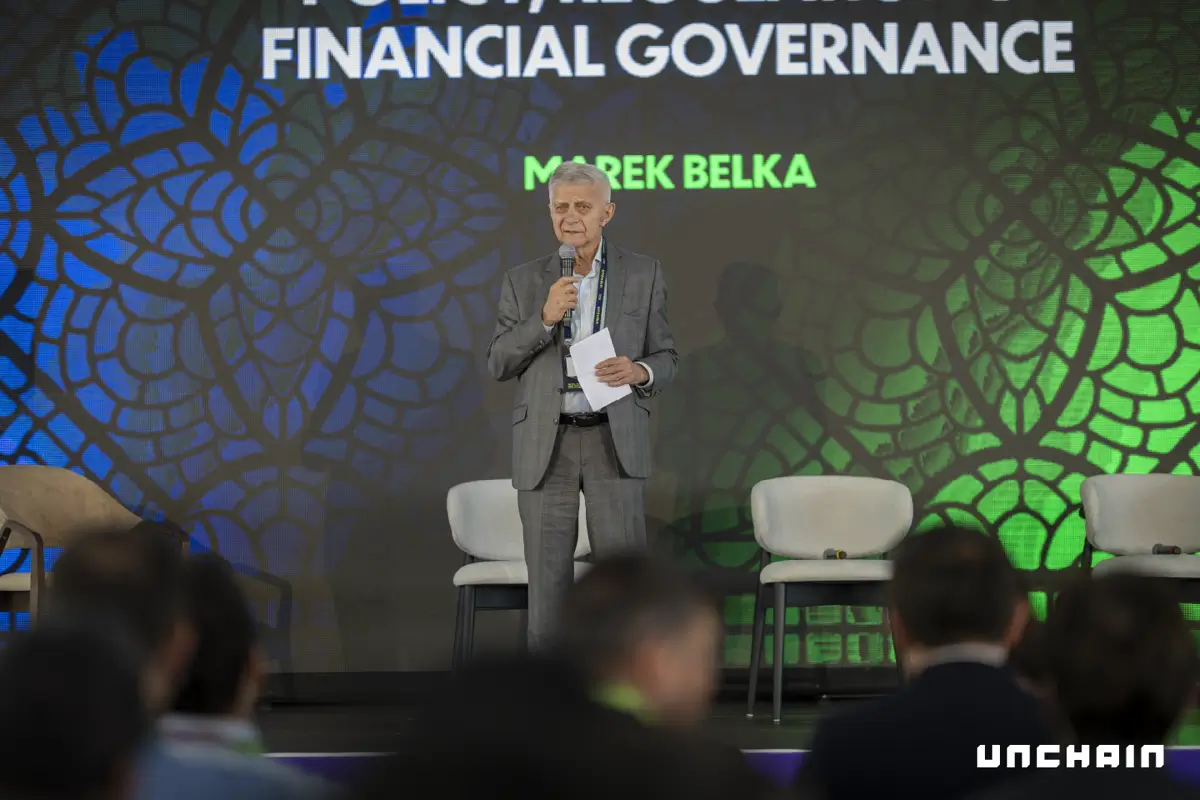
Among the keynote speakers at this year’s event edition was Marek Belka, former Prime Minister of Poland, former President of the National Bank of Poland, and former Member of the European Parliament, a prominent voice at the intersection of economics and public policy, who emphasized the importance of strengthening the European project in today’s geopolitical and economic environment. In his address, he highlighted the role of European financial integration in strengthening economic resilience and regional stability.
“The world has changed dramatically in recent years, and Europe must adapt to a new geopolitical reality. The euro is not only about payments or monetary policy—it is about security. For countries like Poland and Romania, deeper European financial integration strengthens resilience, lowers the cost of development, and provides greater protection against global uncertainty. Central and Eastern Europe has proven its strength, and our future lies in supporting a stronger, more cohesive European Union.”
Marek Belka, former Prime Minister of Poland, during UNCHAIN Festival 2026
This high-level institutional presence allowed UNCHAIN to become a solid platform for critically important dialogue on regulation, monetary policy, digital transformation, and the future of finance in Central and Eastern Europe.
UNCHAIN Awards 2026 Were Granted to Regional Fintech Innovators
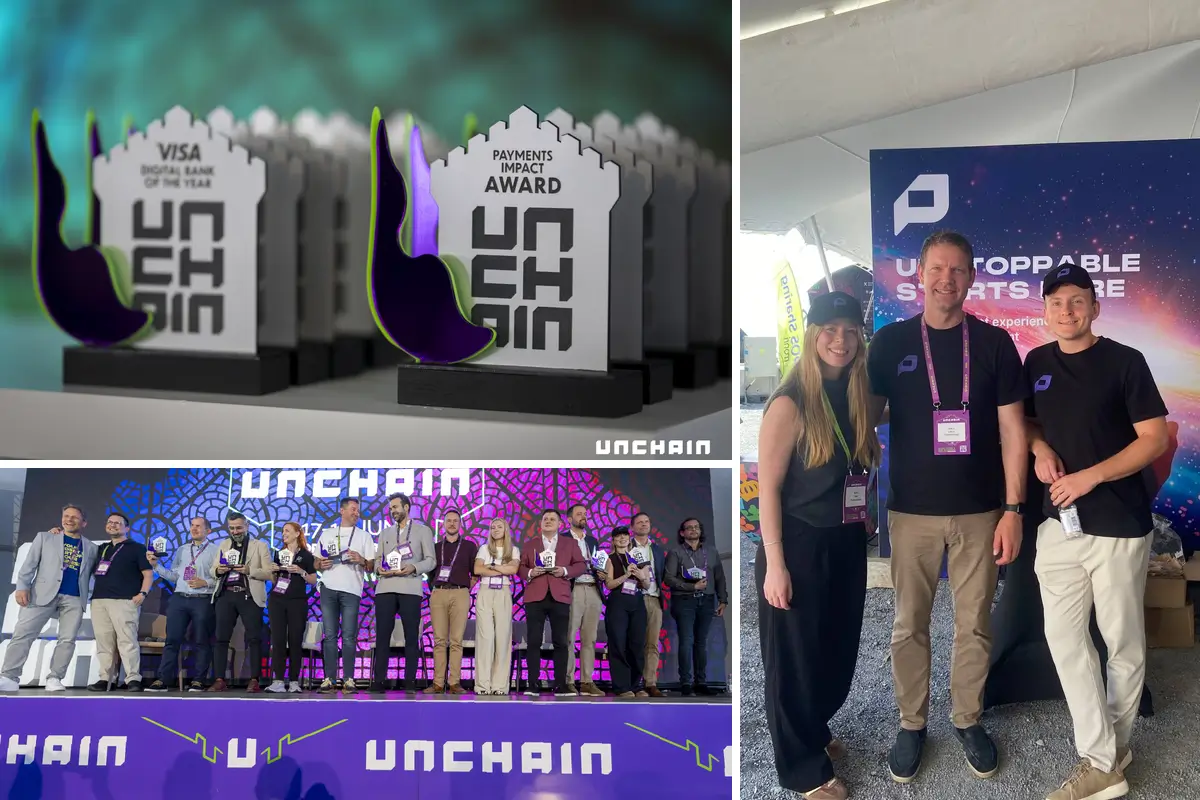
Except for the vital discussions at hand, excellence and innovation in the financial and technology industries were also recognized at the event. The UNCHAIN Awards 2026 gala honored the organizations and companies making the most significant contributions to the transformation of financial services across Central and Eastern Europe.
In the Industry Awards category, distinctions were presented to:
- mBank (Digital Bank of the Year),
- Comarch (Innovation Excellence Award),
- Transfond (Trust & Resilience Award),
- Magnetiq Bank (Growth & Achievement Award),
- Payten (Collaboration & Partnership Award),
- Partners Banka (Future Readiness Award),
- Paymentology (Payments Impact Award),
- Hellas Direct (Insurance Impact Award),
- Tremend Software Consulting (Technology Leadership Award),
- and Leanpay (Future of Finance Award).
In addition, the Innovation Awards program, dedicated to startups and emerging innovative companies, recognized
- Cryptoswift from Estonia (Market Impact Award),
- Processlab from Romania (Regulatory Readiness Award),
- Okazio from Slovakia (Innovation Excellence Award),
- Clym from Romania (Responsible Finance Award),
- and HackenProof from Ukraine (Future of Finance Award),
highlighting the diversity and dynamism of the regional fintech ecosystem.
With its broad international reach and the relevance of the issues it tackles, UNCHAIN Festival keeps cementing its place as Central and Eastern Europe’s premier summit for finance and technology, while helping position Romania and Oradea as essential touchpoints in shaping the future of European financial services.
The event was made possible thanks to Visa as Main Sponsor; Raiffeisen Bank Romania, BRD Groupe Société Générale and Banca Transilvania as Banking Partners; Leanpay, Monri and Payten as Gold Partners; Paymentology, Worldline, SurePay, fme Romania, Comarch, Bankart, Profile Software, certSIGN, Creatio, Entrust, DECTA, Tremend Software Consulting, Matricia and Garanti BBVA as Sponsors; Poland Business Forward and InvestHK as Country Pavilion Partners; and Visit Oradea and Make IT in Oradea as Hosting Partners.